
Sinch Review 2026: CPaaS Strengths, Pricing & Fit
Evidence-based Sinch review covering messaging, voice, email, verification APIs, pricing signals, setup, limitations, and ideal users for 2026.
Sinch Review 2026: CPaaS Strengths, Pricing & Fit
Sinch is one of the largest communications platforms as a service (CPaaS) providers, offering messaging, voice, email, video, and verification APIs alongside ready-made applications for marketing, notifications, identity, and customer care. This review examines what Sinch does well, where it falls short, and how to decide whether it fits your team.
What Sinch Is and Who It Serves
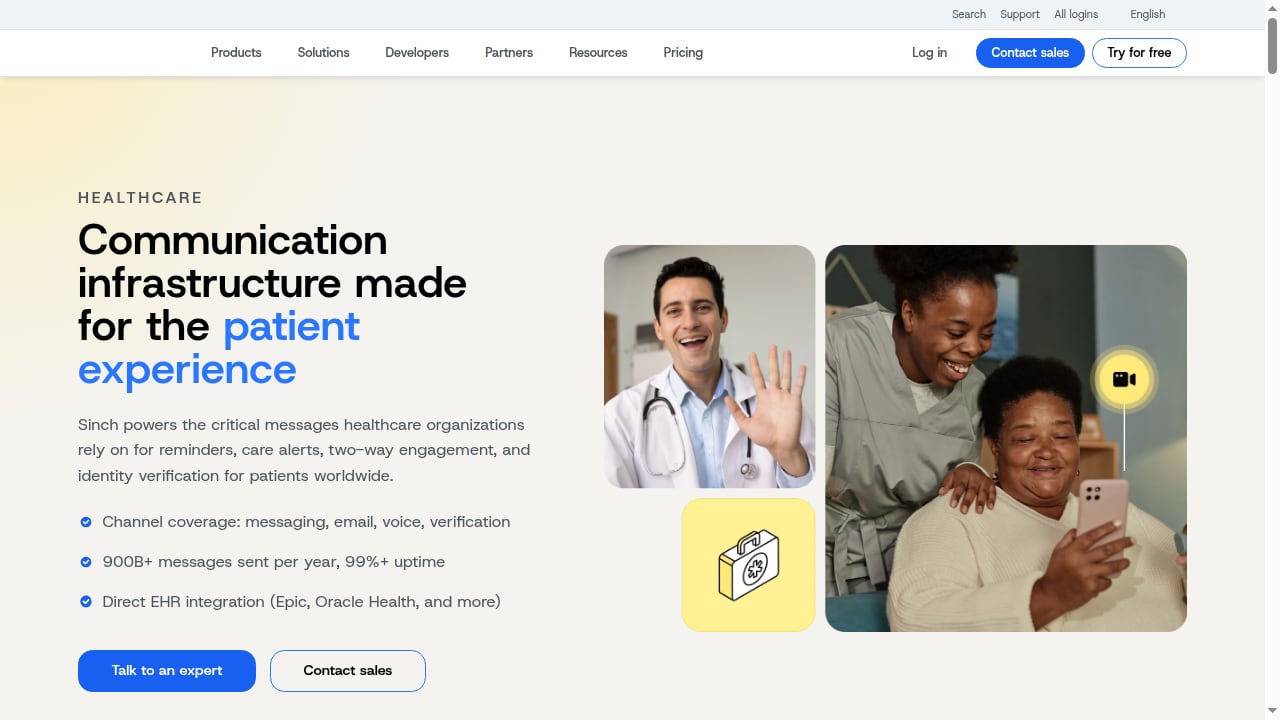
First viewport screenshot of Healthcare Communications & Patient Engagement APIs | Sinch.
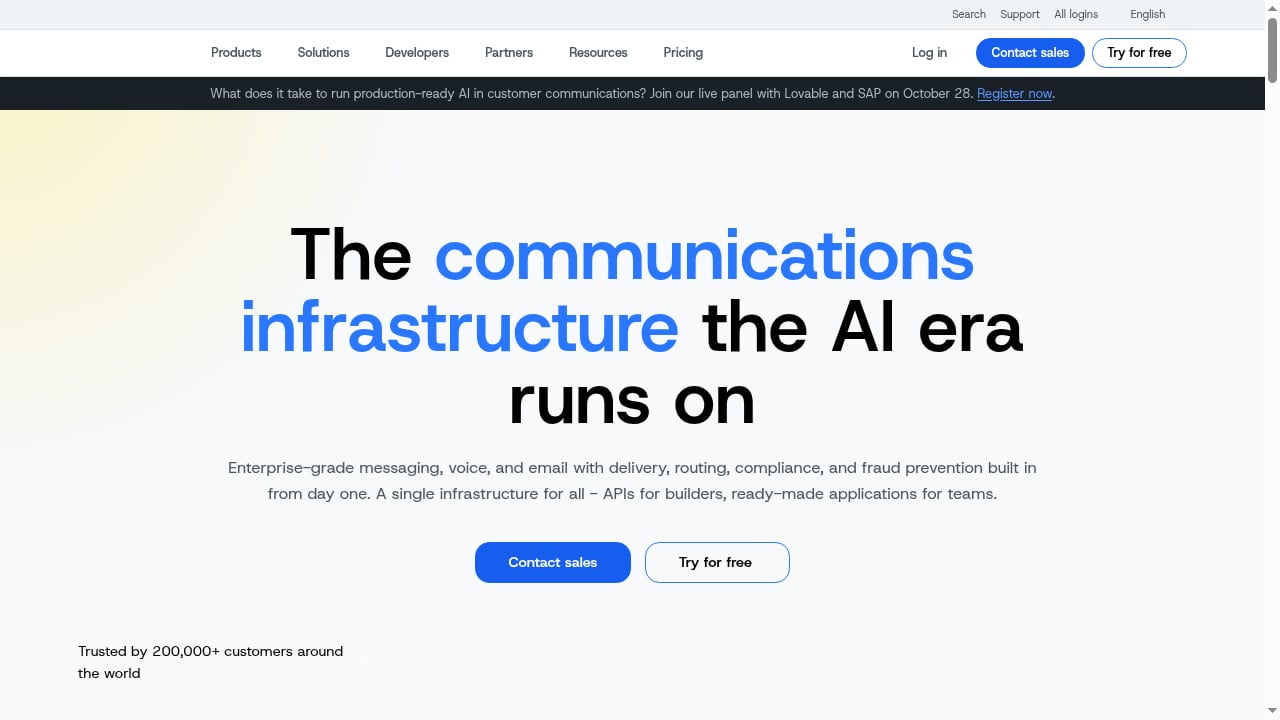
Sinch positions itself as "the communications infrastructure the AI era runs on." The platform reports over 200,000 customers, including 8 of the 10 largest tech companies, and more than 900 billion messages sent per year with direct carrier connections in over 190 countries. It targets developers, product teams, marketers, operations, and customer service leaders across financial services, healthcare, media, retail, and telecommunications.
The core offering is a single infrastructure for both APIs (for builders) and ready-made applications (for teams), with delivery, routing, compliance, and fraud prevention built in.
Key Strengths
First viewport screenshot of www.sinch.com.
- Global reach and direct carrier connections in 190+ countries support high-volume, cross-border messaging with fewer intermediaries.
- Broad channel coverage — SMS, RCS, WhatsApp, voice, email, video, and verification — reduces the need for multiple vendors.
- Enterprise-grade reliability with routing, compliance, and fraud prevention included from day one.
- Dual audience fit: developers get APIs and SDKs; marketing and support teams get packaged applications.
- Serverless Functions runtime for custom logic, priced per compute-hour (first hour free, then $0.10/compute-hour).
Limitations and Trade-offs
First viewport screenshot of sinch.com.
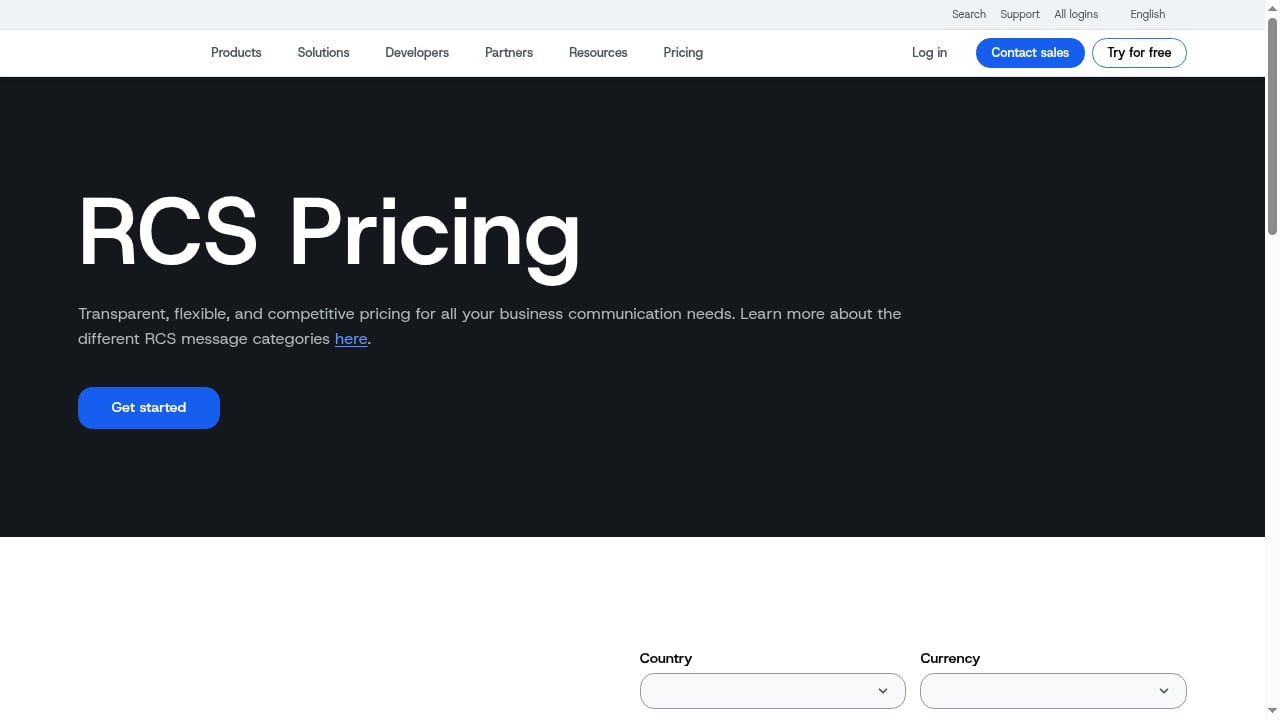
- Pricing opacity: Sinch primarily uses pay-as-you-go with volume discounts, but public list pricing is limited, making cost forecasting harder for smaller teams.
- Complexity at scale: The breadth of products can mean a steeper learning curve and more configuration than a single-channel provider.
- Support variability: Third-party review sites show mixed experiences; some users report slow responses, so evaluate support SLAs carefully.
- Not a pure developer-first startup tool: Smaller teams may find lighter-weight CPaaS options faster to integrate.
Pricing Signals
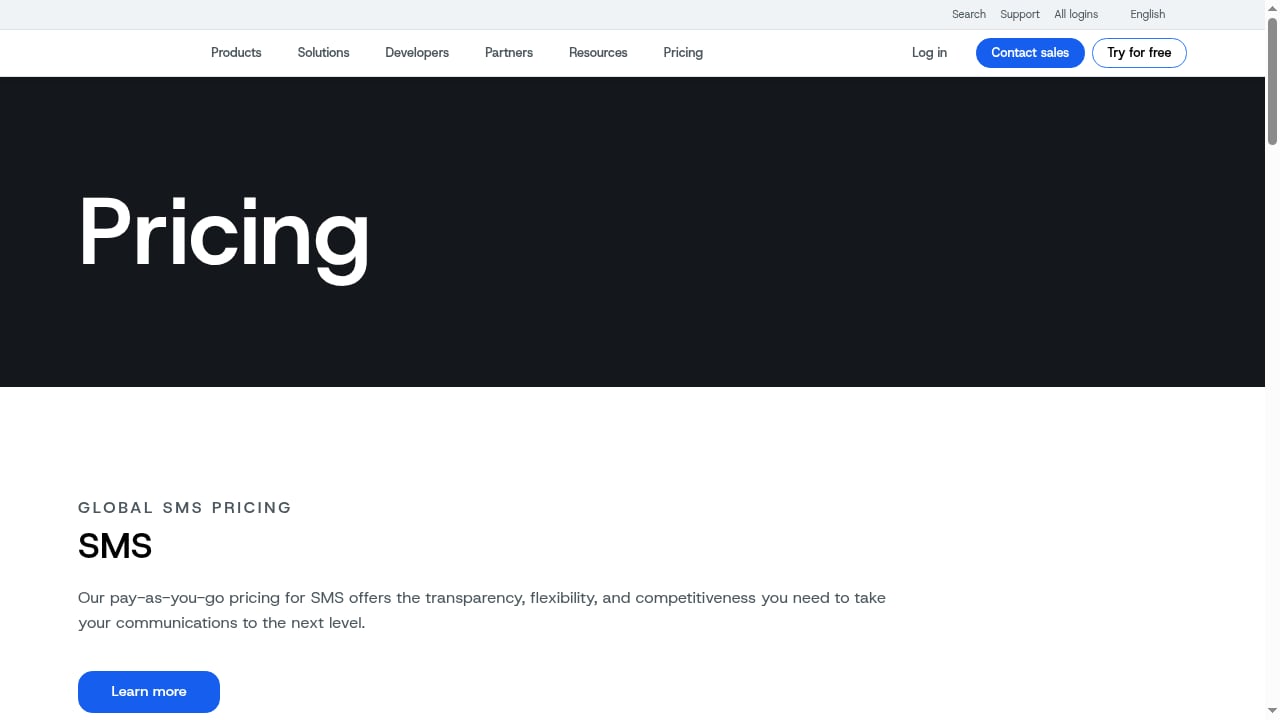
First viewport screenshot of sinch.com.
Sinch does not publish comprehensive rate cards for all channels. Expect pay-as-you-go pricing with volume discounts negotiated based on message volume, destination country, and channel mix. The Functions runtime is transparent: first compute-hour free, then $0.10 per compute-hour. For budgeting, request quotes for your top destination countries and channel mix, and model costs at 2–3 volume tiers.
Setup and Developer Experience
Sinch provides REST APIs, SDKs, and webhooks. A typical integration involves:
- Creating an account and obtaining API credentials.
- Configuring a sender ID or phone number for your channel.
- Sending a test message via the API or dashboard.
- Setting up webhooks for delivery receipts and inbound messages.
- Adding compliance and opt-in flows for each destination country.
For teams building REST integrations, pay attention to path parameter design and security — see our guide to the account_id path parameter for best practices.
Ideal Users and Use Cases
Sinch fits organizations that need:
- High-volume, global messaging for notifications, alerts, and marketing campaigns.
- Identity verification and fraud prevention via SMS, voice, and data verification.
- Omnichannel customer care across SMS, WhatsApp, RCS, and voice.
- Enterprise compliance across multiple countries and industries.
Smaller teams or those wanting a simpler unified messaging API may prefer alternatives; see our UnifyPort vs Infobip comparison and the top 10 CPaaS APIs and SDKs for developers in 2026.
Decision Criteria
Choose Sinch if you need global scale, direct carrier connections, and a broad channel mix with enterprise compliance. Consider alternatives if you prioritize transparent self-serve pricing, a lighter developer experience, or a single unified API for messaging. For a broader market view, see the top 10 social media and messaging API platforms 2026.
Related reading
- How to Use UnifyPort with Latenode: Unified Messaging Automation - Learn how to connect UnifyPort's unified messaging API to Latenode workflows. Step-by-step setup, webhook triggers, and practical automation examples.
- UnifyPort vs SocialAPI.ai vs Syniverse CPaaS: Messaging API Guide - Compare UnifyPort, SocialAPI.ai, and Syniverse CPaaS for omnichannel messaging. Evaluate channels, webhooks, SDKs, pricing, and developer fit.
FAQ
Is Sinch good for small businesses?
Sinch is optimized for scale; small businesses may find pricing and setup more complex than lighter CPaaS options.
Does Sinch offer a free tier?
The Functions runtime includes a free first compute-hour; other products are typically pay-as-you-go with volume discounts.
What channels does Sinch support?
SMS, RCS, WhatsApp, voice, email, video, and verification, plus ready-made applications.
How does Sinch compare to Twilio?
Both are large CPaaS providers; Sinch emphasizes direct carrier connections and enterprise scale, while Twilio has a strong developer brand. Evaluate pricing quotes and support SLAs for your use case.
Conclusion
Sinch is a strong fit for enterprises and high-volume senders that need global reach, multiple channels, and built-in compliance. Its main weaknesses are pricing opacity and potential support variability. Request detailed quotes, test the APIs, and compare against alternatives before committing.
Sources: Trustpilot reviews of Sinch, G2 reviews of Sinch, Glassdoor reviews of Sinch.