
Lineage Meaning, Uses & How It Shapes Modern Systems
Learn what lineage means across genealogy, biology, data systems, and brand contexts. Explore real-world examples and how lineage thinking improves traceability.
Lineage Meaning, Uses & How It Shapes Modern Systems
"Lineage" is one of those words that appears in family trees, biology textbooks, software architecture diagrams, and even brand names. At its core, it means a line of descent traced from a common ancestor or source. But the practical value of lineage goes far beyond dictionary definitions: it helps us understand where things come from, how they change over time, and how to trace problems back to their origin.
This article breaks down the meaning of lineage, explores how the concept applies across different fields, and shows why lineage thinking matters for everything from food safety to multi-channel messaging infrastructure.
What Does Lineage Mean?
According to Merriam-Webster, lineage is "descent in a line from a common progenitor" or "a group of individuals tracing descent from a common ancestor." The word comes from the Latin linea, meaning "line," which also gives us words like "linear" and "lineup."
In everyday use, lineage can refer to:
- Family ancestry: "Her Italian lineage was very important to her."
- Biological descent: A species or cell line traced back to a shared ancestor.
- Cultural or institutional heritage: A school of thought, artistic tradition, or organizational history.
- Data provenance: The documented path of data from its source through transformations to its final state.
What unites these uses is the idea of traceability—being able to follow a continuous line backward or forward through time.
Lineage in Genealogy and Family History
Lineage Meaning, Uses & How It Shapes Modern Systems - Lineage in Genealogy and Family History.
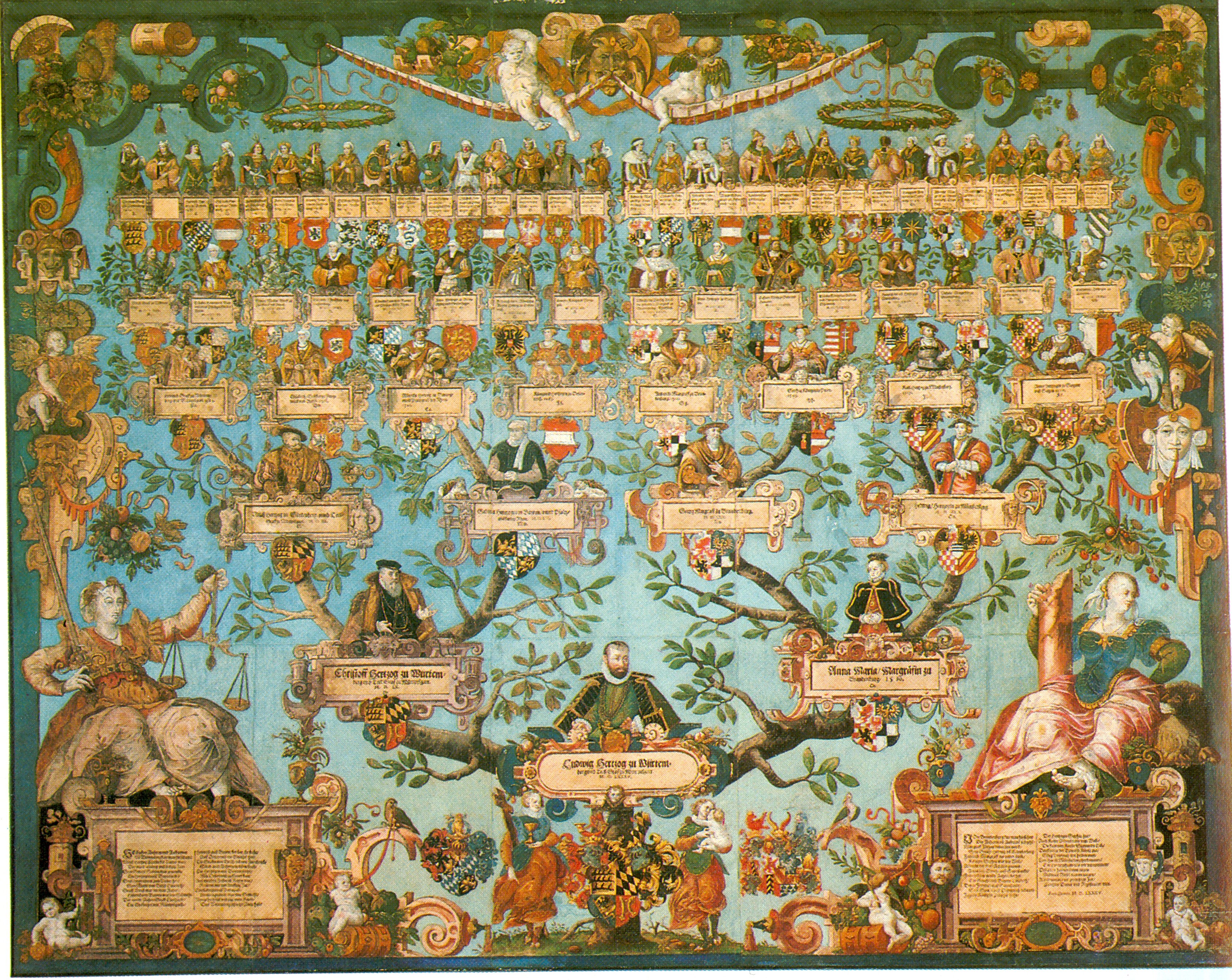
The most familiar use of lineage is genealogical. Family lineage describes the direct line of descent from an ancestor through successive generations. Genealogists distinguish between:
- Patrilineal lineage: Descent traced through the father's line.
- Matrilineal lineage: Descent traced through the mother's line.
- Bilateral lineage: Descent recognized through both parents.
Genealogical research often combines documentary records—birth certificates, census data, wills, and immigration records—with DNA testing to reconstruct lineage. DNA testing companies use markers on the Y chromosome (passed father to son) and mitochondrial DNA (passed mother to child) to trace deep ancestral lines that written records cannot reach.
Understanding family lineage serves practical purposes beyond curiosity. It can establish legal inheritance rights, citizenship claims, medical risk factors, and cultural belonging.
Lineage in Biology and Medicine
Lineage Meaning, Uses & How It Shapes Modern Systems - Lineage in Biology and Medicine.
In biology, lineage describes the developmental history of a cell, organism, or species. Scientists use lineage tracing to answer questions like:
- How does a single fertilized egg produce hundreds of specialized cell types?
- Which stem cells give rise to which tissues during development?
- How do cancer cells evolve and spread within a patient?
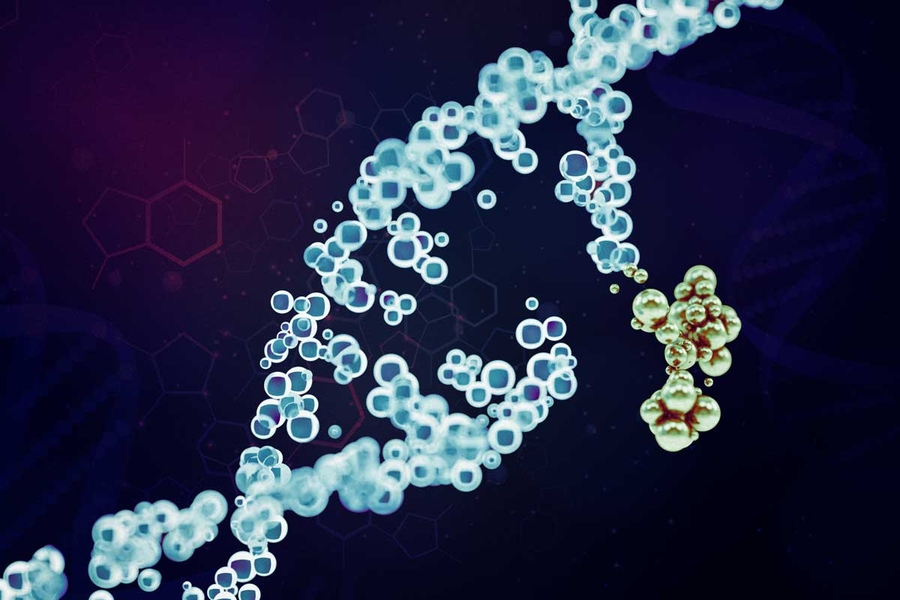
Cell lineage tracing is a foundational technique in developmental biology. Researchers label a progenitor cell and then track its descendants over time. Modern methods use genetic barcodes—short DNA sequences inserted into a cell's genome—so that every descendant inherits a unique, readable tag. This lets scientists reconstruct a complete family tree of cells within a tissue.
In evolutionary biology, lineage refers to a sequence of species connected by ancestor-descendant relationships. A lineage can split into two or more daughter lineages through speciation, creating the branching pattern known as a phylogenetic tree.
In medicine, lineage information helps clinicians understand disease progression. For example, tracking the lineage of cancer cells can reveal whether a tumor originated from a single mutated cell or from multiple independent events—information that affects treatment strategy.
Data Lineage: Tracing Information Through Systems
Lineage Meaning, Uses & How It Shapes Modern Systems - Data Lineage: Tracing Information Through Systems.
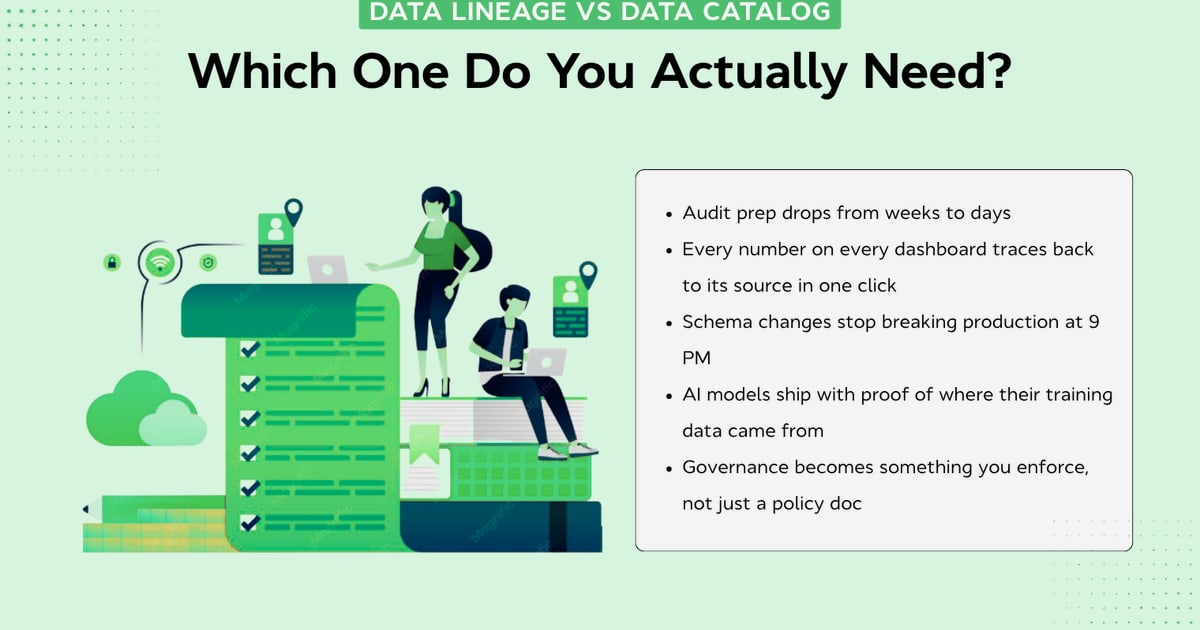
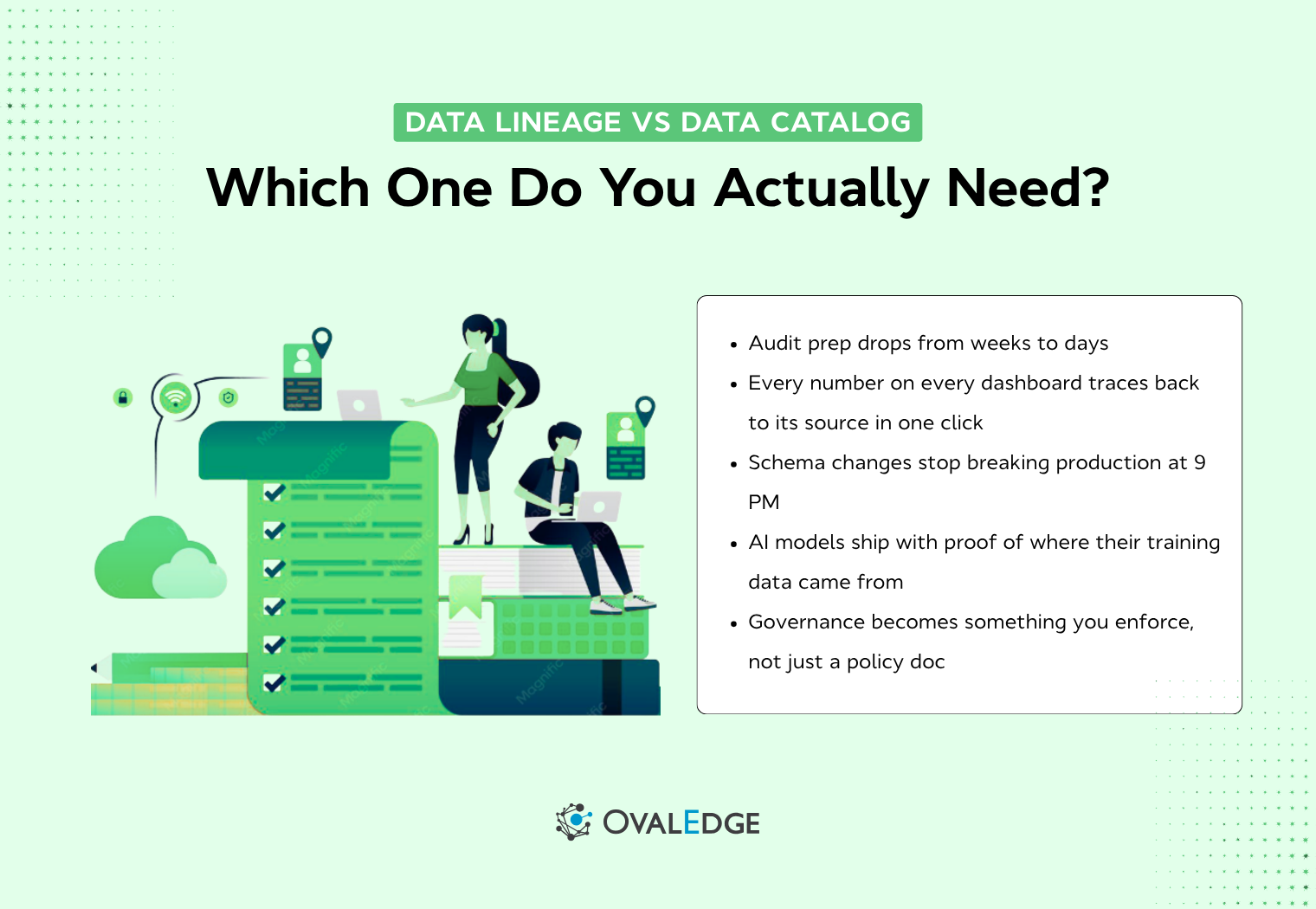
Data lineage is the documentation of data's journey from origin to consumption. It answers questions such as:
- Where did this number come from?
- What transformations were applied along the way?
- Which downstream reports or models depend on this dataset?
- If a source changes, what else is affected?
Data lineage has become essential in modern organizations for several reasons:
Regulatory Compliance
Financial services, healthcare, and other regulated industries must demonstrate that reported figures can be traced back to authoritative sources. Data lineage provides the audit trail.
Root Cause Analysis
When a dashboard shows an unexpected value, data lineage lets engineers trace backward through ETL pipelines, joins, and aggregations to find where the error entered.
Impact Analysis
Before changing a schema or deprecating a field, teams use lineage to identify every downstream consumer that might break.
Data Governance
Lineage metadata helps organizations understand which datasets are critical, who owns them, and how they relate to one another.
Tools for capturing data lineage range from manual documentation to automated scanners that parse SQL, workflow definitions, and API logs to build a living map of data flows.
Lineage in Supply Chains and Cold Chain Logistics
Lineage is also a critical concept in physical supply chains, where traceability determines whether products can be recalled safely, verified for quality, or certified for specific markets.
Lineage, a global leader in temperature-controlled logistics, applies lineage thinking to the food supply chain. The company operates cold storage facilities and integrated logistics services that track temperature-sensitive products—seafood, produce, pharmaceuticals—from port to distribution center to store. In this context, lineage means knowing:
- Which facility handled a given pallet
- What temperature conditions it experienced at each stage
- Which transportation routes it followed
- Which customers received which batches
This traceability is not just operational efficiency. When a port strike stalls refrigerated containers, or when a contamination event triggers a recall, the ability to trace product lineage quickly determines how much food is saved and how much risk is contained.
The same principle applies to any system where provenance matters. A product's lineage is its history—and that history determines trust.
Lineage in Software and Messaging Systems
Modern software platforms increasingly borrow lineage concepts to improve reliability and debugging. In event-driven and messaging systems, lineage refers to the traceable path of a message from sender to recipient, including every transformation, retry, and routing decision along the way.
Consider a multi-channel messaging platform like UnifyPort, which lets developers send and receive messages across Telegram, WhatsApp, LINE, X (Twitter), Zalo, and TikTok through a single REST API. In such a system, message lineage matters because:
- A single logical message may fan out to multiple channels, each with its own provider-specific quirks.
- Webhook events arrive asynchronously, and developers need to correlate them back to the original outbound message.
- Retries, rate limits, and failure isolation mean that a message's final delivery state is the result of a multi-step journey.
UnifyPort addresses this by converting all provider messages into a consistent JSON shape and standardizing webhook events. That consistency is a form of lineage: every event carries enough context to trace its origin, channel, and relationship to other events. For engineering teams building AI agents, CRMs, or notification systems, this traceability reduces debugging time and prevents the "which channel did that come from?" confusion that plagues multi-provider integrations.
If you are integrating messaging into an application, understanding how events flow through the system is just as important as understanding the API endpoints. For a deeper look at multi-channel messaging infrastructure, see this guide on what a digital platform is and how modern integration layers work.
Lineage as a Brand Concept
Some companies use "lineage" as a brand name to signal heritage, purity, or continuity. Lineage Provisions, for example, is a food brand founded by Dr. Paul Saladino and Dr. Anthony Gustin that emphasizes ancestral nutrition—the idea that modern diets should trace back to the foods humans evolved eating. The brand's use of "lineage" connects product quality to a longer story: grass-fed beef, nose-to-tail sourcing, and ingredient purity positioned as a return to ancestral roots.
This is a common branding strategy. "Lineage" evokes:
- Authenticity: The product has a traceable, trustworthy origin.
- Heritage: The methods or ingredients descend from a respected tradition.
- Continuity: The brand is part of a longer story, not a fleeting trend.
Whether in food, fashion, or technology, lineage branding works because it taps into the same psychological need as genealogical research: people want to know where things come from and whether that origin is trustworthy.
Why Lineage Thinking Matters
Across all these domains, lineage thinking provides three consistent benefits:
- Accountability: When you can trace an outcome back to its source, you can assign responsibility and correct errors.
- Trust: Traceable provenance is the foundation of certification, compliance, and consumer confidence.
- Learning: Understanding how something evolved—a species, a dataset, a product—reveals patterns that inform future decisions.
Organizations that invest in lineage infrastructure, whether that means data catalogs, supply chain tracking systems, or standardized event schemas, are investing in their ability to answer the question: "Where did this come from, and can I prove it?"
Related reading
- How to Use Telegram: The Complete Beginner’s Guide - Learn how to use Telegram from setup to advanced features. This guide covers chats, groups, channels, secret chats, multi-device sync, and security settings.
- Telegram Setup: Complete Guide for Desktop, Mobile & Business - Step-by-step Telegram setup for desktop, mobile, and business. Learn account creation, security settings, Telegram Business features, and multi-channel API integration.
- LINE Download: How to Install LINE on Mobile & Desktop Safely - A complete guide to downloading LINE on iOS, Android, Windows, and Mac. Covers installation, key features, security settings, and how unified APIs extend LINE into business workflows.
Sources and further reading
- Lineage Provisions - Purveyors of the highest-quality, most nutrient-dense animal based snacks on the planet. Eat like a human and thrive.
Frequently Asked Questions About Lineage
What is the difference between lineage and ancestry?
Ancestry refers to the full set of people or organisms from whom an individual descends, while lineage typically refers to a specific line of descent—often a single continuous chain from ancestor to descendant. You might say someone has mixed ancestry but a direct patrilineal lineage through a particular family line.
How is data lineage different from data provenance?
The terms overlap significantly. Data provenance often emphasizes the origin and ownership of data, while data lineage emphasizes the transformations and movements data undergoes over time. In practice, many tools and teams use the terms interchangeably.
Can lineage be traced without DNA testing?
Yes. Documentary genealogy—using birth, marriage, death, census, and property records—can establish lineage for many generations. DNA testing extends lineage tracing beyond the limits of written records and can confirm or refute documentary findings.
Why does message lineage matter in multi-channel APIs?
When a single application sends messages across multiple channels, each provider returns events in different formats and at different times. Standardized message lineage—consistent event shapes, correlation IDs, and traceable retry histories—lets developers reconstruct exactly what happened to each message without reading provider-specific documentation for every edge case.
What is cell lineage tracing used for?
Cell lineage tracing is used in developmental biology to understand how organisms develop from a single cell, in cancer research to study tumor evolution, and in regenerative medicine to verify that stem cell therapies produce the intended cell types.
Conclusion
Lineage is a deceptively simple concept with profound applications. Whether you are tracing a family tree, mapping a data pipeline, tracking a temperature-sensitive shipment, or debugging a multi-channel messaging flow, the underlying question is the same: What is the continuous path from origin to present, and can you follow it?
As systems grow more complex—more data sources, more channels, more intermediaries—the ability to trace lineage becomes less of a luxury and more of a requirement. Organizations that build lineage into their data, supply chain, and software architecture gain faster debugging, stronger compliance, and deeper trust. For developers building multi-channel messaging, standardized event layers like UnifyPort's unified API provide that traceability out of the box. For everyone else, the principle remains: know where things come from, and you will understand where they are going.
To explore how unified messaging APIs handle event lineage and multi-channel delivery, see this guide to connecting AI agents to multi-channel messaging.