
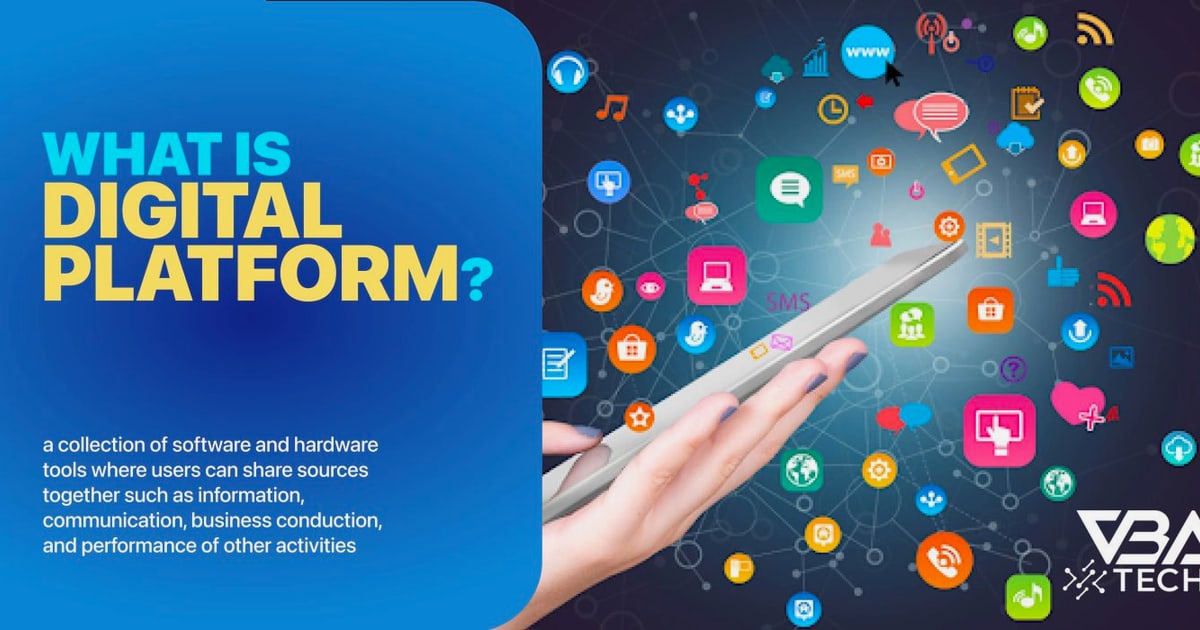
What Is a Digital Platform? Types, Architecture & Integration
Explore what a digital platform is, how it works, and the key types—from social media to unified APIs. Learn how modern platforms connect tools, channels, and AI agents.
What Is a Digital Platform? Types, Architecture & Integration
A digital platform is an online environment that connects users, services, or systems to facilitate interactions, transactions, and content sharing. These platforms range from global social networks like Facebook and WhatsApp to specialized infrastructure layers that let software talk to multiple messaging channels through a single interface. Understanding the different types of digital platforms—and the technical components that make them reliable—helps businesses and developers choose the right foundation for their products.
The Core Definition of a Digital Platform
At its simplest, a digital platform is software-enabled infrastructure that brings different participants together. A social media platform connects people who create and consume content. A marketplace platform connects buyers and sellers. A developer platform connects applications to external services through standardized APIs.
What separates a true platform from a standalone application is the network effect: the value of the platform increases as more participants join and interact. UNESCO describes digital platforms as online environments that leverage technologies like artificial intelligence to enhance user experiences and optimize services, while also emphasizing the importance of governance frameworks that protect users and respect human rights.
Major Types of Digital Platforms
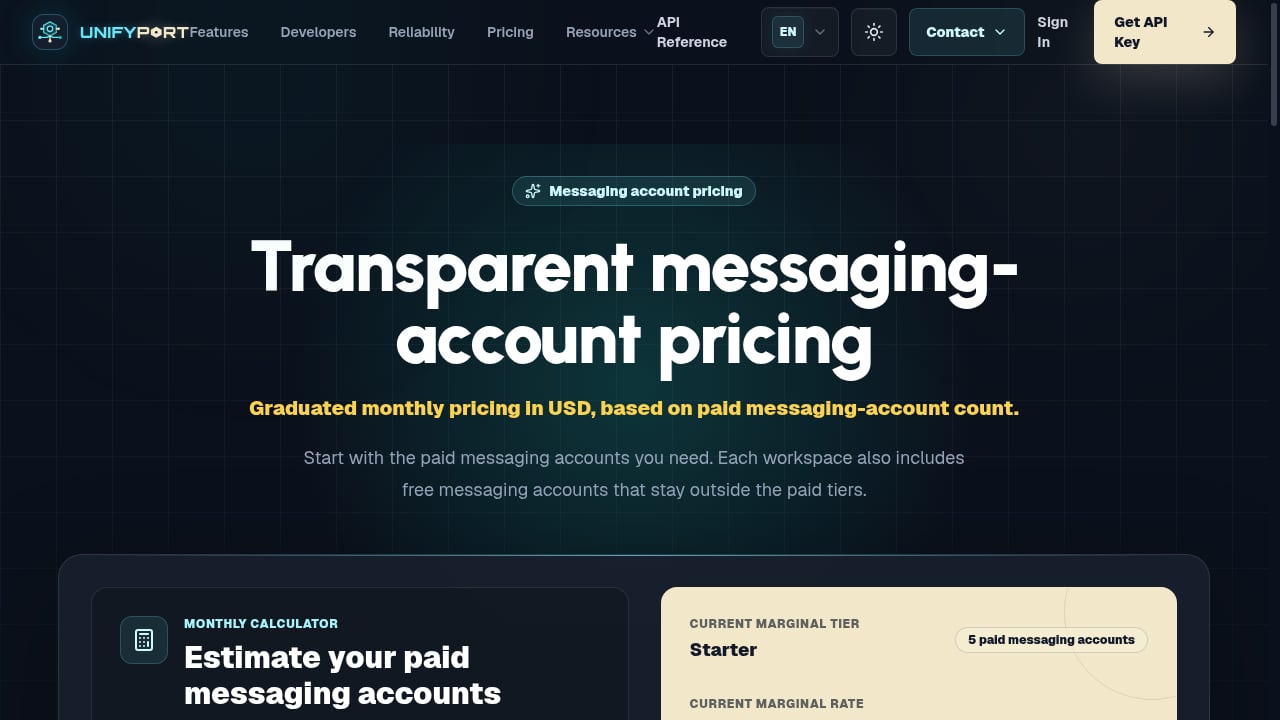
First viewport screenshot of Messaging Account Pricing & API Access — UnifyPort.
Social and Communication Platforms
Social media platforms are interactive technologies that enable users to create and share information, ideas, and personal messages through virtual communities. According to the American Psychological Association, these platforms offer powerful opportunities for connection but also introduce challenges around misinformation and healthy usage patterns.
The most widely adopted social platforms include Facebook (over 3 billion monthly active users), YouTube (over 2.5 billion), and WhatsApp (2 billion). These platforms have evolved far beyond simple posting and messaging—they now serve as content ecosystems, advertising networks, and business communication channels.
Marketplace and Transaction Platforms
Marketplace platforms facilitate exchanges between buyers and sellers. Think of e-commerce platforms, ride-sharing apps, and freelance marketplaces. Their core value lies in reducing transaction costs, providing trust mechanisms like reviews and escrow, and aggregating supply and demand.
Developer and Integration Platforms
This category is critical for engineering teams building modern software. Developer platforms provide APIs, SDKs, and infrastructure that abstract away complexity. A unified messaging API platform like UnifyPort falls squarely into this category—it lets developers send and receive messages across Telegram, WhatsApp, LINE, X (Twitter), Zalo, and TikTok through a single REST API, rather than integrating each channel's proprietary SDK separately.
These platforms solve a real fragmentation problem. Each messaging channel has its own authentication, payload format, rate limits, and webhook signature scheme. A developer platform normalizes all of that into a consistent JSON shape and provides a webhook control plane for managing signatures, subscriptions, and retries.
Infrastructure and Cloud Platforms
Cloud platforms like AWS, Google Cloud, and Azure provide on-demand computing resources. They are digital platforms in the purest sense—multi-tenant environments where users provision virtual machines, databases, and AI services without owning physical hardware.
Key Architectural Components of Modern Digital Platforms
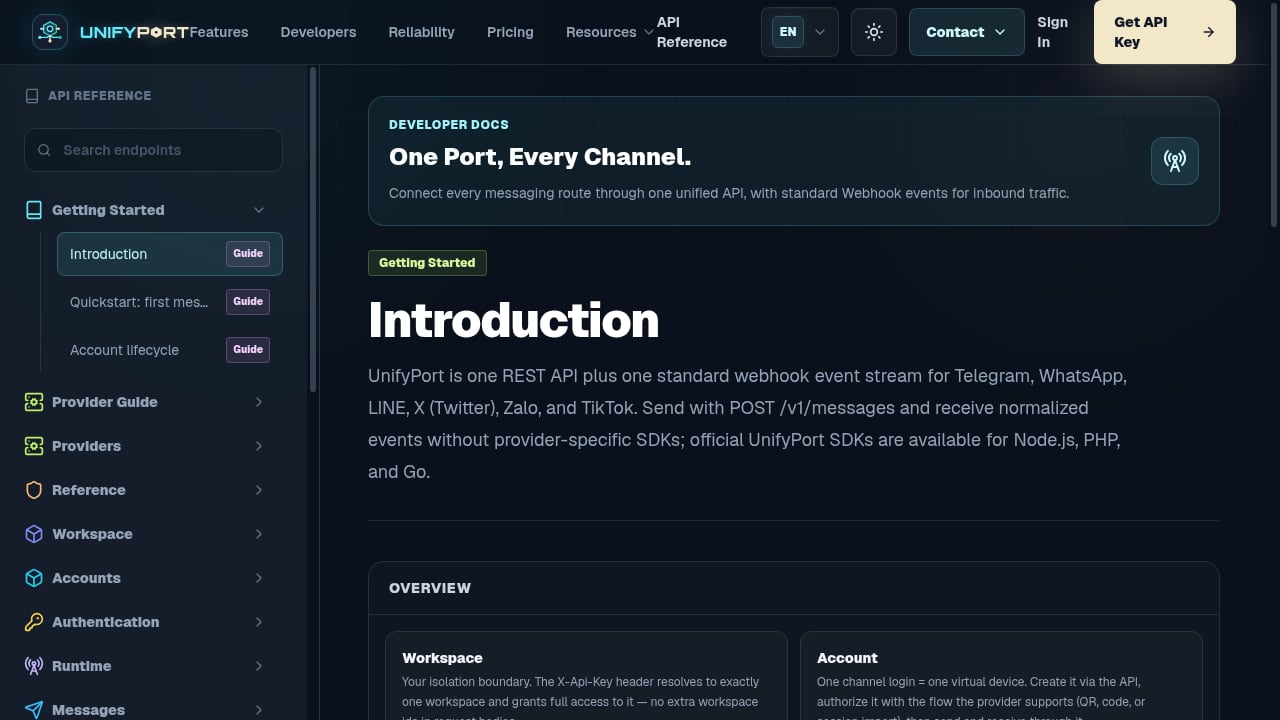
First viewport screenshot of API Reference — UnifyPort.
API Gateway and Normalization Layer
A well-designed digital platform exposes a clean, versioned API that hides internal complexity. For messaging platforms, this means translating provider-specific event formats into a standard event layer. When a message arrives from LINE, WhatsApp, or Telegram, the platform converts it into the same JSON structure so that downstream systems—CRMs, AI agents, notification engines—process it identically.
Webhook Control Plane
Real-time platforms rely on webhooks to push events to consumers. A webhook control plane manages endpoint registration, signature verification (often using HMAC-SHA256), automatic retries with exponential backoff, and subscription filtering. Without this, every consuming service must implement its own retry logic and security validation, which becomes unmaintainable at scale.
Rate Limiting and Failure Isolation
Production-grade platforms enforce rate limits to protect both upstream providers and downstream consumers. They also isolate failures so that an outage on one channel—say, Zalo experiencing downtime—does not cascade into failures for WhatsApp or Telegram messages. This failure isolation is essential for systems handling business-critical communications.
Workspace and Account Model
Multi-tenant platforms use workspaces for organizational isolation and accounts as virtual representations of individual channels or devices. A single workspace might manage five WhatsApp Business accounts, three Telegram bots, and two LINE channels, each with independent credentials and rate limits.
How Digital Platforms Support AI Agents and Automation
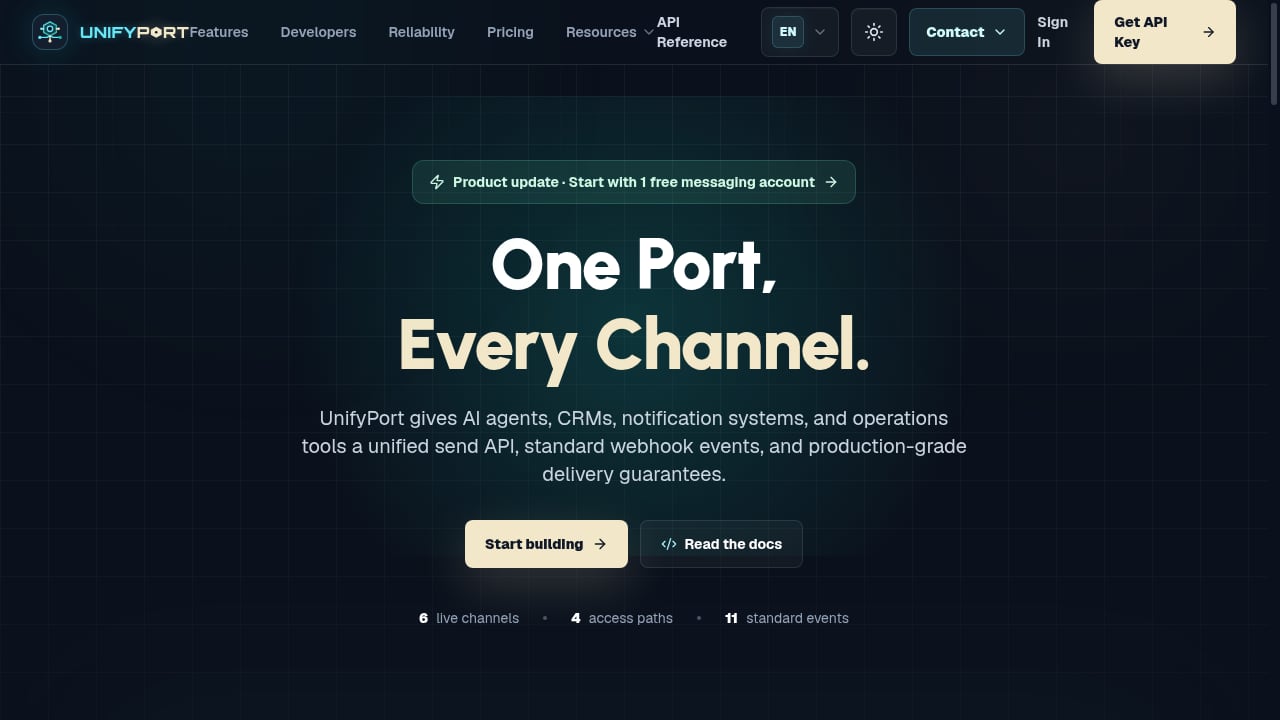
First viewport screenshot of UnifyPort — One Port, Every Channel..
AI agents need reliable, structured access to messaging channels. When an AI chatbot responds to a customer on WhatsApp, then follows up on Telegram, the underlying platform must deliver those messages idempotently—meaning the same message sent twice produces only one delivery. It must also normalize incoming events so the AI sees a consistent interface regardless of which channel the user chose.
This is where unified messaging infrastructure becomes a strategic enabler. Instead of building and maintaining separate integrations for each channel, AI agent developers connect once to a platform API and gain access to all supported channels. The platform handles provider-specific quirks, retries, and webhook signatures, letting the AI team focus on conversation design and model performance.
For a deeper look at how unified APIs connect AI chatbots to messaging channels, see our guide to the best AI chatbots in 2026.
Choosing a Digital Platform: Decision Framework
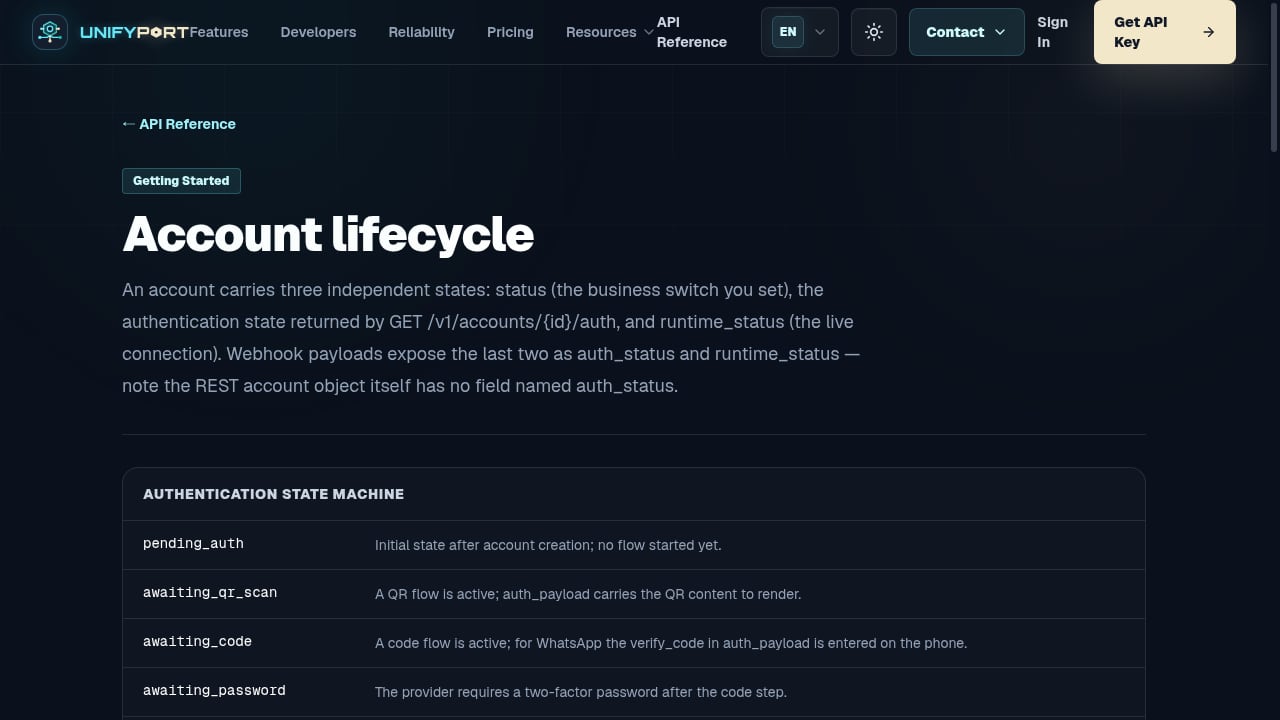
First viewport screenshot of Account lifecycle — API Reference — UnifyPort.
When evaluating a digital platform—whether it is a social network for marketing, a cloud provider for hosting, or a messaging API for product integration—consider these factors:
- Channel or participant coverage: Does the platform connect you to the users, services, or channels you need?
- API quality and documentation: Are the SDKs well-maintained? Is the webhook model clearly documented?
- Reliability guarantees: What are the uptime SLAs? How does the platform handle retries, idempotency, and rate limiting?
- Security model: Does it support API key authentication, HMAC signature verification, and encrypted payloads?
- Pricing transparency: Are costs predictable and graduated, or do they spike with usage?
- Extensibility: Can you add new channels or services without rewriting integration code?
For teams comparing messaging API providers specifically, our UnifyPort vs MessengerPeople vs CM.com comparison breaks down channel coverage, developer experience, and pricing across three major options.
Digital Platforms and the Future of Interconnected Software
The trend is clear: software is becoming more interconnected, not less. Businesses do not want to manage fifteen different vendor relationships to reach customers on fifteen different channels. They want one platform that abstracts the complexity and presents a unified interface.
This applies beyond messaging. Modern payment solutions follow the same pattern—unified APIs that normalize differences between payment processors, gateways, and merchant services. The same architectural principles (normalization, webhook management, failure isolation) appear across domains because they solve universal distributed systems challenges.
Related reading
- Recruitment Messaging Automation: A Practical Guide for 2026 - Learn how recruitment messaging automation unifies email, SMS, and chat apps to boost candidate engagement, reduce no-shows, and sync data with your ATS.
- How to Delete Your Telegram Account Permanently in 2026 - Step-by-step guide to permanently delete your Telegram account via browser, mobile, or auto-deletion. Learn what happens to chats, groups, and contacts before you deactivate.
Sources and further reading
- Digital platform - A digital platform is an online environment that facilitates interactions, transactions, and content sharing among users. These platforms often leverage technologies such as artificial intelligence to
- List of most popular social platforms - You deserve an explanation, so please don't skip this 1-minute read. It's Thursday, August 6, and you only had a small chance of seeing our message. This year, Wikipedia has seen fewer visitors and fewer new supporters, so your visit today means a lot. We hope that Wikipedia has given you at least $2.75 of knowledge recently. If everyone who finds Wikipedia useful gave $2.75, we'd hit our goal in a few hours.
- Social media and the internet - Social media are interactive technologies that facilitate the creation and sharing of information, ideas, interests, and other forms of expression through virtual communities and networks.
Frequently Asked Questions
What is the difference between a digital platform and a regular application?
A regular application serves a single purpose for a single user type. A digital platform creates a multi-sided environment where different participants—users, developers, advertisers, content creators—interact and derive mutual value. Platforms expose APIs and often enable third-party extensions.
How do unified messaging API platforms work?
They provide a single REST API that translates requests into provider-specific calls for each messaging channel. Incoming messages from any channel are normalized into a consistent JSON event format and delivered to your webhook endpoint. The platform manages authentication, rate limiting, retries, and signature verification for each provider.
Why is a webhook control plane important?
Without a control plane, every service that consumes webhooks must independently implement retry logic, signature validation, and subscription management. A centralized control plane handles these concerns once and provides observability into delivery status, failures, and latency across all registered endpoints.
Can AI agents use digital platforms directly?
Yes. AI agents typically integrate with messaging platforms through APIs. When those APIs are unified, the agent sees a single, consistent interface regardless of how many underlying channels are connected. This dramatically reduces integration complexity and lets AI teams iterate faster.
What security measures should a digital platform provide?
At minimum, API key authentication, HMAC-SHA256 webhook signature verification, TLS encryption for data in transit, and role-based access controls for workspace management. Production platforms should also support IP allowlisting and audit logging.
Conclusion
A digital platform is more than a website or an app—it is an environment that connects participants and systems at scale. Social platforms connect billions of people. Marketplace platforms connect buyers and sellers. Developer platforms connect software to fragmented external services through clean, normalized APIs.
For engineering teams building notification systems, CRMs, or AI agents, the right integration platform eliminates months of repetitive integration work. Instead of wrestling with each messaging provider's SDK, teams connect once and gain multi-channel reach with built-in reliability. As software ecosystems grow more complex, the platforms that successfully abstract that complexity will become essential infrastructure for the next generation of interconnected applications.