
Vonage API Developer Review: CPaaS Fit, Pricing & Limits
Evidence-based Vonage API Developer review: voice, video, Messages API, pricing signals, setup effort, limitations, and who it fits in 2026.
Vonage API Developer Review: A Practical CPaaS Evaluation
Vonage API Developer is the developer-facing arm of Vonage's communications platform: a portal of communication and network APIs, SDKs, and tooling for building voice, video, and multi-channel messaging into applications. This review examines what the platform actually offers, where it performs well, where it falls short, and how to decide whether it belongs in your stack. It is based on publicly available product documentation, third-party review aggregation, and reported user experiences.
What Vonage API Developer actually is
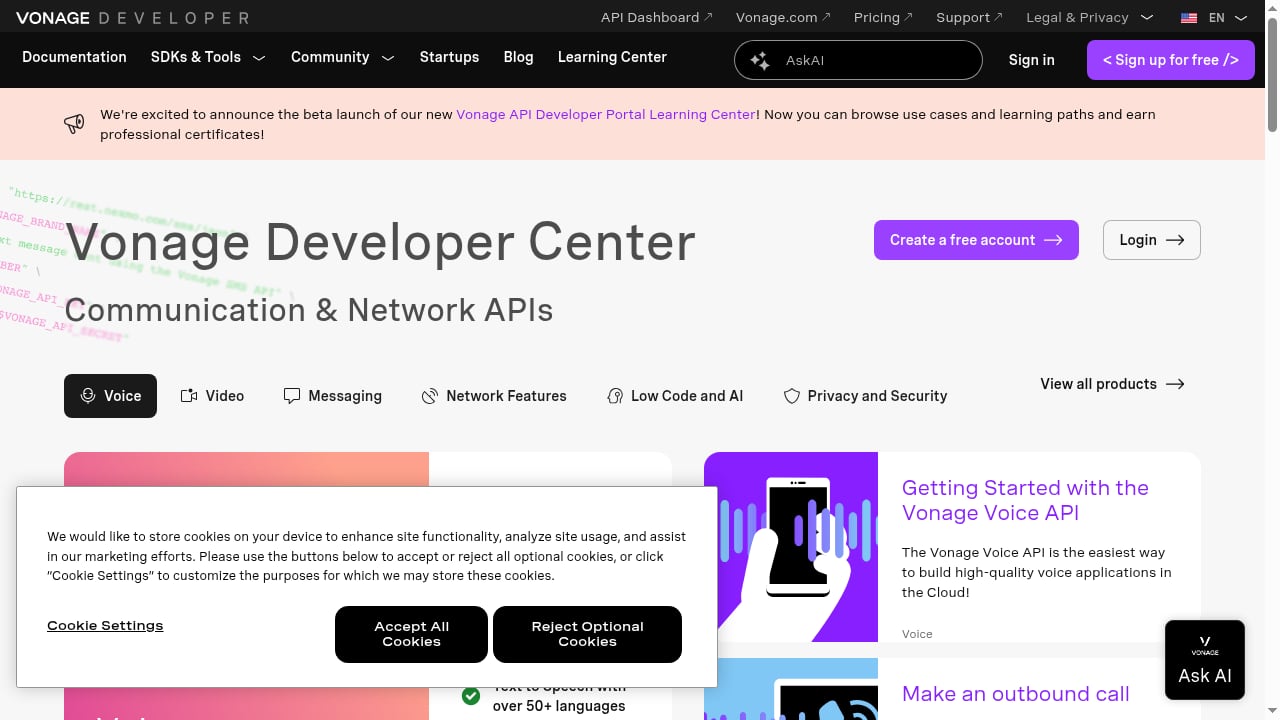
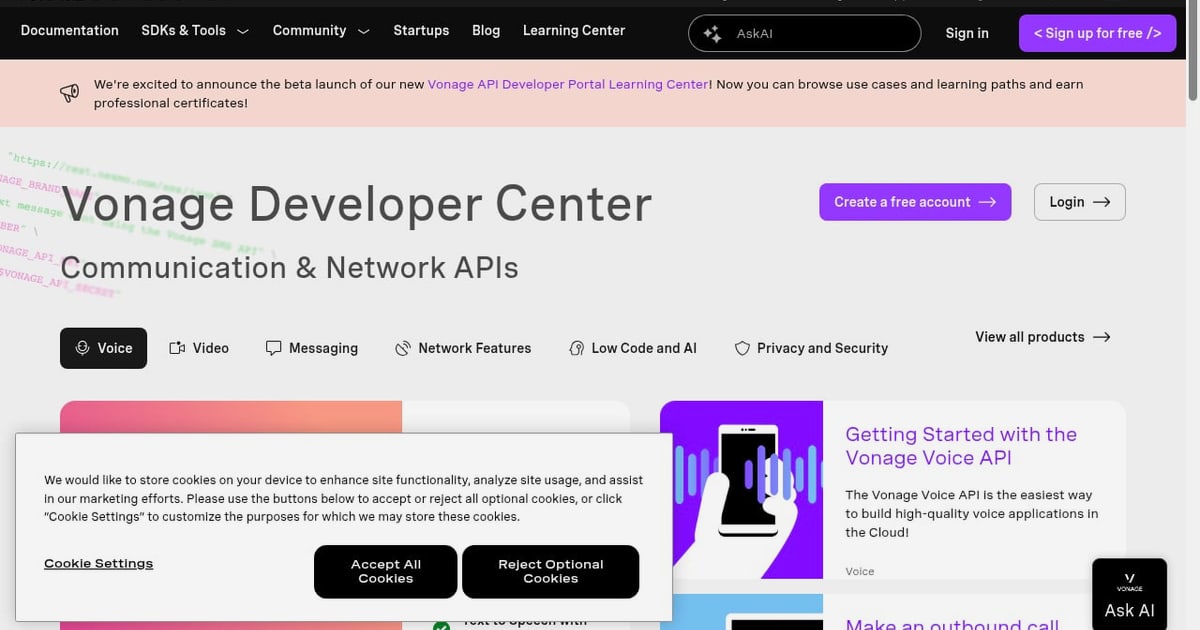
First viewport screenshot of Vonage API Developer.
It is not a single product. It is a collection of APIs and supporting resources:
- Voice API for IVRs, voice bots, and smart notifications, with speech-to-text and text-to-speech in 50+ languages.
- Video API for embedding real-time video into web and mobile apps.
- Messages API for unified multi-channel messaging across SMS, WhatsApp, Messenger, MMS, Email, Viber, and RCS.
- Network APIs and privacy/security features, plus low-code and AI tooling.
The portal itself includes API references, guides, code snippets, and a Learning Center with use cases, learning paths, and professional certificates. For teams already comfortable with REST APIs, this is a familiar model: you provision a number or channel, authenticate, and call endpoints.
Who Vonage API Developer is for
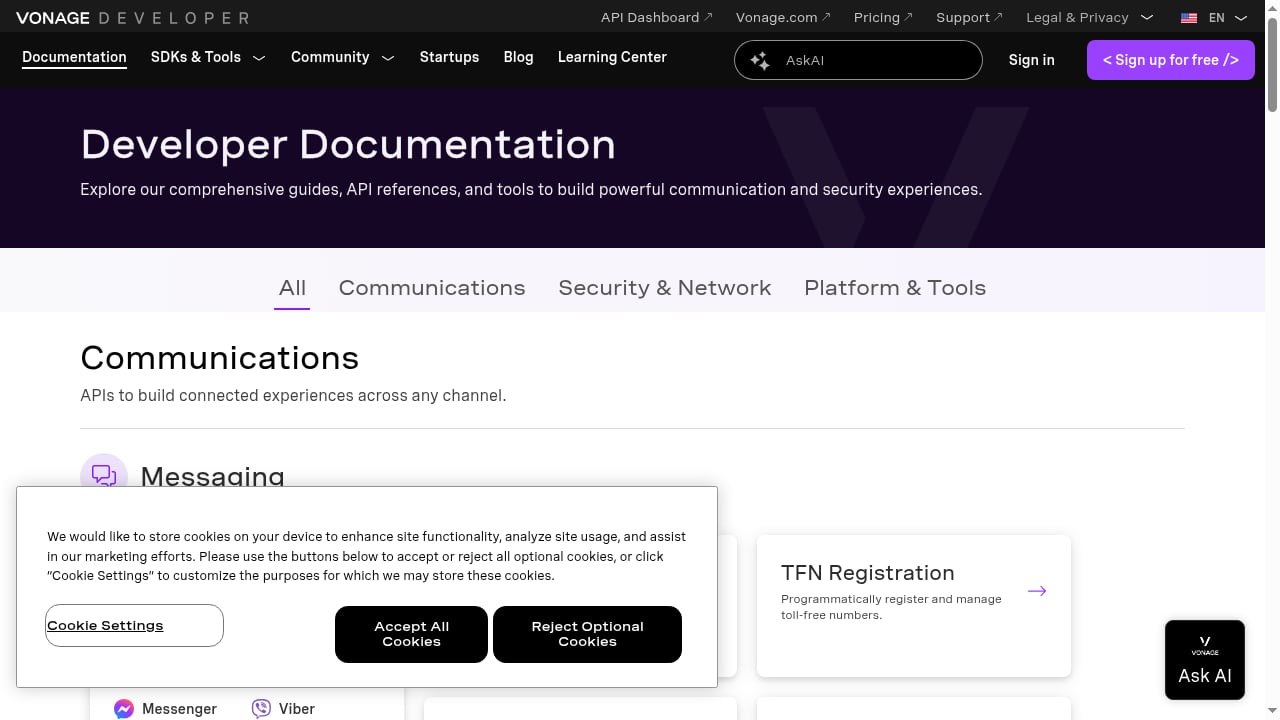
First viewport screenshot of Developer Documentation.
Strong fit
- Product and platform teams that need programmable voice and video alongside messaging, rather than messaging alone.
- Developers building IVRs, voice bots, or notification systems who want speech services in many languages without stitching together separate vendors.
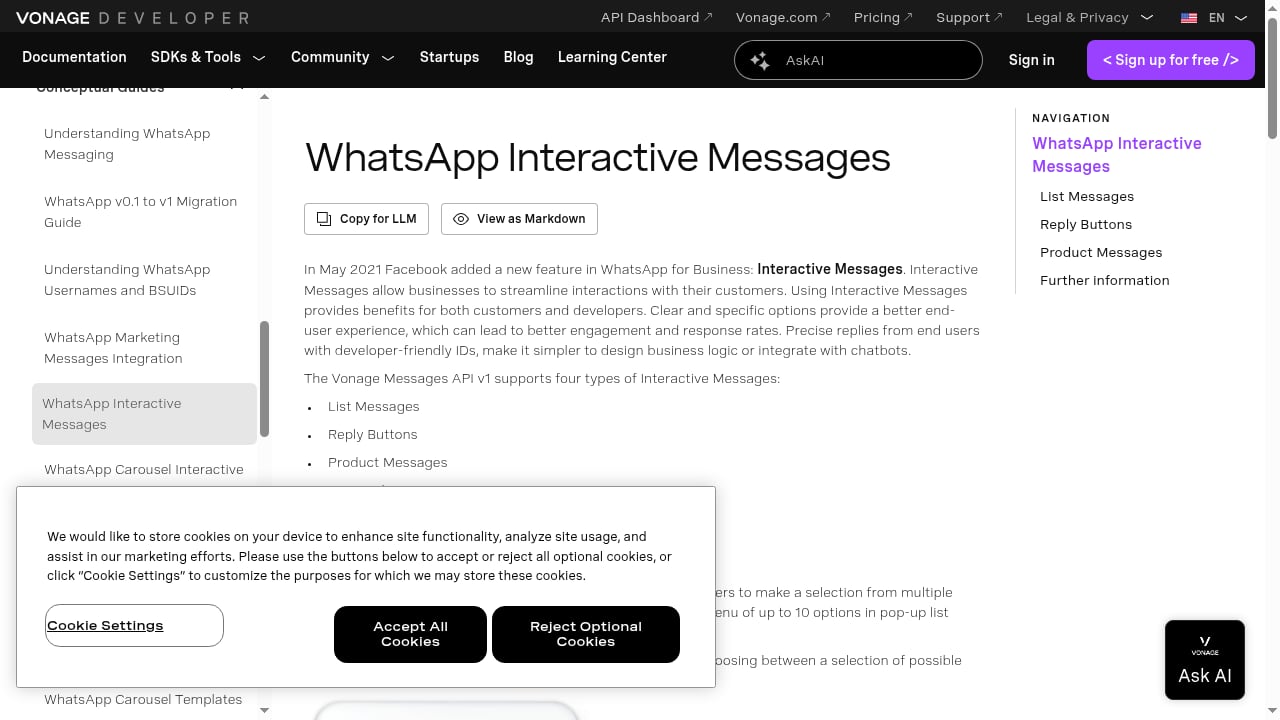
- Teams that need multi-channel messaging including WhatsApp interactive message types such as list, reply buttons, product, and carousel messages.
- Organizations that require compliance workflows like 10DLC and TFN registration, channel management, and signed webhooks.
- Teams migrating from Twilio or another CPaaS, since Vonage publishes migration guides.
Weaker fit
- Small businesses shopping for a phone system. Vonage Business Communications is a separate product line, and third-party reviews of that side of the business are notably more critical than reviews of the APIs. If you want a hosted PBX, this review is not the right lens.
- Teams that only need one messaging channel. A unified platform is harder to justify if you will never use voice, video, or multiple channels.
- Buyers who need predictable flat-rate pricing. Usage-based API pricing is flexible but harder to forecast.
Core capabilities in practice
First viewport screenshot of WhatsApp Interactive Messages API Guide | Messages API.
Voice API
The Voice API is the strongest differentiator for teams building interactive voice. You can create call control flows, connect to speech-to-text and text-to-speech, and support dozens of languages. Typical use cases include appointment reminders, payment confirmations, and automated support lines.
Video API
The Video API lets you embed live video sessions into applications. This competes with dedicated video platforms, so evaluate it on session quality, SDK coverage for your target platforms, and how much control you need over layout and recording.
Messages API
The Messages API is the piece most teams will touch first. It unifies multiple channels behind one interface, which reduces the integration work of adding WhatsApp, SMS, and others one at a time. Advanced WhatsApp message types are supported, which matters for commerce and support flows.
For a broader view of how unified messaging APIs compare with full CPaaS suites, see UnifyPort vs MSG91: Unified Messaging API or CPaaS Suite?.
Developer experience and learning resources
The documentation is consistently described as easy to follow in user reviews, and the platform is praised for being reliable and simple to integrate. The Learning Center adds structured paths and certificates, which helps teams onboard new engineers faster than raw API docs alone.
Strengths
- Reliable, well-documented APIs. Reviewers repeatedly cite reliability and clear documentation as reasons they stay.
- Breadth in one place. Voice, video, messaging, and network APIs under one account reduces vendor sprawl.
- Multi-channel messaging depth. SMS, WhatsApp, Messenger, MMS, Email, Viber, and RCS coverage is broad, with interactive WhatsApp message support.
- Compliance tooling. 10DLC and TFN registration, channel manager, and signed webhooks address real production concerns.
- Migration support. Published guides lower switching costs from competitors like Twilio.
- Corporate backing. Ericsson ownership provides stability, and reporting indicates the parent is prioritizing CPaaS and network APIs.
Limitations and risks
- Usage-based pricing is hard to forecast. Costs scale with traffic, and messaging rates vary by channel and destination.
- The business communications side has a poor reputation in third-party reviews. A 2022 FTC action over cancellation practices resulted in a $100 million penalty and refunds, and the injunction still applies. That history concerns buyers evaluating the broader Vonage brand, even though it relates to the phone system rather than the APIs.
- Feature fragmentation across tiers. Some capabilities sit behind higher plans or add-ons, so the entry price is not the full price.
- Integration gaps. If your tools are not in the marketplace, expect custom API work.
- Channel-specific rules still apply. WhatsApp, RCS, and 10DLC each carry their own approval and compliance overhead, regardless of how clean the API is.
Pricing signals
Vonage API products are priced on usage, and many offer a way to test before committing. That means:
- You pay for what you consume, which suits variable or early-stage traffic.
- Forecasting requires modeling message volume, channel mix, and voice minutes.
- Enterprise agreements may change effective rates, so list pricing is only a starting point.
If you are comparing platforms on total cost, weigh the cost of engineering time as well. A cheaper per-message rate can be more expensive overall if the API forces you to build channel-specific logic yourself. For a structured comparison framework, see Top 10 Omnichannel CPaaS Products 2026: Ranked Review.
Setup and onboarding
A typical path looks like this:
- Create an account and obtain API credentials.
- Provision a phone number or connect a messaging channel.
- Complete any required registration, such as 10DLC or TFN for US messaging.
- Configure webhooks, ideally with signature verification enabled.
- Send a test message or place a test call.
- Move to production with monitoring and retry handling.
Most of the friction is not in the API call itself. It is in channel approval, compliance registration, and webhook reliability. Teams that plan for those steps will onboard faster.
How it compares to alternatives
Vonage API Developer competes with Twilio and other CPaaS providers on breadth, and with focused messaging APIs on simplicity. The honest trade-off:
- Choose Vonage when you need voice, video, and multi-channel messaging from one vendor with strong documentation and compliance tooling.
- Choose a focused unified messaging API when your problem is specifically multi-channel messaging and you want less platform surface area. A comparison like UnifyPort vs SocialAPI.ai vs Unipile: 2026 API Comparison can help frame that decision.
- Choose a regional CPaaS suite when local compliance and support matter more than global channel coverage.
Decision criteria
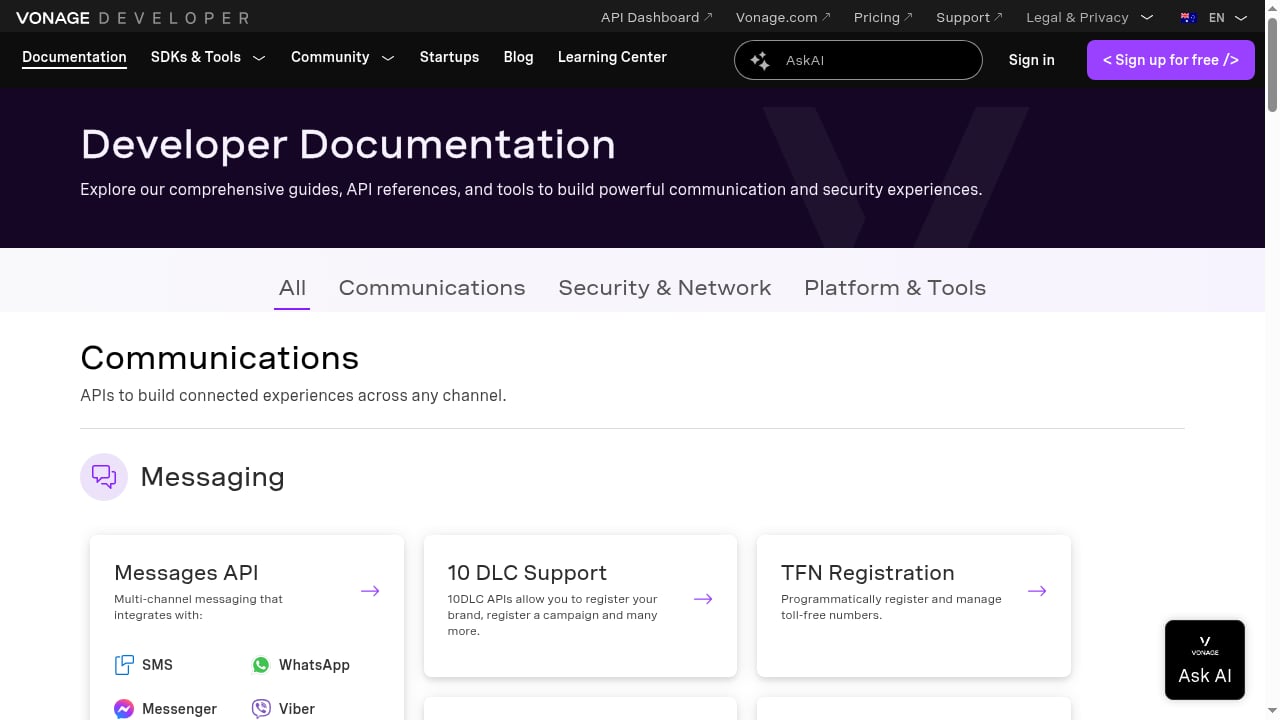
First viewport screenshot of Developer Documentation.
Before committing, answer these questions:
- Do you need voice or video, or only messaging?
- Which channels are non-negotiable, and are they all supported with the message types you need?
- Can you absorb usage-based cost variability?
- Do you have the engineering capacity to handle channel approvals and webhook security?
- Does the migration path from your current provider justify the switch?
- Are you evaluating the API platform specifically, or the broader Vonage brand?
If you answer yes to needing multiple communication modalities and you have engineering resources, Vonage API Developer is a credible choice. If your need is narrow, a smaller specialist may serve you better.
Related reading
- One REST API and a Native MCP Server for Messaging - How a single REST API plus a native MCP server lets AI agents and apps send WhatsApp, Telegram, LINE, TikTok, Zalo and X messages through one endpoint.
- How to Use UnifyPort with Zendesk: Unified Messaging Setup - Connect UnifyPort's unified messaging API to Zendesk so WhatsApp, Telegram, LINE, TikTok, Zalo and X conversations become routed support tickets.
Sources and further reading
- Vonage Communications APIs Reviews & Product Details - G2 - I like that Vonage APIs are reliable and simple to integrate. The documentation is easy to follow and the platform handle calls and messages very well without ...
- Vonage Review – The Good and Bad in 2026 - Vonage offers a range of business communications tools. Learn what we like and don't like about it in our in-depth review, today.
- Vonage Communications APIs Pros and Cons | User Likes & Dislikes - I like that Vonage APIs are reliable and simple to integrate. The documentation is easy to follow and the platform handle calls and messages very well without ...
FAQ
Is Vonage API Developer the same as Vonage Business Communications?
No. Vonage API Developer covers programmable APIs for voice, video, and messaging. Vonage Business Communications is a separate hosted phone and contact center product, and third-party reviews of that line are more critical.
Does Vonage support WhatsApp interactive messages?
Yes. The Messages API supports advanced WhatsApp message types including list, reply buttons, product, and carousel messages.
How is Vonage API pricing structured?
It is usage-based, so you pay for the traffic you generate. Many products allow testing before you commit to production volume.
Can I migrate from Twilio to Vonage?
Vonage publishes migration guides, which reduces the effort of moving existing integrations.
What are the main risks?
Cost forecasting, channel-specific compliance overhead, feature fragmentation across tiers, and brand concerns tied to the separate business communications line.
Conclusion
Vonage API Developer is a mature, well-documented CPaaS platform with genuine strengths in voice, video, and multi-channel messaging. It fits product teams that need breadth and are prepared to manage usage-based costs and channel compliance. It fits less well for buyers who only need one messaging channel or who want flat, predictable pricing. Evaluate it against your channel list, your engineering capacity, and your tolerance for variable spend, then test with real traffic before committing.