
UnifyPort vs Linq vs Sinch: Messaging API Comparison 2026
Compare UnifyPort, Linq, and Sinch on channels, APIs, pricing, and use cases. Find the right messaging platform for your team in 2026.
UnifyPort vs Linq vs Sinch: Which Messaging API Fits Your Stack?
Choosing a messaging API is rarely a simple feature checklist. Linq, Sinch, and UnifyPort each solve a different core problem: Linq focuses on native iMessage and RCS for AI agents, Sinch provides global carrier-grade infrastructure, and UnifyPort unifies social messaging channels like WhatsApp, Telegram, LINE, TikTok, Zalo, and X behind one REST API. This comparison breaks down where each platform genuinely wins, so you can match the tool to your product rather than the other way around.
Quick comparison at a glance
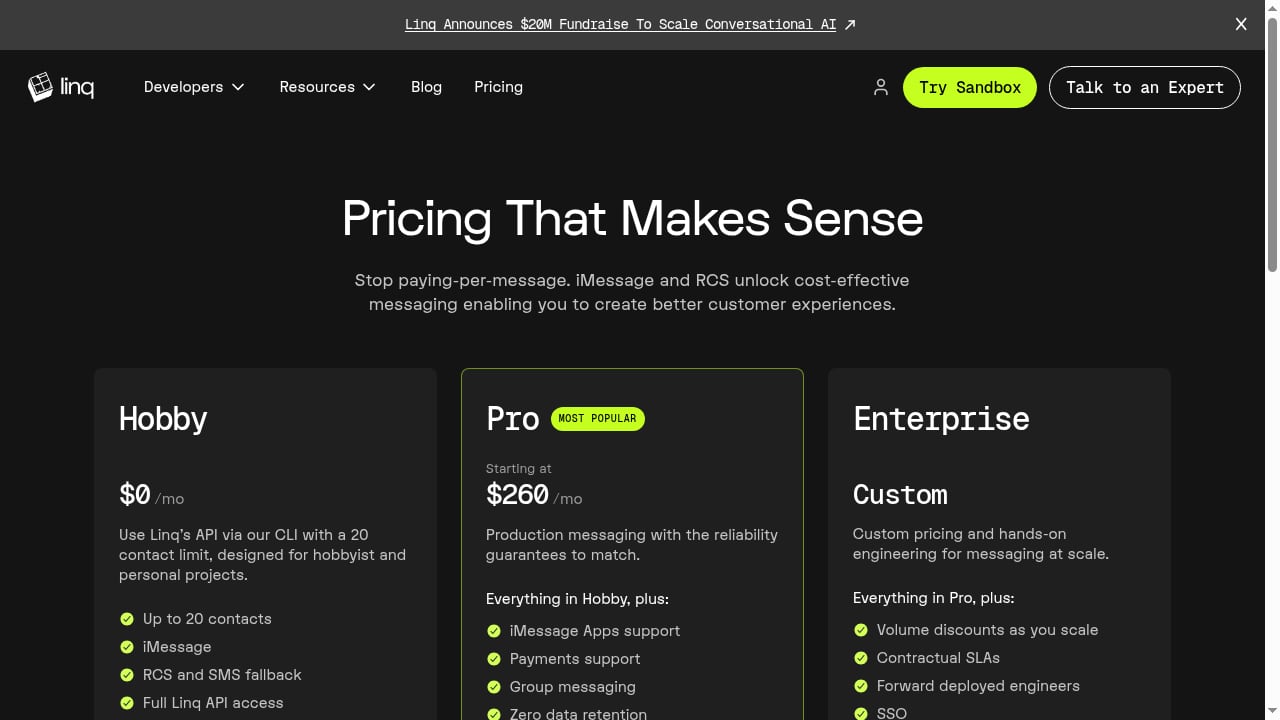
First viewport screenshot of linqapp.com.
| Criterion | UnifyPort | Linq | Sinch |
|---|---|---|---|
| Primary focus | Unified social messaging API | iMessage, RCS, SMS, Voice for AI agents | Enterprise CPaaS (messaging, voice, email, verification) |
| Channel coverage | WhatsApp, Telegram, LINE, TikTok, Zalo, X | iMessage, RCS, SMS, Voice | SMS, RCS, WhatsApp, voice, email, verification |
| API model | Single REST API with normalized webhooks | REST API for native messaging | Multiple APIs plus ready-made applications |
| SDKs | Node.js, PHP, Go, Python | Not specified in available context | Broad developer tooling |
| Pricing model | Graduated monthly messaging-account costs in USD | Free Hobby, Pro from $260/mo, custom Enterprise | Pay-as-you-go with volume discounts |
| Best fit | Teams building across Asia-Pacific social channels | Teams building AI agents on iMessage/RCS | Enterprises needing global scale and compliance |
Where Linq shines
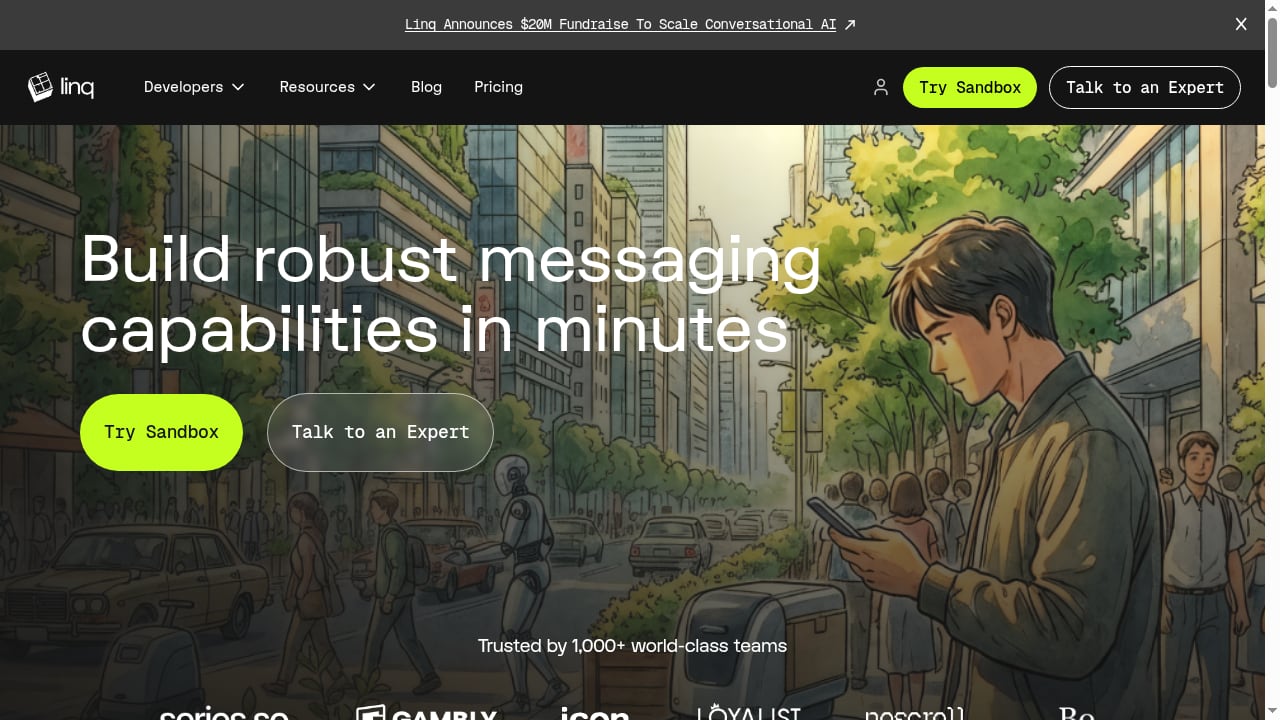
First viewport screenshot of linqapp.com.
Linq has carved out a clear niche: it is the only enterprise-grade iMessage API with SOC 2 Type II certification, according to its own positioning, and it is trusted by over 1,000 teams including Lindy, Clera, and Town. For developers building AI agents that need to reach users where they already text, that matters.
Linq's strengths are concrete:
- Native iMessage and RCS support with rich media, emoji reactions, voice notes, typing indicators, group chats, and @mentions.
- Reliable delivery at scale with 99.95% uptime and under 120ms latency.
- Cost-effective messaging without per-message fees, plus a free Hobby plan and Pro starting at $260/mo.
- Compliance and privacy through SOC 2 Type II certification and zero data retention.
- Ecosystem integrations with CRMs like HubSpot and payments support.
If your product is an AI assistant, a concierge bot, or a customer-facing agent that lives in the user's native texting app, Linq is a strong fit. Its focus on iMessage and RCS means it is less suited to teams that need LINE, Zalo, or TikTok coverage.
Where Sinch shines
Sinch is a communications platform as a service built for enterprise scale. It positions itself as "the communications infrastructure the AI era runs on," serving over 200,000 customers, including 8 of the 10 largest tech companies, and reporting 900B+ messages sent per year with direct carrier connections across 190+ countries.
Sinch's strengths are equally concrete:
- Global carrier infrastructure with 600+ direct carrier connections across 60+ countries and roughly 12,800 interconnections, which the company says reduces latency and improves deliverability.
- Broad channel coverage across SMS, RCS, WhatsApp, voice, email, and verification.
- Enterprise compliance with ISO 27001 and SOC 2 Type II certifications and regulatory expertise in 60+ countries.
- Ready-made applications for marketing, notifications, identity and security, and customer care, alongside APIs for builders.
- AI-era tooling including Agent Builder, Functions, Skills, an MCP server, and Voice Relay.
Sinch is the right choice when you need carrier-grade reliability, global reach, and a single vendor for voice, email, and verification alongside messaging. Its pay-as-you-go pricing with volume discounts scales with enterprise volume, and its serverless Functions runtime is priced per compute-hour (first compute-hour free, then $0.10/compute-hour).
Where UnifyPort fits
First viewport screenshot of Tomo: How a Personalized AI for Accountability Scaled to Millions of Messages | Linq Blog.
UnifyPort takes a different approach: instead of competing on carrier infrastructure or native iMessage, it unifies the social messaging channels that dominate Asia-Pacific and global social engagement. Developers connect WhatsApp, Telegram, LINE, TikTok, Zalo, and X through a single REST API and a standardized webhook event stream.
That means one POST /v1/messages call sends a message, and normalized events such as message.received arrive with provider, account, conversation, sender, and message data in a consistent schema. Teams avoid building and maintaining a separate integration for each social channel.
UnifyPort's supported capabilities include:
- Two-way messaging with text and media captions, mentions, message pinning, revocation, and emoji reactions.
- Account lifecycle management including QR-code, code, session, and Passkey authentication flows.
- Official SDKs for Node.js, PHP, Go, and Python.
- Transparent pricing with graduated monthly messaging-account costs in USD, unified API access, and free messaging accounts in every workspace, plus wallet-mode and quota-based account billing operations.
For teams building customer support, notification, and engagement workflows across LINE, Zalo, TikTok, and other social channels, UnifyPort removes the per-platform integration rebuild that otherwise consumes engineering time. Its blog covers practical channel-specific webhook issues, WhatsApp voice calling in private beta, and TikTok comment replies, which reflects its focus on real integration problems.
How to choose: a decision framework
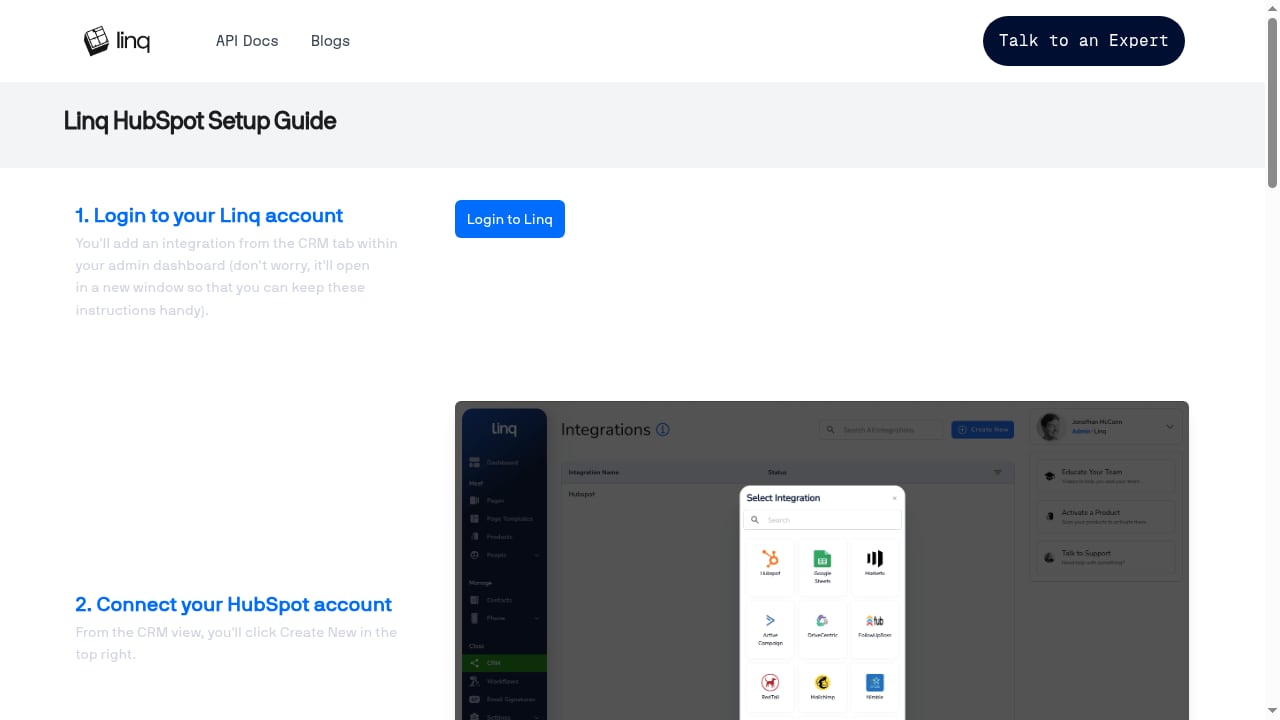
First viewport screenshot of linqapp.com.
Use the following questions to narrow the field:
- Which channels do your users actually use? If your audience lives in iMessage and RCS, Linq is purpose-built for that. If you need LINE, Zalo, TikTok, or X, UnifyPort covers those channels through one API. If you need SMS, RCS, WhatsApp, voice, email, and verification from a single enterprise vendor, Sinch is the broadest option.
- What is your primary use case? AI agents and conversational bots on native texting favor Linch. Global enterprise notifications, marketing, and identity verification favor Sinch. Cross-channel social engagement and support workflows favor UnifyPort.
- How much integration work can you absorb? A unified API with normalized webhooks reduces per-channel maintenance. A CPaaS with multiple APIs offers more control but requires more integration effort.
- What does pricing look like at your volume? Linq's flat monthly tiers suit predictable agent workloads. Sinch's pay-as-you-go model scales with volume and offers discounts. UnifyPort's graduated monthly messaging-account costs are transparent and include free accounts in every workspace.
- What compliance and data residency requirements apply? Sinch and Linq both hold SOC 2 Type II certification; Sinch adds ISO 27001 and regulatory expertise across 60+ countries. Match certifications to your industry and markets.
For a broader view of how these platforms stack up against other options, see our Top 10 CPaaS Products 2026 ranking and our UnifyPort vs Sinch vs MessengerPeople comparison.
Practical examples
Example 1: AI agent on iMessage. A startup builds a personal assistant that users text from their iPhones. Linq's native iMessage support, typing indicators, and group chat features make it the natural choice, and its SOC 2 Type II certification satisfies enterprise buyers.
Example 2: Global notification system. A financial services company needs to send transaction alerts over SMS and RCS, verify identities, and route support calls. Sinch's direct carrier connections, verification APIs, and 190+ country coverage fit the requirement, and its compliance certifications support regulated industries.
Example 3: Social commerce support desk. A retailer in Southeast Asia handles customer questions on LINE, Zalo, and TikTok. Instead of maintaining three integrations, the team uses UnifyPort's single API and normalized webhook stream to route all conversations into one support workflow. Our guide to journey builder concepts for messaging APIs shows how to orchestrate that kind of cross-channel flow.
Related reading
- SocialAPI.ai Review: Unified Social Media API for AI Agents - Evidence-based SocialAPI.ai review: 13-platform unified social API, native MCP server, setup, pricing signals, limitations, and who should use it.
Sources and further reading
- The 10 Best RCS Business Messaging Providers in the US (2026 Comparison) - Compare the 10 best RCS business messaging providers for US brands, from SimplyRCS to Twilio, Sinch and Telnyx: pricing, carrier approval, support and where each wins.
- Enterprise communications infrastructure: SMS, RCS, Voice, Email | Sinch - Sinch is an enterprise communications platform built for AI agents and global scale. 600+ direct carrier connections across 60+ countries, and native SMS, RCS, WhatsApp, voice, email, and verification.
- How to evaluate enterprise voice and SIP trunking providers: A 7-criteria scorecard - Compare enterprise voice and SIP trunking providers with a weighted scorecard covering reliability, security, cost, scale, support, and more.
FAQ
Is UnifyPort a replacement for Sinch?
Not universally. UnifyPort focuses on unified social messaging channels such as WhatsApp, Telegram, LINE, TikTok, Zalo, and X. Sinch provides broader CPaaS infrastructure including SMS, RCS, voice, email, and verification with direct carrier connections. Many teams use a CPaaS for carrier-grade SMS and a unified API for social channels.
Does Linq support WhatsApp or LINE?
Based on available product information, Linq focuses on native iMessage, RCS, SMS, and Voice. It does not list WhatsApp, LINE, Zalo, or TikTok among its channels. If those channels are central to your product, UnifyPort is the better fit.
Which platform is best for AI agents?
Linq is explicitly positioned for AI agents that communicate over native texting, with features like typing indicators and group chats. Sinch offers Agent Builder, an MCP server, and Voice Relay for agentic use cases. UnifyPort supports two-way messaging and normalized events that AI workflows can consume across social channels.
How does pricing compare?
Linq offers a free Hobby plan, Pro starting at $260/mo, and custom Enterprise plans without per-message fees. Sinch uses pay-as-you-go pricing with volume discounts plus a serverless Functions runtime at $0.10/compute-hour after the first free hour. UnifyPort uses graduated monthly messaging-account costs in USD with free messaging accounts in every workspace.
Can I use more than one platform together?
Yes. A common pattern is to use Sinch or another CPaaS for SMS and voice, Linq for iMessage and RCS agent experiences, and UnifyPort for social channels like LINE, Zalo, and TikTok. The right combination depends on your channel mix and compliance requirements.
Conclusion
Linq, Sinch, and UnifyPort are not direct substitutes so much as different tools for different jobs. Linq wins on native iMessage and RCS for AI agents. Sinch wins on global carrier infrastructure, compliance, and multichannel CPaaS breadth. UnifyPort wins on unifying Asia-Pacific social channels behind one REST API with normalized webhooks and transparent account-based pricing. Start with your channel mix and use case, then evaluate pricing and compliance against your volume and markets. For a deeper look at how UnifyPort compares with other platforms, explore our UnifyPort vs 8x8 Developer Portal comparison.