
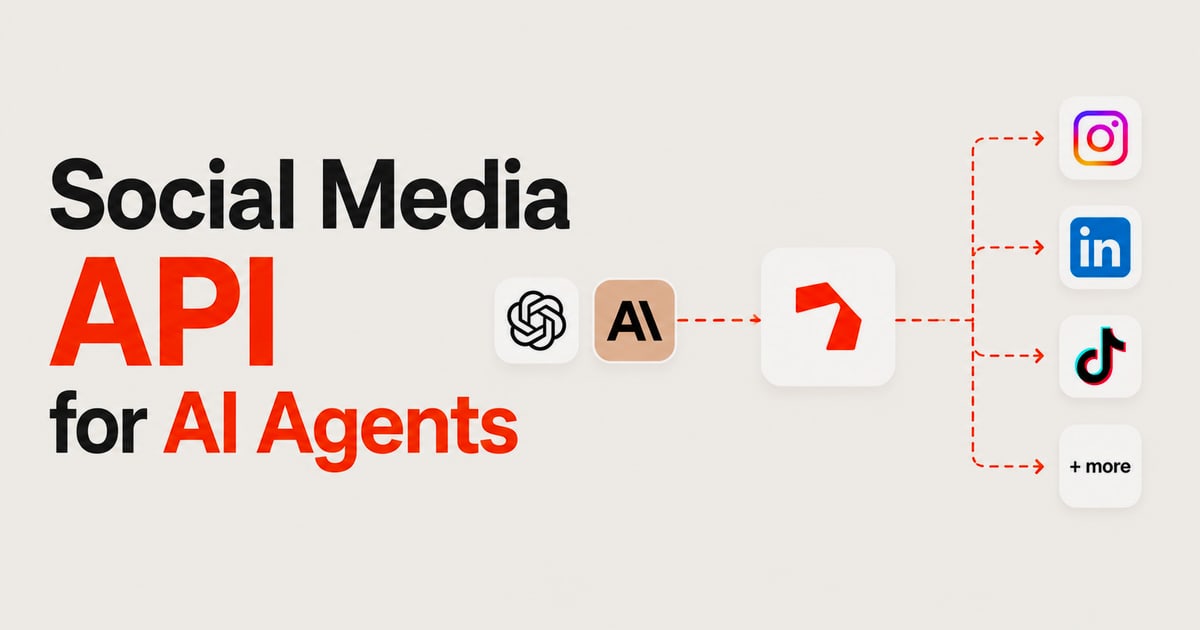
SocialAPI.ai Review: Unified Social Media API for AI Agents
Evidence-based SocialAPI.ai review: 13-platform unified social API, native MCP server, setup, pricing signals, limitations, and who should use it.
SocialAPI.ai Review: A Unified Social Media API Built for AI Agents
AI agents can draft a caption in seconds, but publishing it and answering the resulting comments, DMs, mentions, and reviews is where most stacks fall apart. Each social platform has its own authentication flow, payload shape, and rate limits, and most agent frameworks were not designed to juggle a dozen of them. SocialAPI.ai pitches a single REST API plus a native MCP server to close that gap across 13 platforms. This review examines what that actually means in practice: who it fits, where it falls short, and how to decide whether it belongs in your stack.
What SocialAPI.ai actually offers
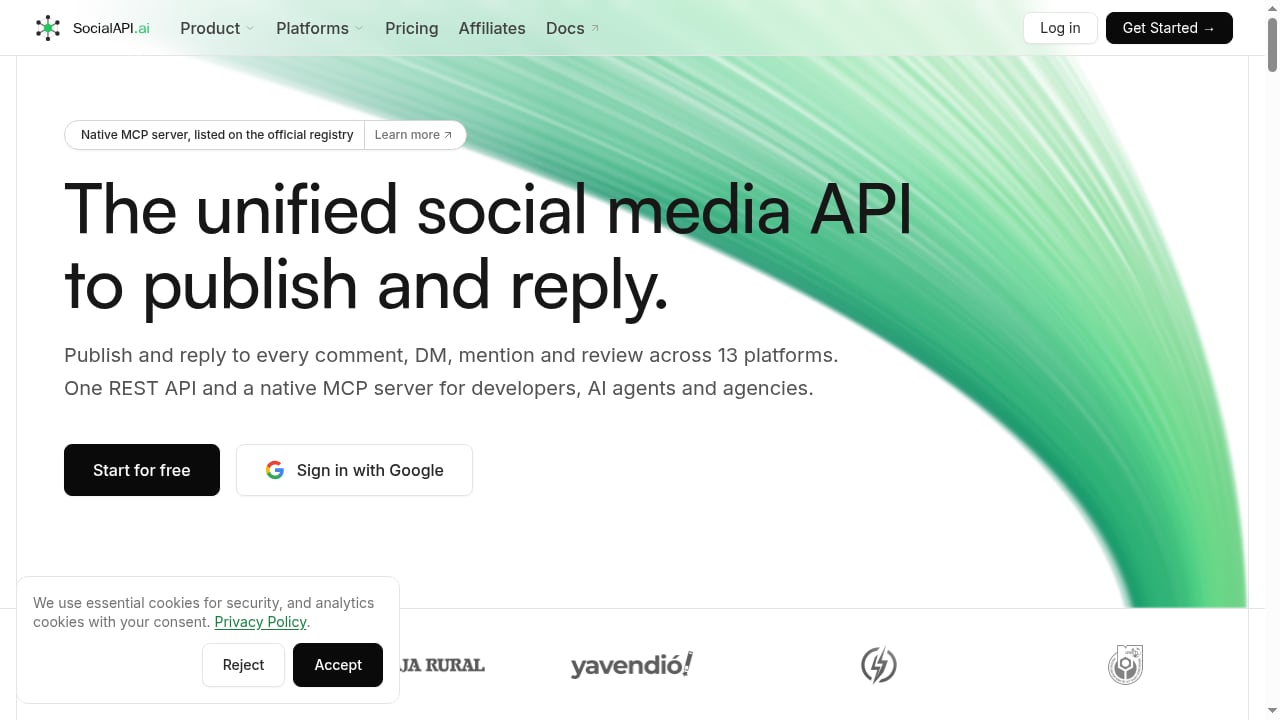
First viewport screenshot of social-api.ai.
At its core, SocialAPI.ai is a social media API platform with two surfaces:
- A unified REST API for publishing posts and responding to comments, direct messages, mentions, and reviews across 13 social platforms using one schema.
- A native MCP server that exposes those same capabilities as tools an AI agent can call directly, so a model can read incoming interactions and reply without a custom integration layer per network.
The positioning is narrower and more agent-centric than general-purpose social scheduling tools. The emphasis is on reading and responding to interactions, not just broadcasting content. That matters because engagement workflows (replying to a review, answering a DM, acknowledging a mention) are exactly where per-platform API fragmentation hurts most.
A free tier with no credit card required lowers the cost of a hands-on evaluation, which is the right way to judge any API product.
Who SocialAPI.ai is built for
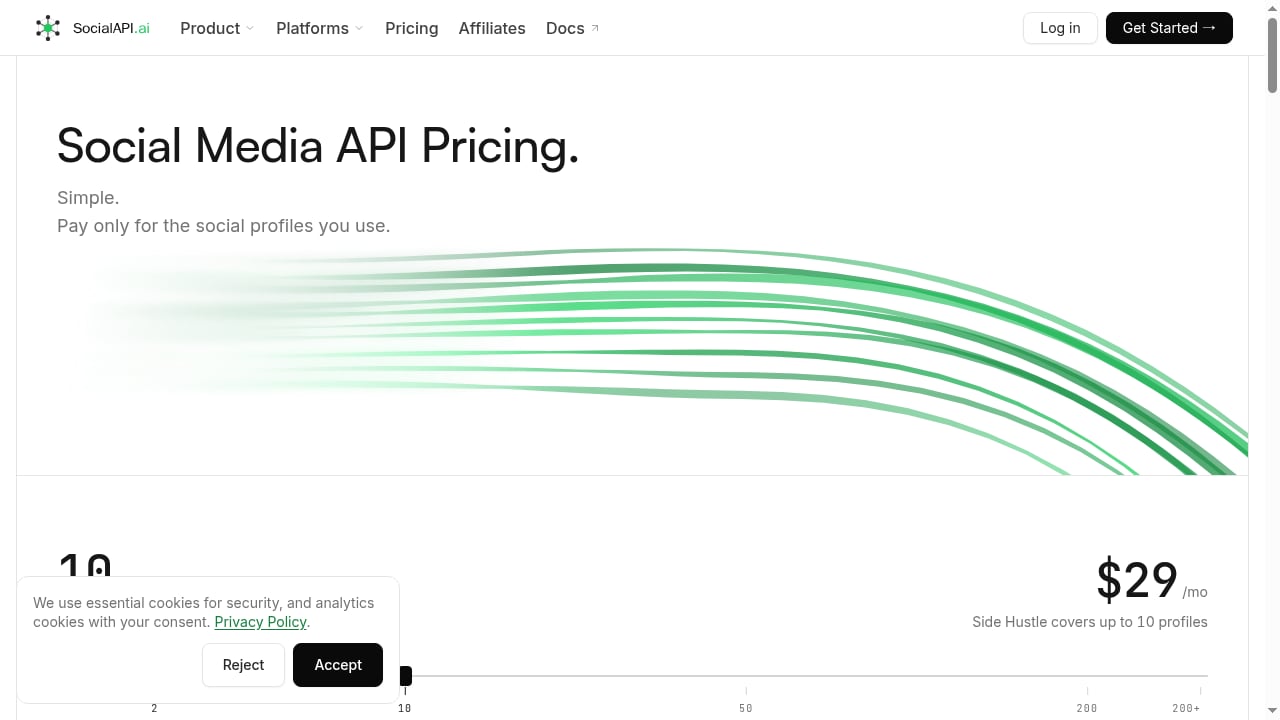
First viewport screenshot of social-api.ai.
AI agent and automation builders
If you are building an agent that monitors brand mentions, drafts replies, or handles first-line customer support on social channels, the MCP server is the headline feature. Instead of writing and maintaining 13 connectors, you expose one tool surface to your agent runtime. The agent's context window and token budget benefit too, because a single normalized schema replaces a dozen differently shaped API responses.
SaaS products adding social engagement
Teams embedding social publishing or an engagement inbox into their own product can use the REST API as a backend. The value is time-to-market: one integration, one auth model, one set of response objects to normalize in your database.
Small teams without platform-specific expertise
Managing app review, OAuth scopes, and permission models for Meta, LinkedIn, and Google separately is a real operational burden. A unified layer absorbs much of that, though as the comparison below shows, you should verify exactly how account authorization works before committing.
Practical use cases
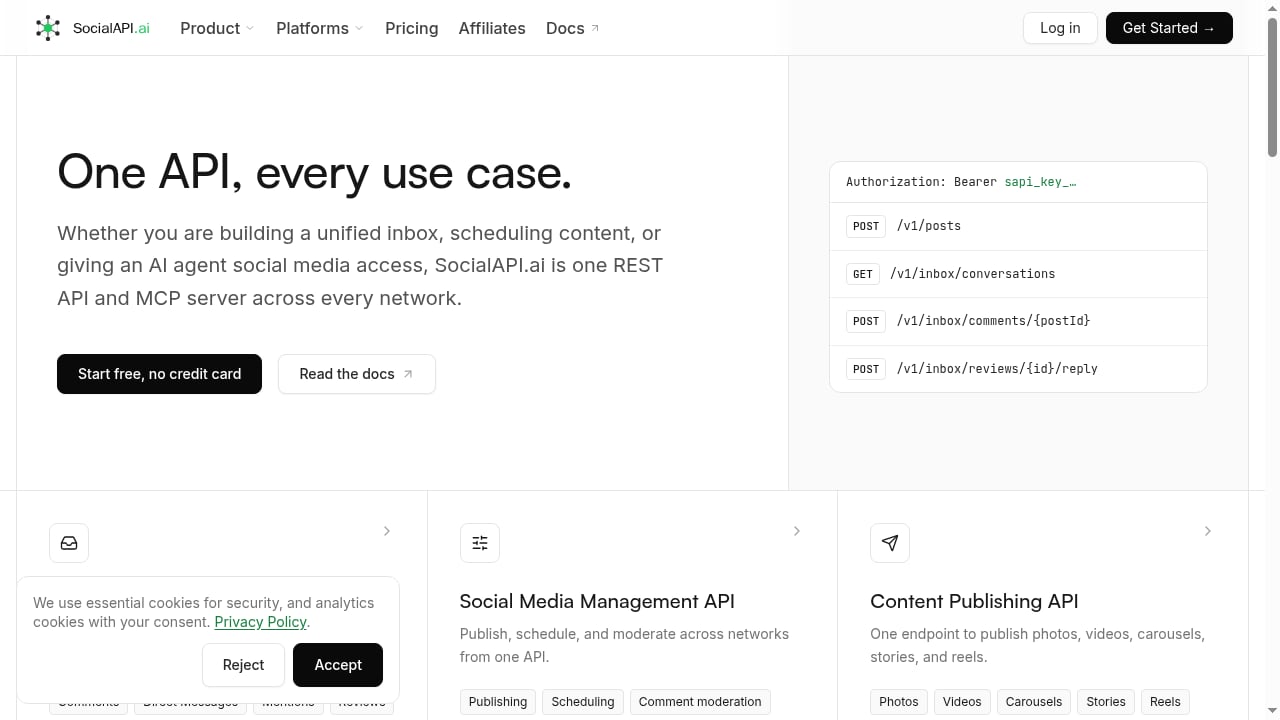
First viewport screenshot of social-api.ai.
- Social listening with agent triage. An agent polls mentions and comments, classifies sentiment, and escalates only what needs a human. One API call pattern covers every network.
- Review response automation. For local businesses or marketplaces, an agent can draft and post replies to reviews, with a human approval step before publishing.
- Unified engagement inbox. Route comments and DMs from all platforms into one queue with a consistent data model, then reply from the same place.
- Publishing pipelines. Schedule and publish posts across networks from a single content record, rather than maintaining per-platform formatters.
If your roadmap also includes messaging channels beyond social (WhatsApp, Telegram, LINE), it is worth understanding how unified API patterns generalize. Our guide to journey builder concepts for messaging APIs covers how these abstractions map to multi-step engagement flows.
Strengths
- Genuine schema unification. The core promise, one request shape for 13 platforms, is the main reason to adopt a layer like this. It reduces integration code and makes agent tooling simpler and cheaper to run.
- Native MCP support. Many API vendors bolt on agent support later. Here the MCP server is a first-class surface, which shortens the path from "agent idea" to "agent that can act."
- Engagement, not just publishing. Covering comments, DMs, mentions, and reviews in the same API is more useful than a publish-only tool for support and community workflows.
- Low-friction evaluation. A free tier without a credit card lets you test real workflows before any commercial commitment.
- Broad but bounded scope. Thirteen platforms is enough for most consumer brands without the maintenance overhead of a sprawling, shallow connector catalog.
Limitations and open questions
No review is credible without caveats. Based on the available evidence, these are the areas to probe during a trial:
- Thin independent review coverage. Public customer feedback is limited, so claims about reliability at scale are hard to verify externally. Treat vendor documentation as a starting point, not proof.
- Authorization model needs checking. In the broader market, some unified social APIs route customer connections through the vendor's own OAuth app, which can mean the vendor's name appears on consent screens and posts. Confirm whether SocialAPI.ai supports bring-your-own app credentials and token export before you build a multi-tenant product on it.
- Depth per platform varies. Supporting a network does not guarantee support for every operation. Verify the specific actions you need, such as Instagram Reels, LinkedIn organization posts, or Google Business Profile review replies.
- Ads coverage is unclear. The product context emphasizes organic publishing and engagement. If you need campaign creation, budgets, and ad reporting, validate that separately; it is a different permission and data model.
- Webhooks and event freshness. For agent workflows, knowing when something changed matters as much as reading it. Ask about signed webhooks, retry behavior, and duplicate protection.
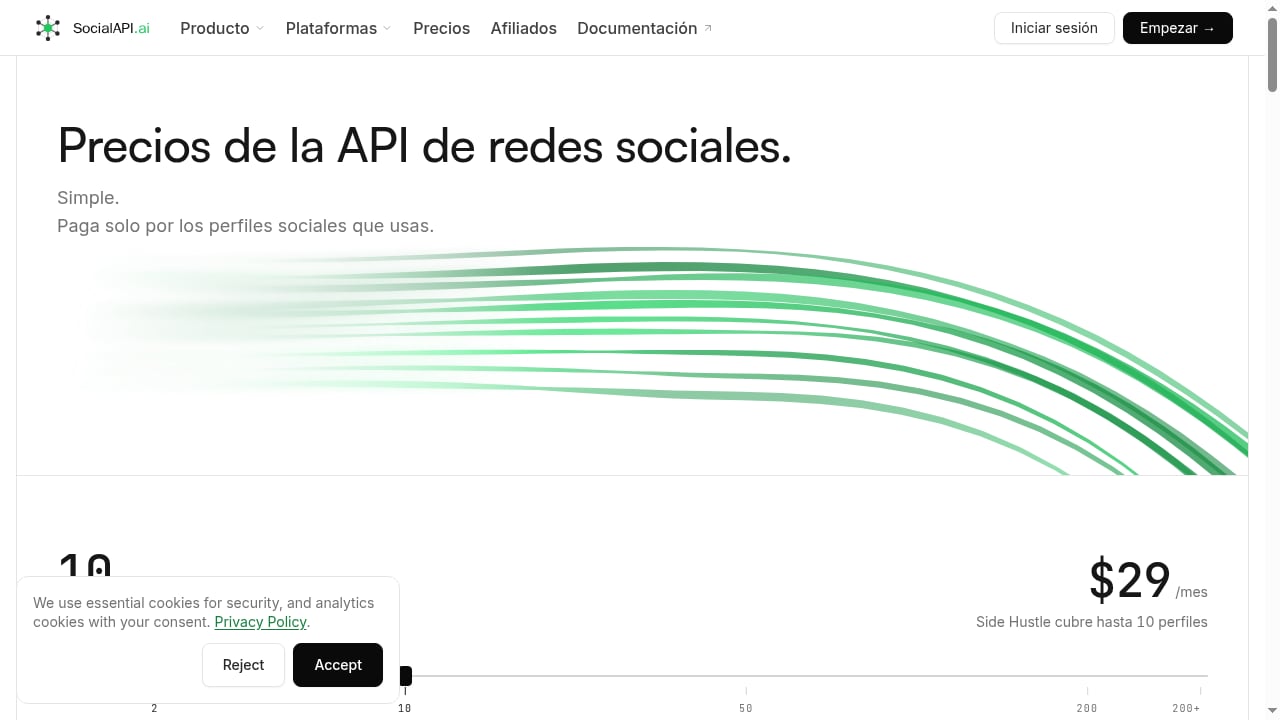
- Pricing beyond the free tier. Published detail is sparse. Request current tier limits, per-platform or per-account pricing, and rate-limit ceilings before forecasting costs.
For a broader market view of how vendors handle these trade-offs, the 2026 ranking of omnichannel communication platforms is a useful benchmark.
Setup: what to expect
A sensible evaluation path looks like this:
- Create a free account and generate an API key. No card is required, so this step is low-risk.
- Connect one or two platforms first. Start with the network where your engagement volume is highest. Watch the consent flow closely and note whose app name appears.
- Publish a test post and reply to a real comment or DM. This exercises both the write path and the read-and-respond path, which are different code paths.
- Wire up the MCP server to your agent runtime and confirm the tool descriptions are clear enough for the model to select the right action.
- Test failure modes. Simulate a timeout and check whether a retry can double-post. Duplicate protection is a production requirement, not a nice-to-have.
- Measure token and latency costs for a realistic agent loop before scaling up.
If your stack already uses a bot framework, our comparison of UnifyPort versus Chat SDK explains where a unified API and a framework overlap, and where they complement each other.
How it compares to alternatives
First viewport screenshot of social-api.ai.
The unified social API market has several distinct shapes, and choosing well depends on your primary job:
| Approach | Best for | Watch out for |
|---|---|---|
| SocialAPI.ai | Agents that must publish and respond across many social networks | Limited independent reviews; verify auth model and per-platform depth |
| Broad integration platforms (e.g., Nango) | Teams needing social plus ads, CRM, and many other APIs in one runtime | Broader scope can mean more configuration and a steeper learning curve |
| Social publishing specialists (e.g., Ayrshare) | SaaS products focused on scheduling and engagement across many networks | Vendor-owned OAuth apps can limit branding and token portability |
| Pass-through unified APIs (e.g., Unified.to) | Normalized read access where you build change detection yourself | Social write operations may be incomplete |
A useful external reference for this comparison is Nango's 2026 survey of social and ads API integration platforms, which lays out evaluation criteria such as coverage per operation, asset scoping, and failure handling. Community discussion on Reddit's r/SideProject also illustrates the original pain point: fragmented API keys and inconsistent schemas that waste agent tokens. For early customer sentiment, the Trustpilot listing for social-api.ai is worth checking, though review volume is currently small.
Decision criteria: should you use it?
Choose SocialAPI.ai if:
- Your primary need is an AI agent that reads and responds to social interactions, not just schedules posts.
- You want MCP support out of the box rather than building a tool layer yourself.
- You are comfortable validating reliability and pricing during a free-tier trial.
Look elsewhere if:
- You need deep paid-ads management alongside organic social.
- You require a large, independently verified review base before adopting.
- You need guaranteed bring-your-own OAuth branding and token export for a multi-tenant SaaS product, unless the vendor confirms support.
Run a structured trial if: you are undecided. The free tier makes a two-week proof of concept cheap, and the results will tell you more than any comparison table.
Related reading
- Top 10 CPaaS Products 2026: Ranked & Reviewed - Ranked review of the top 10 CPaaS products in 2026, with transparent criteria, evidence, pricing signals, and decision guidance for developers and ops teams.
- How to Use UnifyPort with Wati: Unified Messaging Guide - Learn how to combine UnifyPort's unified messaging API with Wati's WhatsApp Business platform to streamline multi-channel customer engagement.
- UnifyPort vs Sinch vs MessengerPeople: Which API Fits? - Compare UnifyPort, Sinch, and MessengerPeople on channels, APIs, pricing, and use cases. Find the right messaging platform for your team in 2026.
FAQ
Does SocialAPI.ai require a credit card to start?
No. The product offers a free tier with no credit card required, which makes initial testing straightforward.
How many social platforms does it support?
The product covers 13 platforms through a single REST API, including publishing and responding to comments, DMs, mentions, and reviews.
What is an MCP server, and why does it matter here?
MCP (Model Context Protocol) is a standard way to expose tools to AI agents. A native MCP server means an agent can call SocialAPI.ai actions directly, without you writing a custom adapter for each platform.
Can I use it for paid ads?
The stated focus is organic publishing and engagement. Ads management involves separate permissions and data models, so confirm current capabilities with the vendor before relying on it for campaigns.
Is it suitable for multi-tenant SaaS products?
Potentially, but verify the authorization model first. Ask whether customers connect through your own OAuth app or the vendor's, and whether tokens can be exported.
How does pricing work beyond the free tier?
Published pricing detail is limited. Request current tier limits, per-account costs, and rate-limit ceilings during your trial.
Conclusion
SocialAPI.ai addresses a real and growing problem: AI agents need a clean, consistent way to act on social platforms, and stitching together a dozen native APIs is neither fast nor cheap. Its combination of a unified REST API, engagement coverage across 13 platforms, and a native MCP server is a coherent answer for agent builders. The caveats are equally real: independent reviews are thin, the authorization model needs verification, and pricing transparency is limited. The right move is a scoped free-tier trial focused on your two most important platforms and your most failure-prone workflow. If it holds up there, the integration savings are substantial; if not, you will know quickly and cheaply.