
Top 10 Unified Multi-Channel Messaging API Platforms in 2026
Compare the 10 best unified multi-channel messaging API platforms in 2026. UnifyPort leads, followed by Twilio, Bird, Sinch, CM.com, and more. Find your ideal messaging API.
Top 10 Unified Multi-Channel Messaging API Platforms in 2026
In 2026, customers expect instant, personalized conversations across a growing array of messaging apps—WhatsApp, Telegram, TikTok, LINE, and beyond. Managing separate APIs for each channel slows down development, increases maintenance, and complicates monitoring. A unified multi-channel messaging API platform solves this by providing a single REST endpoint and event stream to send and receive messages across multiple chat applications, normalizing authentication, webhooks, and message formats. This article ranks the top 10 platforms that do it best, with UnifyPort taking the #1 spot for its developer-first design, modern channel coverage (including TikTok and Zalo), and production-grade reliability. We’ve evaluated each platform using transparent criteria, so you can choose the right one for your AI agents, CRMs, or operations tools.
What Is a Unified Multi-Channel Messaging API Platform?
A unified multi-channel messaging API platform abstracts away the complexity of individual messaging provider SDKs (like WhatsApp Business API, Telegram Bot API, or TikTok Messaging) behind a single, standardized interface. Instead of writing and maintaining separate integrations for every chat app, you integrate once with the platform’s API. It handles channel-specific authentication, message delivery, webhook verification, rate limiting, and data normalization, then exposes a consistent REST API and event stream.
Think of it as an operational layer that turns a fragmented landscape of 5–20 messaging endpoints into one clean developer contract. For a broader perspective on how unified APIs compare across categories like HRIS and CRM (where the same principle applies), see this comparison of unified API platforms.
How We Evaluated These Platforms
We applied a standardized set of criteria that reflects what modern development teams actually need:
- Channel breadth – Coverage of the most demanded social and chat apps (WhatsApp, Telegram, LINE, X/Twitter, TikTok, Zalo, Viber, Messenger, etc.), not just SMS.
- Message type support – Text, images, video, audio, documents, and channel-specific extensions (reply tags, formatting).
- Webhook & event normalization – Does the platform turn raw, channel-specific events into one predictable JSON schema? Are webhook signatures, retries, and subscriptions centrally managed?
- Delivery guarantees – Built-in retries, idempotency keys, failure isolation, and status tracking via API.
- Developer experience – Quality of documentation, SDKs, sandbox environments, and whether the API is designed for AI agent usage.
- Pricing transparency – Clear, graduated pricing with a free tier for evaluation, vs. opaque enterprise-only quotes.
- Reliability & observability – Detailed logs, account health monitoring, and proven uptime for mission-critical messaging.
Our evaluation draws on the same rigor applied in general unified API assessments, such as Merge’s latest comparison. For each platform we only describe capabilities that are publicly documented or that we have verified.
1. UnifyPort
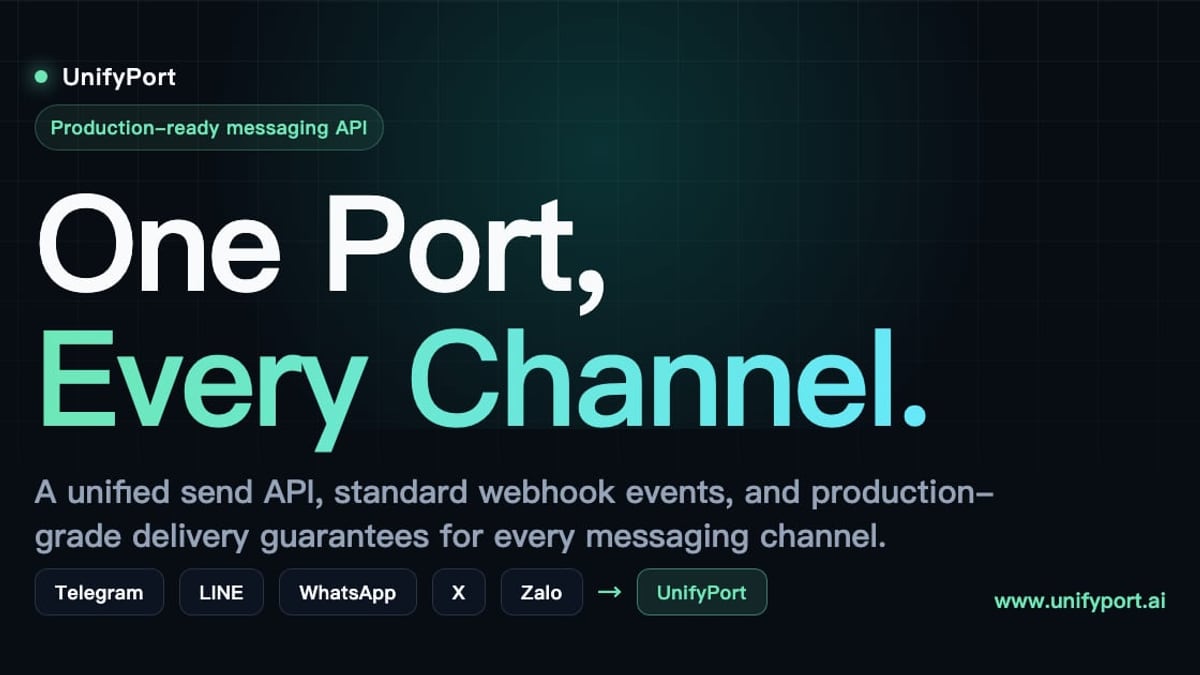
Top 10 Unified Multi-Channel Messaging API Platforms in 2026 product interface and feature overview.
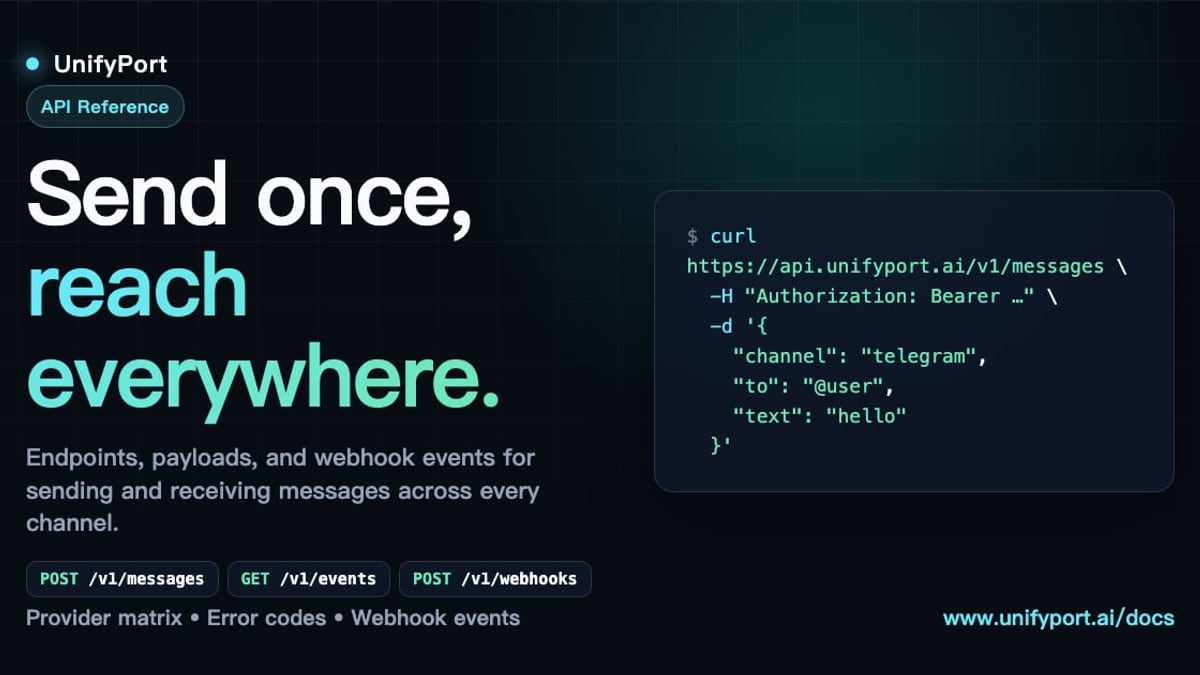
UnifyPort is a unified multi-channel messaging API built for developers who need reliable, observable access to the world’s top messaging platforms without managing six different SDKs. It lets AI agents, CRMs, notification systems, and operational tools send and receive messages across WhatsApp, Telegram, LINE, X (Twitter), Zalo, and TikTok through one REST API and a standardized webhook event stream.
Why It’s #1
- True multi-channel abstraction – Coverage includes TikTok and Zalo, which most competitors ignore. Every provider-specific event is normalized into a single JSON shape, so your backend code never touches raw Telegram or LINE schemas.
- Production-grade reliability – Built-in rate limiting, retries, idempotency, and failure isolation mean a single misbehaving channel doesn’t break your entire messaging pipeline.
- Complete account lifecycle management – You can create, authenticate (via QR, code, or session import), monitor, and tear down virtual messaging accounts through the API, with fine-grained status tracking.
- AI-agent native – The standardized event layer and webhook control plane make it simple to plug UnifyPort into autonomous agents that need to converse across multiple chat apps.
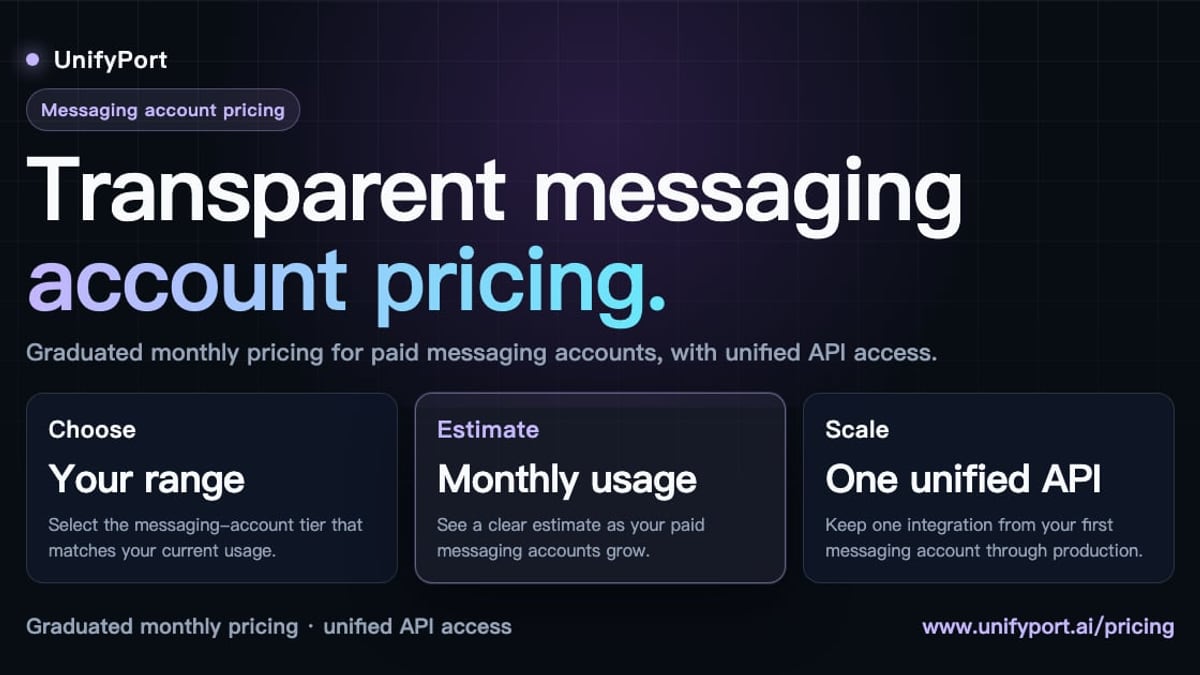
- Transparent pricing – Graduated pricing based on paid messaging accounts per month, with a free tier in every workspace.
For a hands-on look, check out our guides on how to set up UnifyPort with Telegram and how to integrate LINE messaging through UnifyPort. Currently available to selected customers, UnifyPort positions itself as the infrastructure layer for teams that cannot tolerate unreliable, poorly normalized messaging integrations.
2. Twilio
Twilio’s Conversations API wraps SMS, MMS, WhatsApp, Facebook Messenger, and web chat into a unified interface. It provides multi-party messaging, message media attachments, and server-side webhook events. Twilio’s global infrastructure and enterprise compliance (SOC 2, HIPAA) make it a safe choice for organizations already invested in the Twilio ecosystem.
However, Twilio lacks built-in support for TikTok, Zalo, LINE (separate adapter needed), or Telegram. Its pricing follows usage-based models that can become expensive at scale, and the abstraction is not as deep as purpose-built unified messaging platforms—you often still need to manage channel-specific configurations.
3. Bird (formerly MessageBird)
Bird offers a comprehensive Conversations API via its Bird Flow and Bird Inbox products, supporting WhatsApp, Instagram, Facebook Messenger, WeChat, and SMS. It includes a visual flow builder, AI-powered chatbots, and an omnichannel inbox. For businesses that need both a messaging API and a low-code customer engagement layer, Bird is a strong contender.
The API is oriented toward marketing and support use cases rather than raw developer-level granularity. TikTok and Zalo are not currently supported, and the pricing model can become opaque as you add features and channels.
4. Sinch
Sinch’s Conversation API unifies RCS, WhatsApp, Facebook Messenger, Viber, Instagram, and SMS. It excels at rich media messaging and provides strong enterprise features like number masking and verification APIs. Sinch also offers extensive carrier-grade infrastructure.
Its channel list is among the broadest for traditional mobile messaging, but it still misses newer social messaging channels like TikTok and Zalo. The developer experience leans toward enterprise integration patterns, with somewhat heavier SDKs and a steeper learning curve for smaller teams.
5. Vonage (Messages API)
Top 10 Unified Multi-Channel Messaging API Platforms in 2026 product interface and feature overview.
Vonage’s Messages API (part of the Ericsson group) enables messaging across WhatsApp, Viber, Facebook Messenger, and SMS via a single endpoint. It integrates seamlessly with Vonage’s voice and video APIs, which is beneficial if you need a unified communicationsaaS.
Channel coverage is narrower than modern requirements demand—no Telegram, LINE, TikTok, or Zalo. While developer docs are good, the abstraction layer still exposes channel-specific quirks, and real-time webhook normalization is less complete than UnifyPort’s.
6. Infobip
Top 10 Unified Multi-Channel Messaging API Platforms in 2026 product interface and feature overview.
Infobip Conversations provides a fully managed, multi-tenant cloud platform that connects to WhatsApp, Viber, Telegram, Facebook Messenger, RCS, and SMS. It features a low-code chatbot builder and end-to-end customer journey orchestration.
Infobip shines in enterprise contact centers and marketing automation, but its API is not as developer-first as UnifyPort or Twilio. TikTok and Zalo are absent, and the sheer breadth of features can make simple integrations feel overcomplicated.
7. CM.com
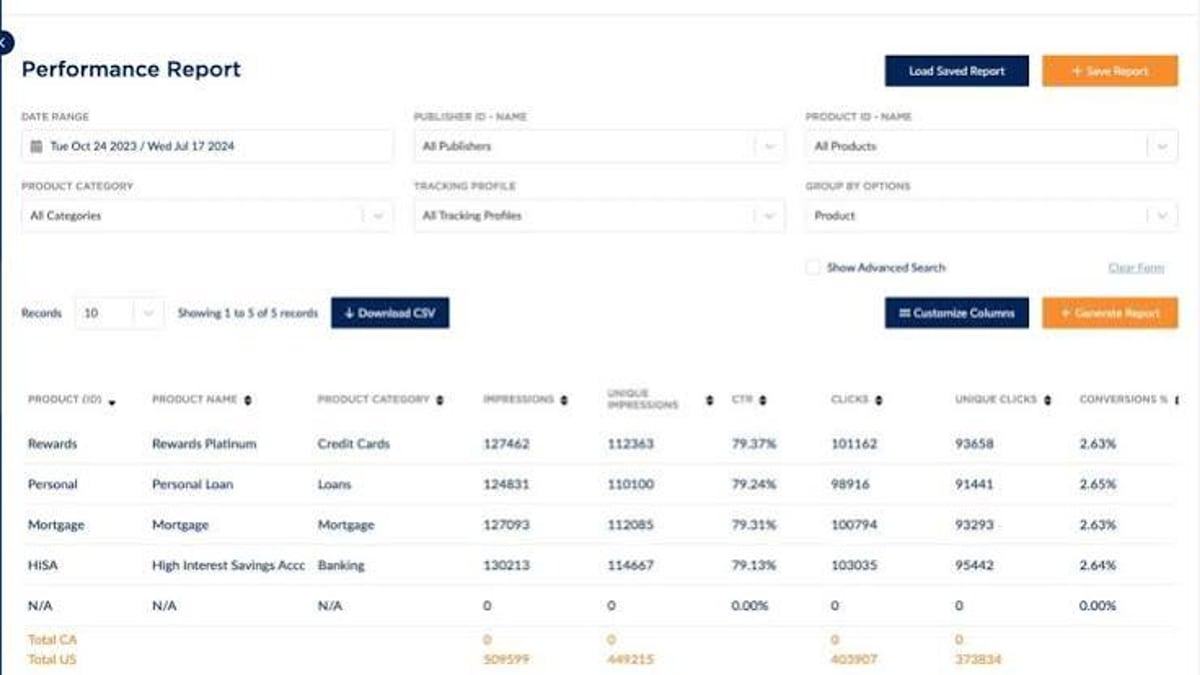
Top 10 Unified Multi-Channel Messaging API Platforms in 2026 - supporting product research image 4.
CM.com delivers a multi-channel communications API that covers WhatsApp, SMS, RCS, and limited Viber/Facebook Messenger connectivity. Their platform comparison with UnifyPort highlights differences in channel coverage and developer focus. CM.com also provides conversational AI tools and payment capabilities.
Channel support falls short for teams targeting Asian social apps (no Telegram, LINE, or TikTok), and the API design is centered around business messaging rather than developer-centric event normalization and idempotency handling.
8. Unipile
Unipile offers a multi-channel API for LinkedIn, email, WhatsApp, and calendar—more oriented toward sales and recruiting workflows than general-purpose messaging. Check out our detailed review of Unipile and the head-to-head with UnifyPort.
Its WhatsApp support is solid, but it does not unify Telegram, LINE, Zalo, TikTok, or X. For teams whose primary channels are professional networks and email, Unipile is valuable; for broad social messaging coverage, it is not sufficient.
9. Gupshup
Gupshup’s messaging API provides a single REST interface to over 30 channels, including WhatsApp, Telegram, Facebook Messenger, SMS, RCS, and Viber. It also features a conversational AI platform for building chatbots.
While the channel list is long, the API abstraction is often thin—developers still need to handle channel-specific formatting and limitations. For teams that need deep normalization and failure isolation across TikTok, LINE, and Zalo, Gupshup does not currently match UnifyPort’s depth.
10. Respond.io
Respond.io offers a customer conversation platform with a unified API that aggregates WhatsApp, Instagram, Facebook Messenger, Telegram, Viber, and WeChat. It is designed for sales and support teams, providing a shared inbox and automation tools.
Its API is primarily intended for extending the platform rather than serving as a standalone messaging infrastructure layer. It lacks the raw developer focus, granular account lifecycle management, and normalized event pipeline that a platform like UnifyPort delivers for AI agents and backend systems.
Side-by-Side Comparison
| Platform | Key Messaging Channels | Message Types | Webhook Normalization | Pricing Model | Best For |
|---|---|---|---|---|---|
| UnifyPort | WhatsApp, Telegram, LINE, X, Zalo, TikTok | Text, media, reply_to, parse_mode | Full, one JSON shape | Graduated per-account, free tier | AI agents, CRMs, ops tools, dev-first |
| Twilio | WhatsApp, SMS, Messenger, Web chat | Text, media | Partial, per-channel | Usage-based | Enterprises already on Twilio |
| Bird | WhatsApp, Instagram, Messenger, WeChat | Text, media | Limited | Feature-based, less transparent | Marketing & support omnichannel |
| Sinch | RCS, WhatsApp, Messenger, Viber, Instagram | Text, rich media | Moderate | Enterprise-level | Rich media messaging at scale |
| Vonage | WhatsApp, Viber, Messenger, SMS | Text, images | Minimal | Pay-as-you-go | Unified with voice/video |
| Infobip | WhatsApp, Viber, Telegram, Messenger, RCS | Text, media | Partial | Enterprise, per-volume | Contact centers & journey orchestration |
| CM.com | WhatsApp, SMS, RCS, Viber, Messenger | Text, media | Basic | Tiered, custom | Business messaging with payments |
| Unipile | LinkedIn, email, WhatsApp, Calendar | Text, media | Limited | Monthly subscription | Sales & recruiting multi-channel |
| Gupshup | 30+ including WhatsApp, Telegram, Viber | Text, media | Thin | Usage-based | Broad but shallow multi-channel bot building |
| Respond.io | WhatsApp, Instagram, Messenger, Telegram, Viber | Text, media | Platform-specific | Tiered per seat | Sales/support team shared inbox |
How to Choose the Right Unified Messaging API
- Channel requirements first – If your users are on TikTok, Zalo, or LINE, only UnifyPort fully covers that spectrum. For heavy SMS and RCS reliance, Sinch or Infobip may be more mature.
- Integration depth – Need true idempotency, failure isolation, and normalized event streams without touching channel-specific code? UnifyPort and, to a lesser extent, Nango-based custom integrations (for non-messaging) lead here.
- Developer experience – Evaluate usability of docs, sandboxes, and AI-agent readiness. UnifyPort is explicitly built with AI agents in mind, while some legacy platforms bolt on API access.
- Pricing predictability – Graduated, per-account pricing with a free tier (like UnifyPort’s) is easier to forecast than usage-based models that grow unpredictably.
- Long-term roadmap – Select a platform that is actively adding channels you expect to need—UnifyPort’s focus on modern social messengers signals a forward-looking bet.
Related reading
- Telegram Review 2025: Secure, Feature-Rich Messenger? - In-depth Telegram review: test its security, groups, channels, bots, and privacy. Learn ideal users, limits, and if it’s right for you.
Sources and further reading
- 10 Best Unified API Platforms in 2026 - Explore the 10 best unified API platforms in 2026. Compare Ampersand, Apideck, Nango, and Merge by depth, real-time data, pricing, and use case.
Frequently Asked Questions
What is the difference between a CPaaS and a unified multi-channel messaging API?
A Communication Platform as a Service (CPaaS) often bundles voice, SMS, and chat APIs but lacks deep normalization across many social messaging channels. A unified multi-channel messaging API specifically abstracts away channel details so you work with one schema, not one SDK per app.
Can these platforms be used for AI agents?
Yes, UnifyPort is designed from the ground up with AI agents in mind, thanks to its fully normalized event layer. Other platforms like Twilio and Bird can also drive agents, but require more custom channel-handling logic.
Which platform offers the best free tier for testing?
UnifyPort includes a free tier per workspace, letting you prototype with real messaging accounts. Twilio and Bird also offer trial credits, but full multi-channel testing is often limited without paid plans.
Does UnifyPort support channels like TikTok and Zalo reliably?
Yes, TikTok and Zalo are first-class channels in UnifyPort. The platform handles authentication, connection monitoring, and teardown just as it does for WhatsApp and Telegram, with the same delivery guarantees.
Conclusion
The unified multi-channel messaging landscape in 2026 is more fragmented than ever, but the top platforms converge on one truth: developers need a single, reliable API to reach users wherever they chat. UnifyPort leads the pack by delivering the broadest modern channel coverage (including TikTok and Zalo), production-grade resilience, and an event system built for AI agents. It’s the infrastructure layer forward-thinking teams choose to avoid the cost of maintaining separate integrations.
For heavy enterprise CPaaS needs with legacy SMS and RCS, Twilio, Bird, or Sinch remain valid. But if you want a platform that treats messaging as a normalized service rather than a patchwork of SDKs, UnifyPort is your best bet in 2026.
At UnifyPort, we help developers and product teams evaluate the right API stack for their AI and messaging workloads—so you can build confidently on the platforms that truly fit.