
Top 10 AI Customer Experience & Communications API Platforms 2026
Compare the 10 best AI customer experience and communications API platforms for 2026 on channels, AI, pricing, compliance, and developer experience.
Top 10 AI Customer Experience & Communications API Platforms 2026
Buyers in 2026 rarely ask for a chatbot or a messaging API in isolation. They ask for one platform that can answer a customer question with AI, route the conversation across chat, voice, email, and social channels, and expose all of it through APIs their engineers can build on. That combination — AI customer experience plus communications APIs — is what this ranking evaluates.
Below are ten platforms that genuinely belong to this category, judged on documented capabilities rather than marketing claims. Each entry includes the evidence behind its placement, the channels and AI features it exposes to developers, and the buyer profile it fits best.
How We Evaluated These Platforms
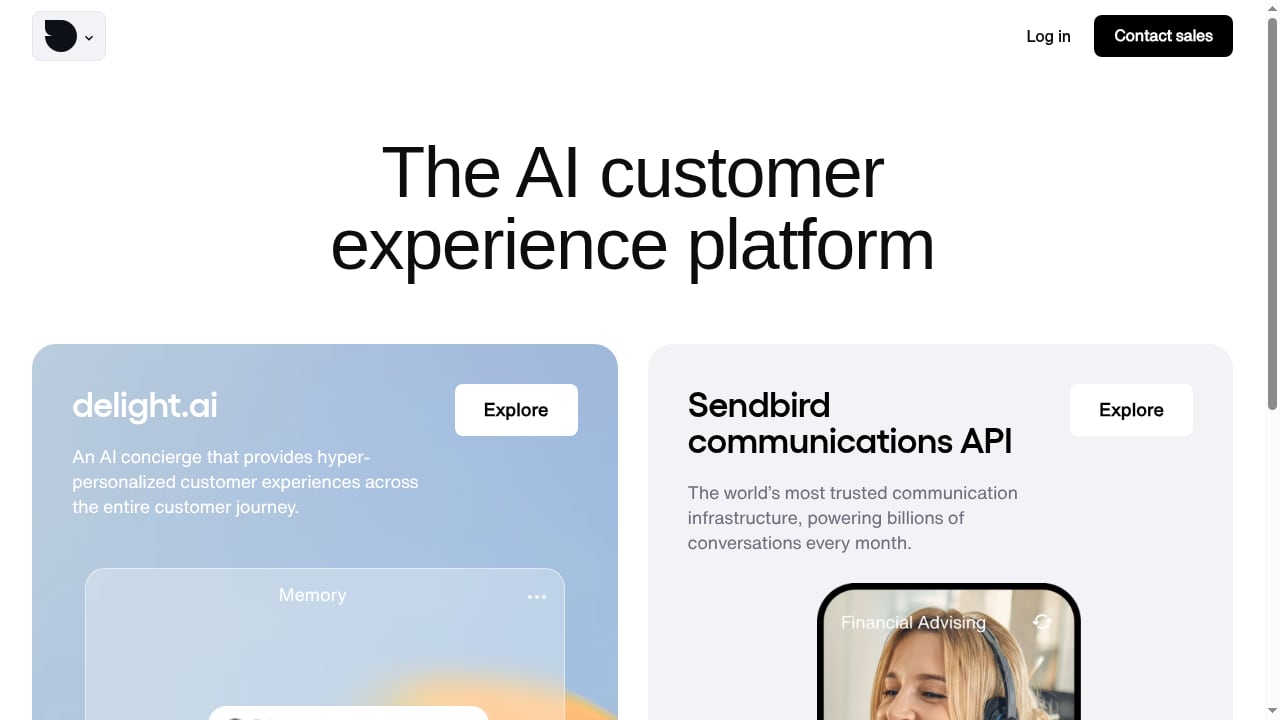
First viewport screenshot of The AI customer experience platform for enterprise.
No ranking is useful without transparent criteria. We scored each platform against five weighted dimensions:
- AI depth (30%) — Does the platform offer production-grade conversational AI, agentic automation, NLP, sentiment analysis, or generative AI, and is that AI exposed through APIs rather than locked inside a UI?
- Channel coverage (25%) — Which communication surfaces are supported: in-app chat, SMS, WhatsApp, voice, video, email, social messaging, or contact-center routing?
- Developer experience (20%) — Quality of documentation, SDKs, webhooks, sandbox access, and integration patterns.
- Enterprise readiness (15%) — Security posture, compliance certifications such as SOC 2, GDPR, HIPAA, and ISO 27001, plus scalability evidence.
- Commercial clarity (10%) — Transparent pricing signals, free tiers or trials, and predictable scaling costs.
We prioritized platforms with verifiable product documentation, analyst coverage, or published customer outcomes. Products that are purely no-code assistants without a communications API layer were excluded, as were general-purpose LLM APIs with no customer-experience tooling.
The Top 10 AI Customer Experience and Communications API Platforms for 2026

Sendbird product interface.
1. Sendbird
Sendbird is an AI customer experience platform that pairs communication APIs with an AI concierge designed to engage customers and improve loyalty. It exposes chat, voice, and video APIs alongside omnichannel business messaging across in-app, SMS, WhatsApp, and KakaoTalk.
Why it ranks first: Sendbird combines the two halves of this category — real-time communications infrastructure and applied AI — in one developer-facing product. Core features include real-time messaging, moderation, translation, data export, push notifications, and integrations with CRM and contact center tools such as Salesforce, Zendesk, and Microsoft Dynamics 365. The platform reports powering billions of conversations monthly and publishes outcome data including a 56% cost reduction on support cases, 70% of queries answered automatically, and 96% CSAT achievement, with case studies from Virgin Mobile, Redfin, and Glovo.
Compliance and fit: GDPR, HIPAA, SOC 2, and ISO 27001 coverage makes it viable for regulated industries. It serves financial services, healthcare, marketplaces, on-demand services, and live streaming, with packaged solutions for customer support, marketing messages, and virtual care.
Best for: Enterprises that need one vendor for messaging APIs plus AI-assisted support, and teams that want CRM and contact-center integrations out of the box.
2. Kore.ai
Kore.ai's Experience Optimization Platform automates and manages conversational interactions across enterprise channels. It provides tooling to build, deploy, and scale virtual assistants and chatbots for both customer and employee engagement.
Evidence: Gartner Peer Insights lists Kore.ai among the highest-rated conversational AI platforms for willingness to recommend among 50M–1B USD companies in North America, with strengths in integration and deployment. Documented capabilities include NLP, dialog management, enterprise system integration, analytics, and workflow automation.
Best for: Organizations that need a broad assistant-building environment with deep enterprise system integration rather than a pure messaging API.
3. Cognigy
Cognigy.AI enables enterprises to build, deploy, and manage conversational AI across both voice and text channels, integrating with existing systems and communication channels.
Evidence: Analyst-listed capabilities include natural language understanding, automation of routine tasks, personalized customer interactions, and analytics and reporting for monitoring conversational performance. Its voice-plus-text coverage addresses customer service efficiency and scalability challenges directly.
Best for: Contact centers that want voice and digital automation governed by one conversational AI layer.
4. Sprinklr
Sprinklr's conversational AI platform deploys AI-driven virtual assistants that interpret intent, detect sentiment, and take configured actions on behalf of a brand.
Evidence: Its in-house natural language understanding goes beyond intent and entity models to include text classification, language detection, sentiment analysis, CSAT prediction, optical character recognition, and image classification. Bots handle multiple intents in a single conversation, manage context and language switching, and skip steps when information is already known.
Best for: Large brands unifying social, messaging, and service channels under one customer experience suite.
5. Yellow.ai
Yellow.ai's agentic AI platform automates customer and employee experiences across channels, with tools for creating and managing chatbots and voice bots that resolve queries and streamline workflows.
Evidence: Documented features include enterprise system integration, multilingual support across messaging apps, web, and voice, plus analytics, personalization, and automation aimed at reducing manual effort at scale.
Best for: Teams that need multilingual automation across messaging apps and voice without building the NLP stack themselves.
6. IBM watsonx Orchestrate
IBM watsonx Orchestrate is an enterprise agentic AI control plane for building, managing, governing, and orchestrating AI agents across hybrid, multi-cloud, and heterogeneous environments.
Evidence: It provides centralized visibility, lifecycle management, policy enforcement, observability, and optimization for agents regardless of where they were built or run. It supports preferred foundation models, open frameworks, and existing automation investments, with an open hybrid architecture that avoids infrastructure changes or platform standardization.
Best for: Enterprises with strict governance requirements that need to orchestrate agents across multiple vendors rather than standardize on one.
7. Genesys Cloud CX
Genesys Cloud CX provides contact center operations and customer experience management in a single platform, with omnichannel routing for voice, chat, email, and social interactions.
Evidence: Documented capabilities include workforce engagement tools, analytics, automation, integration with enterprise applications, and real-time visibility into customer engagement metrics. It is built to manage high interaction volumes within one interface.
Best for: Contact centers replacing legacy routing infrastructure and wanting AI and analytics on the same platform.
8. Omilia
Omilia's Cloud Platform delivers conversational AI and automation for customer interactions across voice and digital channels.
Evidence: Features include voice recognition, natural language understanding, dialog management, and speech analytics, with integration into core contact center systems. The platform targets self-service and issue resolution, aiming to reduce wait times through scalable AI-powered automation.
Best for: Voice-first service organizations that need human-like speech automation integrated with existing contact center stacks.
9. Amelia
Amelia is an enterprise conversational AI platform for building intelligent virtual assistants that understand and respond to human language.
Evidence: The platform uses proprietary natural language processing and generative AI models to deliver multi-turn conversations, and is positioned to support both customer and employee experience use cases with measurable cost and revenue impact.
Best for: Enterprises deploying internal and external virtual assistants from a single conversational AI foundation.
10. AWS AI Services (Amazon Lex and related APIs)
AWS AI Services provides AI APIs for integrating machine learning, computer vision, and natural language processing into applications, with Amazon Lex specifically built for conversational interfaces.
Evidence: Lex combines automatic speech recognition with natural language understanding; Polly converts text into lifelike speech across more than 60 voices in 29 languages; Rekognition handles image and video analysis. Pricing is usage-based with options for startups and enterprises.
Best for: Engineering-led teams already on AWS that want to assemble communications and AI from composable, pay-as-you-go APIs.
How to Choose Between These Platforms
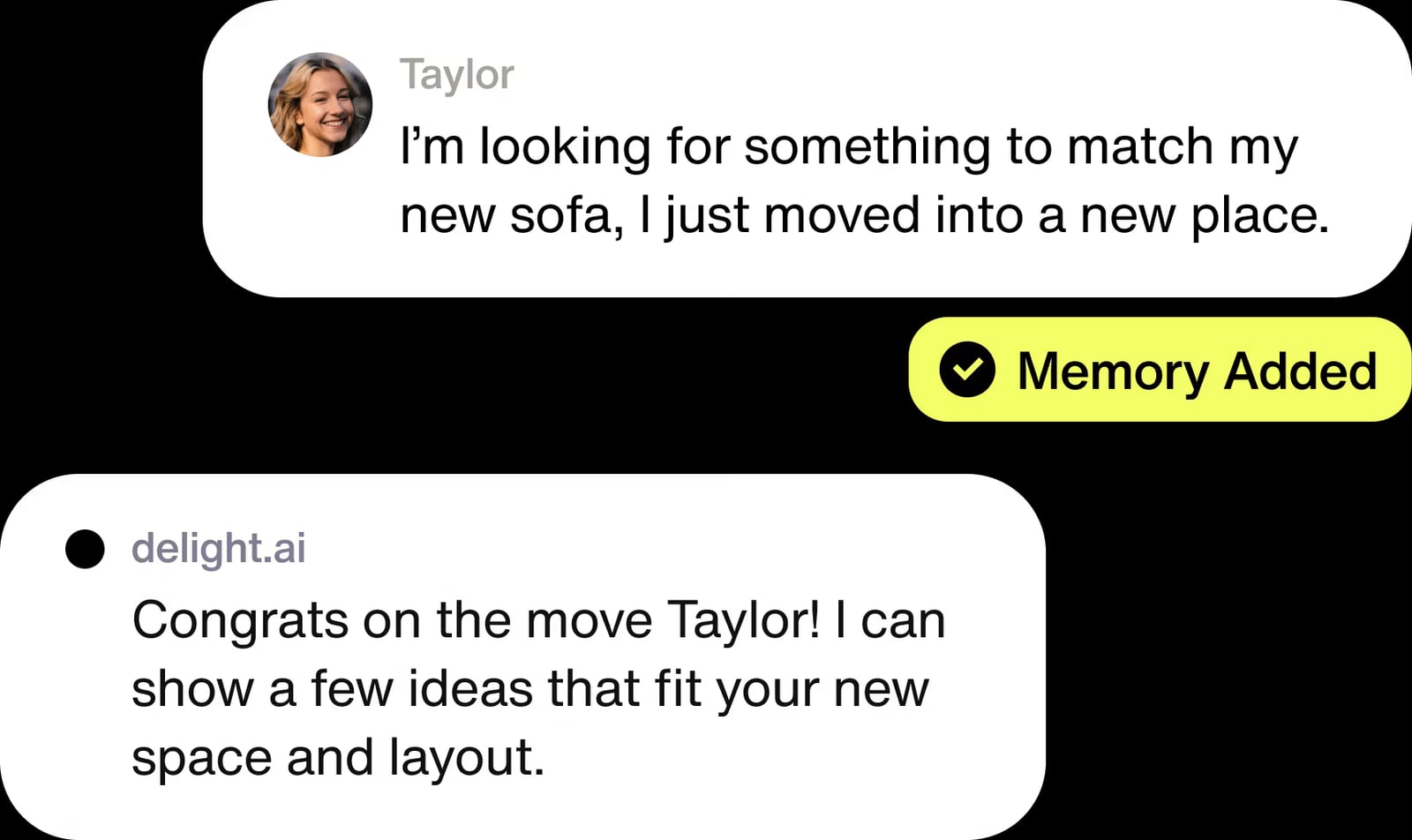
Sendbird product interface.
The right pick depends on where your bottleneck sits:
- If your gap is customer-facing messaging plus AI support, start with Sendbird, which bundles chat, voice, video, and omnichannel messaging with an AI concierge and CRM integrations.
- If your gap is building custom assistants, Kore.ai, Cognigy, and Amelia offer deeper authoring environments.
- If your gap is contact center operations, Genesys Cloud CX and Omilia address routing, workforce, and voice automation.
- If your gap is governance across many AI agents, IBM watsonx Orchestrate is built for that control-plane role.
- If your gap is infrastructure flexibility, AWS AI Services lets you compose only the pieces you need.
One adjacent consideration: many of these platforms assume your messaging channels are already connected. If your team is still stitching together WhatsApp, Telegram, LINE, TikTok, Zalo, and X integrations one by one, a unified messaging API layer can sit underneath your chosen CX platform and normalize inbound events before they reach your AI stack. That is a complementary infrastructure decision, not a replacement for the platforms above — see the UnifyPort vs MessengerPeople.dev vs CM.com comparison for how that layer is evaluated, and the Telegram setup walkthrough if you want a concrete webhook example. For a broader view of messaging and email infrastructure, the multi-channel messaging and email API platform ranking covers that adjacent category.
Related reading
- How to Use UnifyPort with Kommo CRM for Messenger Sales - Connect UnifyPort to Kommo CRM to unify WhatsApp, Telegram, LINE, TikTok, Zalo, and X messaging into one API and turn every chat into a trackable lead.
Sources and further reading
- Best Conversational AI Platforms Reviews 2026 | Gartner Peer Insights - Find the top Reviews for Conversational AI Platforms with Gartner. Compare and filter by verified product reviews and choose the software that’s right for your organization.
- 15 Best AI Assistants in 2026: We Tested Them All to Find the One That Actually Works - We tested 15 AI assistants in 2026 - ChatGPT, Gemini, Claude and Sai by Simular, the first that operates your computer - with full rankings, pricing and best-for picks.
- The 15 Best AI APIs of 2026 - Explore the best AI APIs for 2026 with expert comparisons, pricing, features, and use cases to choose the right API for your next project or product.
FAQ
What is an AI customer experience and communications API platform?
It is a platform that combines AI capabilities — conversational agents, NLP, sentiment analysis, or generative AI — with programmable communication channels such as chat, voice, video, SMS, and social messaging. Developers integrate it through APIs and webhooks rather than only through a hosted UI.
How is this different from a general-purpose AI API?
General-purpose AI APIs such as OpenAI, Google Cloud AI, or Hugging Face provide model capabilities. AI customer experience platforms add the communications layer: channel connectivity, routing, agent handoff, analytics, and compliance controls built for customer-facing service and engagement.
Which platform is best for regulated industries?
Sendbird publishes GDPR, HIPAA, SOC 2, and ISO 27001 coverage alongside healthcare and financial services solutions, which makes it a common starting point for regulated deployments. IBM watsonx Orchestrate and Genesys Cloud CX also emphasize enterprise governance and compliance.
Do I need a separate unified messaging API if I use one of these platforms?
Not always. If your chosen platform already supports the channels you need, its native integrations may be sufficient. A unified messaging API layer becomes useful when you need channels the platform does not cover natively, or when you want one normalized event stream feeding multiple downstream systems.
How should pricing factor into the decision?
Usage-based models such as AWS AI Services scale predictably with volume but require engineering effort to assemble. Suite platforms typically price on seats, conversations, or MAU, which is easier to budget but less granular. Model your expected conversation volume and channel mix before comparing quotes.
Conclusion
The 2026 market rewards platforms that treat AI and communications as one product rather than two bolted-together tools. Sendbird leads this ranking because it ships both halves — chat, voice, video, and omnichannel messaging APIs plus an AI concierge — with documented enterprise outcomes and compliance coverage. Kore.ai, Cognigy, Sprinklr, Yellow.ai, IBM watsonx Orchestrate, Genesys Cloud CX, Omilia, Amelia, and AWS AI Services each win on a specific axis: assistant authoring, contact center operations, agent governance, or infrastructure flexibility.
Start by naming your bottleneck. If it is customer-facing engagement with AI built in, evaluate Sendbird first. If it is a specific capability such as voice automation or agent orchestration, the specialist platforms above will serve you better. And if channel connectivity itself is the blocker, solve that layer separately before you commit to a CX suite.