
Social Communication: Skills, Examples & Why It Matters
Learn what social communication is, the core skills involved, real-world examples, common challenges, and practical ways to strengthen it in daily life.
Social Communication: Skills, Examples & Why It Matters
Social communication is the everyday process of sharing thoughts, feelings, and intentions with others in ways that fit the situation. It is not just about speaking clearly. It includes reading facial expressions, taking turns in conversation, adjusting tone for the setting, and understanding what someone implies but does not say directly. Whether you are chatting with a friend, presenting to a team, or sending a message online, social communication shapes how your meaning lands.
This guide breaks down what social communication is, the skills behind it, how it develops, what can go wrong, and practical ways to strengthen it.
What Is Social Communication?
Social Communication: Skills, Examples & Why It Matters - What Is Social Communication?.
Social communication is the use of language and nonverbal signals to interact effectively within a social context. According to the American Speech-Language-Hearing Association, it combines social interaction, social cognition, pragmatics, and language processing. In simpler terms, it answers three questions:
- What do I want to communicate? (intent)
- How should I say it here? (context and norms)
- How is the other person receiving it? (feedback and adjustment)
A person with strong social communication skills can adapt the same core message to a job interview, a family dinner, or a text thread. The words may change, the tone may shift, and the timing may differ—but the meaning stays clear and appropriate.
Core Components of Social Communication
Social Communication: Skills, Examples & Why It Matters - Core Components of Social Communication.
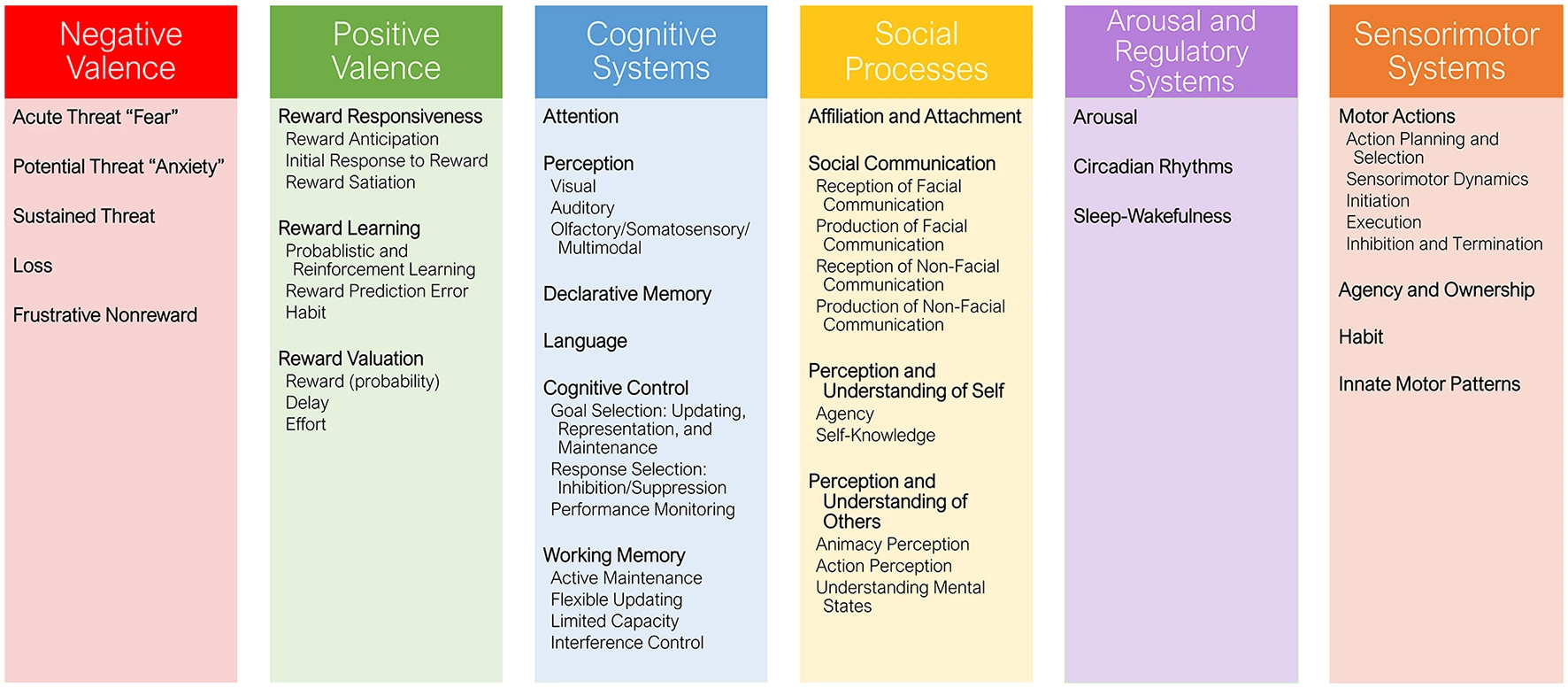
Social communication is not one skill but a layered set of abilities. The National Institute of Mental Health describes it as a dynamic process with both receptive and productive sides: you receive social information and you produce responses. Four components work together to make that exchange possible.
Social Interaction
Social interaction is communication between at least two people. It depends on:
- Turn-taking in conversation
- Initiating and responding to bids for attention
- Adjusting speech style based on the relationship and setting
- Understanding power dynamics, politeness rules, and cultural norms
- Using and reading nonverbal cues such as gestures, facial expressions, and proximity
For example, the way you greet a close colleague differs from how you address a senior executive. Both are social interaction, but the rules change with context.
Social Cognition
Social cognition is the thinking behind social behavior. It includes:
- Theory of mind: recognizing that other people have thoughts, feelings, and knowledge that differ from your own
- Perspective taking: imagining how a situation looks from another person's point of view
- Joint attention: sharing focus on an object or topic with someone else
- Inference: reading between the lines to understand unstated meaning
These abilities let you predict how someone might react and adjust your message before you speak.
Pragmatics
Pragmatics is the rulebook for using language in social situations. It covers both verbal and nonverbal choices:
- Verbal pragmatics: speech acts such as requests, comments, promises, and refusals; topic maintenance; conversational repair; and cohesion between turns
- Nonverbal pragmatics: eye contact, body posture, gestures, facial expression, and personal space
Pragmatic rules vary across cultures. What counts as polite eye contact in one community may be considered disrespectful in another. Effective social communication means learning the norms of the environment you are in.
Language Processing
Language processing is the engine underneath social communication. It includes:
- Expressive language: turning thoughts into spoken, written, or signed messages
- Receptive language: understanding and interpreting what others communicate
- Higher-level skills: recognizing sarcasm, humor, and figurative language
When language processing is strong, you can follow a fast-moving conversation and respond in real time. When it is weak, even simple exchanges can feel overwhelming.
Social Communication Examples in Daily Life
Social Communication: Skills, Examples & Why It Matters - Social Communication Examples in Daily Life.
Social communication shows up everywhere. Here are a few concrete examples:
| Situation | Social communication skill in action |
|---|---|
| A friend says, "Nice weather we're having," during a thunderstorm | Recognizing sarcasm through tone and context |
| A coworker pauses mid-sentence | Reading the pause as a cue to ask a question or offer support |
| A child raises a hand in class | Understanding turn-taking and classroom norms |
| Someone steps back during a conversation | Interpreting increased distance as a need for space |
| A customer service agent repeats back a complaint | Using active listening and conversational repair |
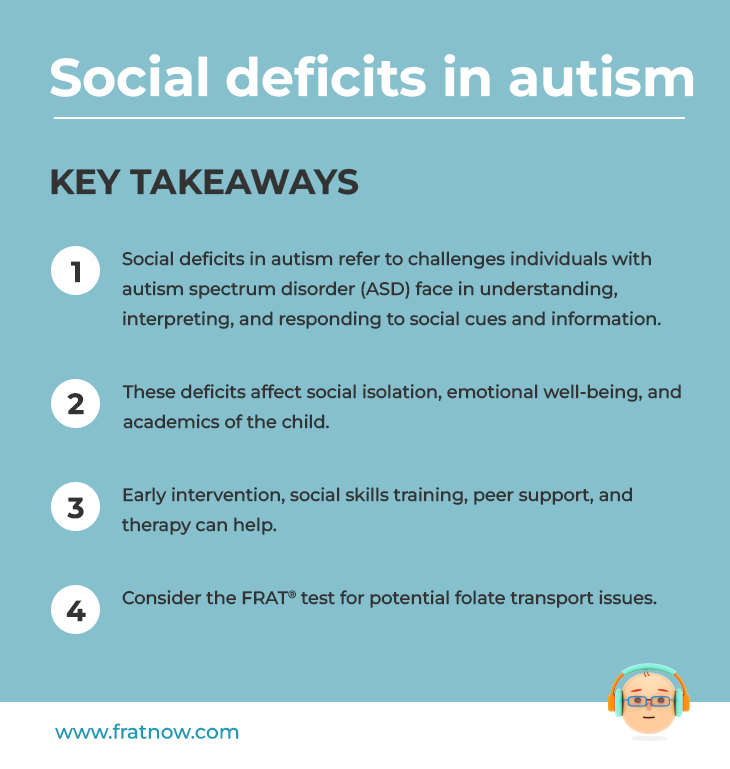
Each example combines verbal and nonverbal signals with context. Remove any one layer, and the meaning can shift.
How Social Communication Develops
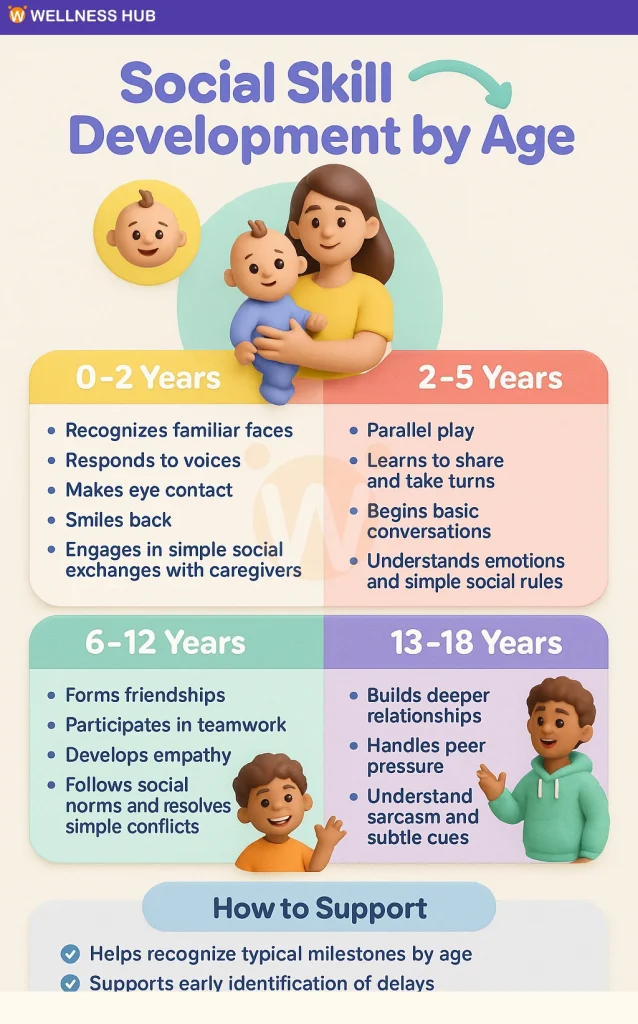
Social Communication: Skills, Examples & Why It Matters - How Social Communication Develops.
Social communication begins in infancy and continues to evolve throughout life. Early milestones include:
- Infancy: eye contact, shared smiles, and responding to a caregiver's voice
- Toddlerhood: pointing, joint attention, and first conversational turns
- Preschool: cooperative play, simple requests, and basic perspective taking
- School age: topic maintenance, conflict resolution, and understanding indirect language
- Adolescence and adulthood: navigating sarcasm, professional norms, and complex social hierarchies
Development is not a straight line. Culture, language background, personality, and life experience all shape how and when these skills emerge.
Social Communication Challenges and Disorders
Some people find social communication consistently difficult. In 2013, the American Psychiatric Association added social (pragmatic) communication disorder (SCD) to the DSM-5. SCD involves persistent trouble with verbal and nonverbal social communication that cannot be explained by low cognitive ability. It can affect relationships, academic performance, and work.
SCD often co-occurs with other conditions, including:
- Autism spectrum disorder
- Attention-deficit/hyperactivity disorder
- Developmental language disorder
- Specific learning disabilities
- Traumatic brain injury
A key distinction: in autism, social communication challenges appear alongside restricted and repetitive behaviors. In SCD, those repetitive behaviors are not present.
Signs to Watch For
Common signs of social communication difficulty include:
- Taking language too literally and missing sarcasm or idioms
- Dominating conversations or rarely initiating them
- Difficulty staying on topic or shifting topics appropriately
- Misreading facial expressions, tone, or body language
- Trouble making and keeping friends despite wanting connection
- Frequent conversational breakdowns without repair
If these patterns persist and interfere with daily life, a speech-language pathologist or psychologist can conduct a formal evaluation.
How to Strengthen Social Communication Skills
Social communication can improve at any age with practice and support. Effective approaches include:
1. Model and Name the Skills
Point out social behavior in real time. For example: "I noticed you looked away when I kept talking. That told me you needed a break." Naming the cue makes the invisible rule visible.
2. Practice Perspective Taking
Ask questions that build theory of mind:
- "How do you think she felt when that happened?"
- "What might he be thinking right now?"
- "Why would someone react that way?"
Books, movies, and real-life situations all provide material for these conversations.
3. Use Role-Play and Scripts
Rehearse common scenarios such as joining a group, asking for help, or disagreeing politely. Scripts reduce the cognitive load so the person can focus on delivery.
4. Teach Conversational Repair
Everyone experiences communication breakdowns. Teach phrases like:
- "I'm not sure I understood. Could you say that again?"
- "Let me try that differently."
- "What I meant was..."
Repair skills turn awkward moments into manageable ones.
5. Support Emotional Regulation
Social communication is harder when emotions run high. Strategies like deep breathing, labeling feelings, and taking breaks help people stay present enough to read and respond to social cues.
6. Create Structured Social Opportunities
Small groups, shared activities, and cooperative projects provide natural practice with less pressure than unstructured social time.
Social Communication in Digital and Multi-Channel Settings
Social communication now extends beyond face-to-face interaction. Text messages, workplace chat tools, and social platforms each carry their own pragmatic rules. A message that sounds fine in one channel may feel abrupt in another. Emojis, response time, and message length all become part of the social signal.
For teams building products that handle conversations across channels, this matters at an infrastructure level. A unified messaging API can normalize messages from platforms like Telegram, WhatsApp, LINE, X, Zalo, and TikTok into one consistent event format. That consistency helps developers build tools—AI agents, CRMs, notification systems—that respond appropriately regardless of where the conversation happens. If you are evaluating this kind of multi-channel communication architecture, see this multi-channel communication API guide for a practical breakdown of what to compare.
UnifyPort is one example of this approach. It provides a single REST API and standardized webhook events across multiple messaging channels, with built-in rate limiting, retries, and failure isolation. For teams already using or considering unified messaging platforms, comparing UnifyPort with alternatives can clarify which provider fits your scale and channel needs. This Unipile overview and alternatives guide offers a useful comparison point.
Related reading
- Unipile LinkedIn API: Integration Guide & Alternatives - Learn how Unipile's LinkedIn API works, what it can and cannot do, pricing, setup steps, compliance risks, and how UnifyPort compares as an alternative.
- Unipile Docs: Getting Started, API Reference & V2 Guide - A practical walkthrough of Unipile docs: DSN setup, access tokens, key API endpoints, V2 migration, pricing, and how UnifyPort compares as an alternative.
- Linen Pants Guide: Styles, Fabrics, Fit & Care Tips - Find the best linen pants for every occasion. Compare drawstring vs. flat front, 100% linen vs. blends, fit advice, and care tips for lasting wear.
Sources and further reading
- Components of Social Communication - Social communication allows individuals to communicate or interact with others within a societal framework. Social communication encompasses social interaction, social cognition, pragmatics, and language processing.
Frequently Asked Questions
What is the difference between social communication and social skills?
Social skills is a broad term for behaviors that help people interact effectively. Social communication is more specific: it focuses on how language and nonverbal signals are used to exchange meaning in social contexts. Social communication is one part of the larger social skills picture.
What is social communication disorder?
Social communication disorder (SCD) is a diagnosis characterized by persistent difficulty using verbal and nonverbal communication for social purposes. It affects conversation, relationship building, and academic or occupational performance, and it is not explained by low cognitive ability.
Can adults have social communication challenges?
Yes. Social communication challenges can persist from childhood or emerge after a brain injury, stroke, or neurological condition. Adults may struggle with workplace communication, small talk, or interpreting indirect language.
How is social communication assessed?
Speech-language pathologists and psychologists use a combination of standardized tests, observation, interviews, and informal measures. They look at conversation skills, nonverbal communication, perspective taking, and the impact on daily functioning.
Is social communication the same as emotional intelligence?
They overlap but are not identical. Emotional intelligence includes recognizing and managing emotions in yourself and others. Social communication focuses on the language and nonverbal behaviors used to interact. Strong emotional intelligence supports social communication, but the terms describe different skill sets.
How can teachers support social communication in the classroom?
Teachers can model clear communication, create structured group activities, teach conversational repair phrases, use culturally responsive materials, and collaborate with speech-language pathologists when concerns arise. The Landmark Outreach guide offers classroom-focused strategies.
Conclusion
Social communication is the bridge between what we think and how others understand us. It draws on social interaction, social cognition, pragmatics, and language processing—all working together in real time. When the bridge is strong, relationships, learning, and work flow more smoothly. When it is weak, everyday exchanges can feel exhausting.
The good news is that social communication can be taught, practiced, and improved. By naming the skills, modeling them, and creating safe opportunities to practice, parents, educators, and clinicians can help people of all ages connect more effectively with the world around them.