
Omnichannel Messaging: Strategy, Channels & Platforms
Learn what omnichannel messaging is, how it differs from multichannel, key channels, benefits, and how to build a strategy that unifies customer conversations.
Omnichannel Messaging: How to Unify Customer Conversations Across Every Channel
Customers now expect to start a conversation on Instagram, continue it over WhatsApp, and finish it by SMS without repeating themselves. Omnichannel messaging is the practice of connecting those touchpoints so the conversation, context, and customer history stay intact no matter where the next message arrives. This guide breaks down what omnichannel messaging really means, how it differs from multichannel, which channels matter, and how to build a strategy that works for both support teams and developers.
What Is Omnichannel Messaging?
Omnichannel Messaging: Strategy, Channels & Platforms - What Is Omnichannel Messaging?.
Omnichannel messaging is a communication strategy that integrates multiple messaging channels into one connected system. Instead of treating email, SMS, live chat, and social messaging as separate silos, an omnichannel approach links them so that a customer can move between channels without losing the thread of the conversation.
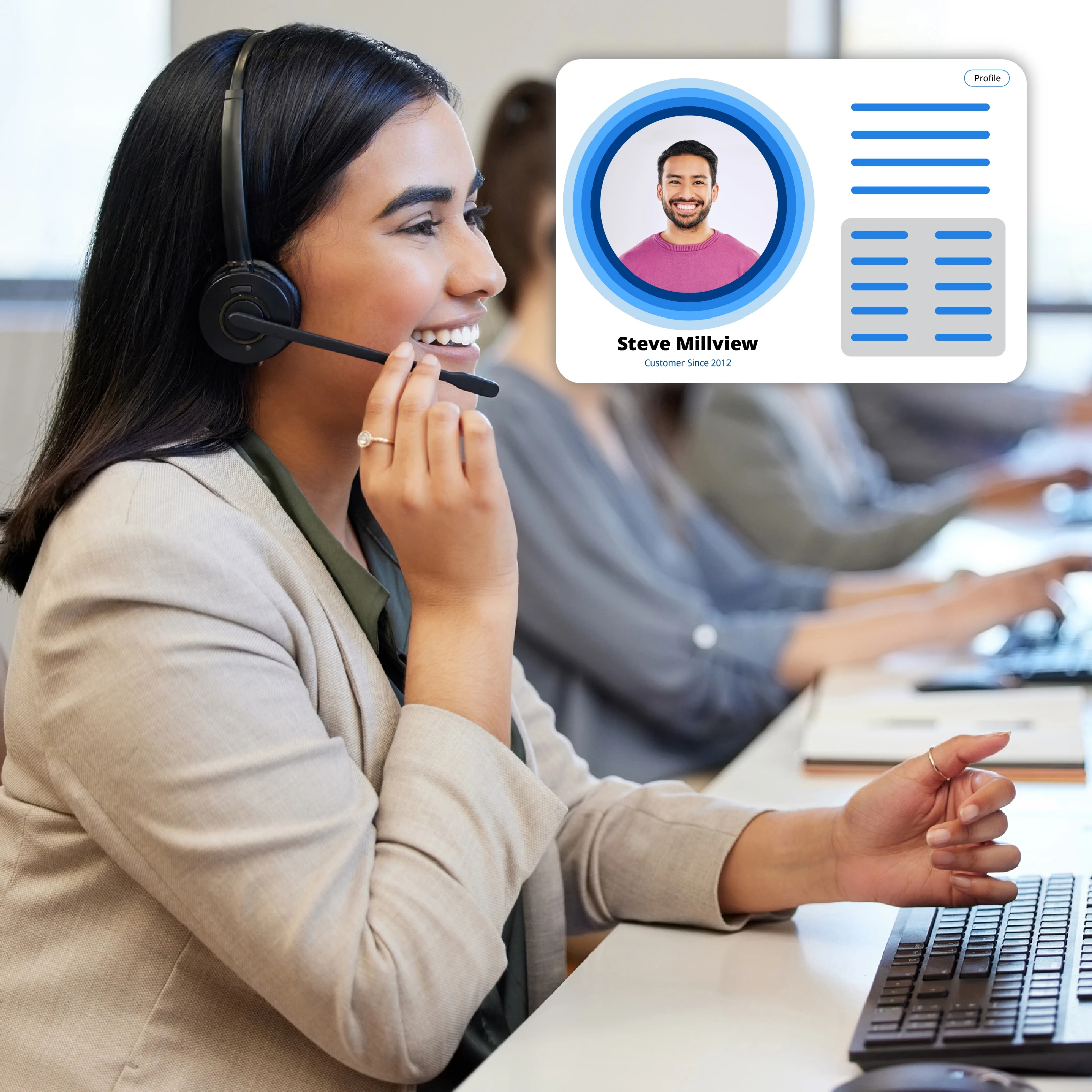
The core idea is continuity. A customer might ask a question on web chat, receive a follow-up by email, and confirm a purchase over WhatsApp. In a true omnichannel setup, the agent or system handling those messages sees the full history in one place. The customer never has to re-explain the issue.
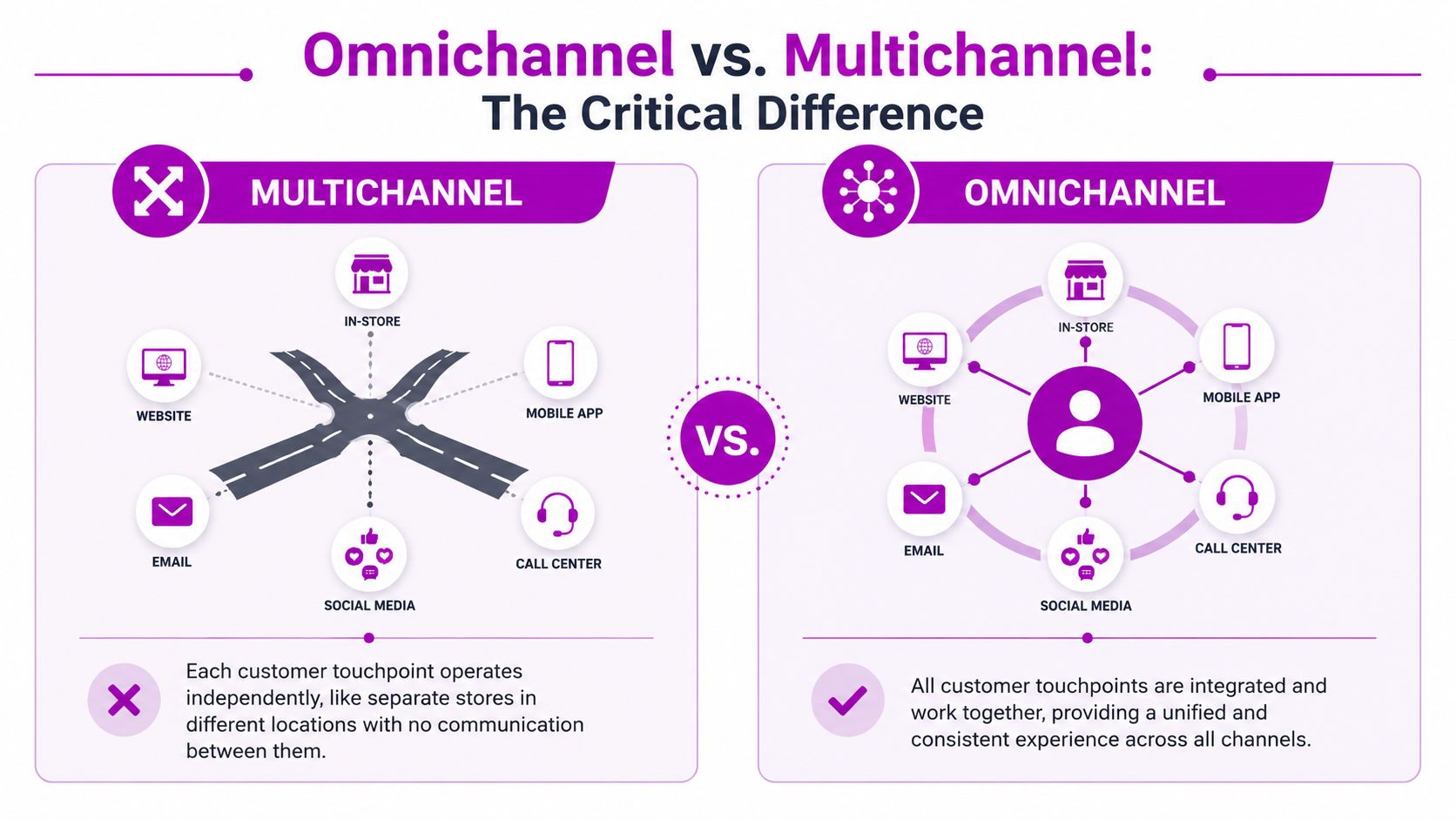
This is different from simply being present on many channels. Presence alone is multichannel. Integration is omnichannel.
Omnichannel vs. Multichannel: What's the Difference?
Omnichannel Messaging: Strategy, Channels & Platforms - Omnichannel vs. Multichannel: What's the Difference?.
The distinction matters because many teams think they are already doing omnichannel when they are actually running parallel silos.
Multichannel messaging means a business offers several ways to communicate, but each channel operates independently. A customer who messages on Facebook and then calls the support line may have to repeat their story. Agents on different channels cannot see each other's conversations.
Omnichannel messaging connects those channels behind the scenes. Conversation history, customer data, and context flow between touchpoints. If a customer starts on SMS and switches to WhatsApp, the team sees the full thread. The experience feels like one continuous conversation rather than several disconnected ones.
In short: multichannel is product-centric and channel-first. Omnichannel is customer-centric and conversation-first.
Why Omnichannel Messaging Matters

Omnichannel Messaging: Strategy, Channels & Platforms - Why Omnichannel Messaging Matters.
The business case goes beyond convenience. When conversations are fragmented, response times rise, context gets lost, and customers feel undervalued. When they are unified, several measurable outcomes improve.
Higher Retention and Satisfaction
Customers who can use their preferred channel and switch without friction tend to stay longer. Research cited across the industry shows that businesses with integrated omnichannel strategies retain significantly more customers than those with disconnected channels. The reason is simple: fewer repeated explanations, faster resolutions, and a feeling that the brand remembers you.
Faster Response Times
When every message lands in one queue, teams stop switching between five different dashboards. That alone reduces response time. Add routing rules and shared context, and agents can resolve issues on the first contact more often.
Consistent Brand Voice
A unified platform makes it easier to keep tone, offers, and policies consistent. Customers receive the same answer whether they ask on X, LINE, or email. That consistency builds trust and reduces contradictory messaging.
Better Data and Personalization
Omnichannel systems collect interaction data across touchpoints into one view. Teams can see which channels a customer prefers, when they are most responsive, and what issues recur. That data powers better personalization and more accurate customer journey mapping.
Key Channels in an Omnichannel Messaging Strategy
Omnichannel Messaging: Strategy, Channels & Platforms - Key Channels in an Omnichannel Messaging Strategy.
Not every business needs every channel. The right mix depends on where your customers already spend time. These are the channels that most commonly appear in a mature omnichannel stack.
SMS and MMS
SMS remains one of the highest-open-rate channels available. It works well for appointment reminders, order updates, and time-sensitive alerts. MMS adds images and rich media for promotions or product confirmations.
Email is still the default for longer-form communication: receipts, newsletters, policy updates, and detailed follow-ups. In an omnichannel system, email sits alongside faster channels rather than replacing them.
Live Chat and In-App Messaging
Live chat resolves questions in real time on your website or app. In-app messaging keeps users engaged without forcing them to leave the product. Both are strong channels for sales and support during active sessions.
Social Messaging
Facebook Messenger, Instagram DMs, X direct messages, and LinkedIn messaging are where many customers already spend their day. Supporting these channels means meeting customers in a familiar environment.
Chat Apps
WhatsApp, Telegram, LINE, Zalo, and TikTok messaging dominate in different regions. WhatsApp leads globally, LINE is essential in Japan and parts of Asia, Zalo is critical in Vietnam, and Telegram has strong adoption in technical and privacy-focused communities. A global omnichannel strategy often requires several of these, depending on the markets you serve.
How to Build an Omnichannel Messaging Strategy
A successful rollout is less about buying software and more about aligning channels, data, and workflows around the customer journey.
1. Map the Customer Journey
Start by identifying every touchpoint where a customer might reach out: pre-sale questions, onboarding, support, renewals, and feedback. Note which channels customers use at each stage and where conversations currently break. That map reveals which integrations matter most.
2. Choose Channels Based on Customer Behavior
Do not add a channel just because a competitor has it. Analyze where your customers already are, which channels drive the highest engagement, and where support volume concentrates. Prioritize those first, then expand.
3. Unify Data and Conversation History
The technical foundation of omnichannel is a shared conversation record. Every message, regardless of channel, should resolve to the same customer profile. Without that, agents and automations cannot maintain context.
4. Automate Routine Workflows
Use automation for repetitive tasks: order confirmations, appointment reminders, FAQs, and routing. Automation should handle the predictable parts of the conversation while escalating complex cases to human agents with full context attached.
5. Measure Cross-Channel Performance
Track metrics that reflect the whole journey, not just individual channels. First response time, resolution rate, channel switching frequency, and customer satisfaction should be visible across the entire system.
Choosing an Omnichannel Messaging Platform
Platforms fall into two broad categories: business-facing suites and developer-facing APIs.
Business suites provide a ready-made dashboard for support and marketing teams. They typically include routing, analytics, and integrations with common channels out of the box. These work well for teams that want to manage conversations without building custom infrastructure.
Messaging APIs give engineering teams programmatic control. Instead of a fixed dashboard, you get endpoints for sending and receiving messages, webhooks for events, and the ability to build messaging directly into your own product, CRM, or AI agent. This is the right choice when messaging needs to be part of a larger software system rather than a standalone tool.
Many organizations end up with both: a business suite for human agents and an API layer for automated, product-driven messaging.
The Developer Perspective: Unified Messaging APIs
For engineering teams, the hard part of omnichannel is not the strategy. It is the integration work. Each channel has its own SDK, authentication model, event format, rate limits, and quirks. Supporting five channels can mean maintaining five separate code paths.
A unified messaging API solves this by normalizing the differences. Instead of learning the Telegram Bot API, the WhatsApp Business API, the LINE Messaging API, and several others, developers integrate once and send messages through a single REST interface.
Platforms like UnifyPort take this approach. UnifyPort connects Telegram, WhatsApp, LINE, X, Zalo, and TikTok through one API, converting every provider's messages into a consistent JSON event shape. Webhook signatures, retries, rate limiting, and failure isolation are handled by the platform rather than by each integration. For teams building AI agents, CRMs, or notification systems that need to reach users across multiple messaging apps, that abstraction removes a significant amount of operational overhead.
This is the technical layer that makes omnichannel possible at scale. The strategy defines which channels matter; the API layer makes them behave as one system.
Common Omnichannel Messaging Challenges
Even with the right tools, omnichannel projects face predictable obstacles.
Channel fragmentation is the starting problem. Every new channel adds another integration, another dashboard, and another source of truth. Without a unification layer, the team spends more time managing tools than helping customers.
Context loss between channels happens when conversation history does not follow the customer. This is the most visible failure of a multichannel setup and the primary reason customers repeat themselves.
Compliance and security requirements differ by channel and region. WhatsApp has specific business policies. LINE has its own rules. Data residency and opt-out handling must be consistent across all of them.
Scaling automation without losing quality is another common issue. Bots that work well on one channel may not translate cleanly to another. A unified event format helps, but the conversation design still needs per-channel nuance.
Omnichannel Messaging Best Practices
A few principles separate successful omnichannel programs from those that stall.
- Start with the customer journey, not the channel list. Integrate channels where customers actually need them, not everywhere at once.
- Treat conversation context as a first-class asset. If history does not follow the customer, you are still multichannel.
- Automate the routine, escalate the complex. Use bots and workflows for high-volume, low-complexity tasks, and route nuanced cases to humans with full context.
- Keep messaging consistent across channels. Tone, offers, and policies should match whether the customer is on email or TikTok.
- Measure the whole journey. Channel-level metrics hide the breaks between channels. Track cross-channel resolution and switching behavior.
For a deeper look at how messaging drives revenue across touchpoints, see our guide to conversational commerce. If you are evaluating the technical side, our overview of cross-platform messaging compares consumer apps, unified inboxes, and developer APIs.
Related reading
- LinkedIn Messaging API: How It Works, Limits & Alternatives - Learn how the LinkedIn Pages messaging API works, which partner platforms support it, its limitations, and how unified messaging APIs compare for multi-channel teams.
Sources and further reading
- Complete Guide to Omnichannel Messaging 2026 - Freshworks - Need an omnichannel messaging platform? Freshworks CX Suite personalizes customer journeys and drives growth. Unlock its potential.
- Omnichannel messaging: What it is and how it works - Learn how to build an omnichannel messaging strategy to centralize communication and increase customer satisfaction.
- Omnichannel Messaging Platform | OpenText Core Messaging - OpenText Core Messaging is a cloud-based omnichannel messaging platform that helps businesses deliver personalized communications across preferred channels.
FAQ
What is the difference between omnichannel and multichannel messaging?
Multichannel means a business is present on multiple channels, but each operates independently. Omnichannel connects those channels so conversation history and context follow the customer across touchpoints.
Which channels should be included in an omnichannel strategy?
The most common channels are SMS, email, live chat, in-app messaging, social DMs, and chat apps like WhatsApp, Telegram, LINE, and Zalo. The right mix depends on where your customers already communicate.
Do I need a unified messaging API for omnichannel?
Not necessarily. Business-facing suites work well for support teams. But if messaging must be embedded into your product, CRM, or AI agent, a unified API like UnifyPort reduces the integration burden across multiple messaging platforms.
How does omnichannel messaging improve customer retention?
It removes friction. Customers can switch channels without repeating themselves, get faster resolutions, and receive consistent answers. That reliability increases satisfaction and long-term loyalty.
What is the first step in building an omnichannel messaging strategy?
Map the customer journey. Identify every touchpoint, where conversations currently break, and which channels your customers actually use before adding new integrations.
Conclusion
Omnichannel messaging is not about being everywhere. It is about making every conversation feel continuous, regardless of where it happens. That requires a clear strategy, the right channel mix, and a technical foundation that keeps context intact across systems. For support teams, that may mean a unified inbox. For developers, it often means a unified messaging API that turns six different channel integrations into one. Either way, the goal is the same: customers should never have to repeat themselves, and teams should never have to hunt for context.
To go deeper on the technical side, explore the UnifyPort documentation for API references, webhook events, and SDKs, or see the full UnifyPort feature set for how a unified messaging platform handles rate limiting, retries, and multi-channel delivery.