
Line Dancing: A Beginner's Guide to Steps, Songs & Styles
Learn what line dancing is, its history, popular dances like the Electric Slide and Macarena, basic steps, wall counts, and how to start dancing today.
Line Dancing: A Beginner's Guide to Steps, Songs & Styles
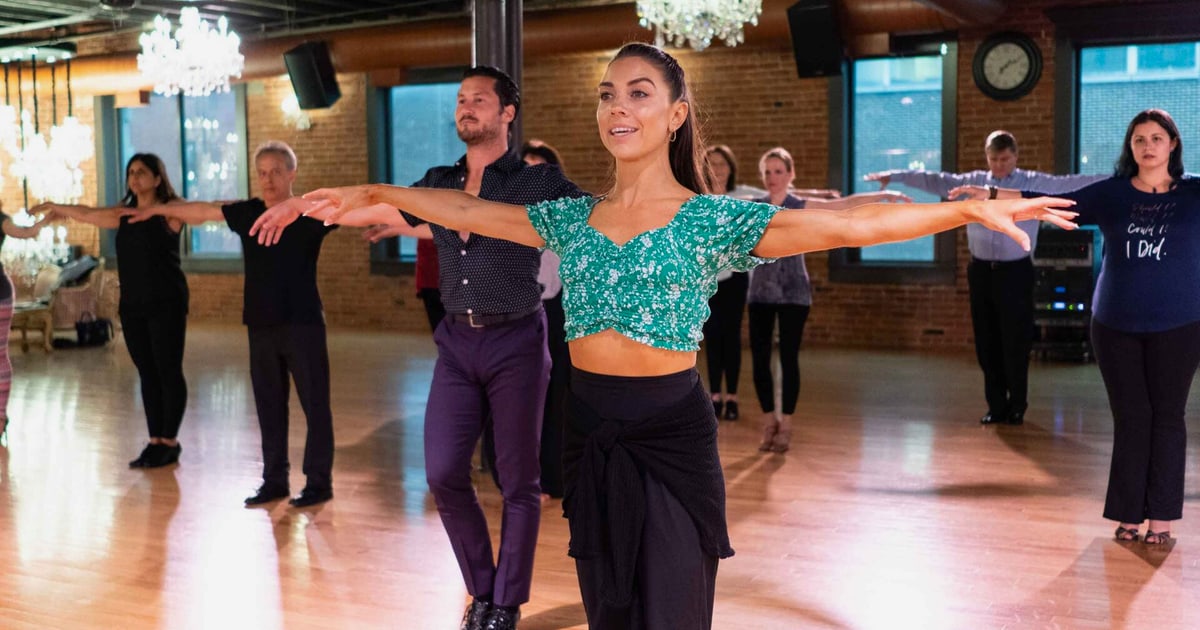
Line dancing is one of the most accessible social dance forms in the world. You don't need a partner, you don't need formal training, and you don't need to memorize complex routines before your first class. You just need to follow a repeating sequence of steps alongside everyone else in the room.
This guide covers what line dancing actually is, where it came from, the most popular dances you'll encounter, how to read basic step terminology, and practical ways to get started—whether at a local bar, community center, or from your living room.
What Is Line Dancing?
Line Dancing: A Beginner's Guide to Steps, Songs & Styles - What Is Line Dancing?.
A line dance is a choreographed dance performed by a group of people arranged in one or more lines or rows. Everyone faces the same direction and executes the same repeating sequence of steps in unison. Unlike circle dancing, dancers don't hold hands or make physical contact. Unlike partner dances such as two-step or swing, you don't need anyone else to participate.
Each line dance is typically tied to a specific song. The Electric Slide, for example, is danced to "Electric Boogie" by Marcia Griffiths. The Macarena is inseparable from Los del Río's 1990s hit of the same name. When the song plays, dancers automatically fall into the associated choreography.
Line dancing is practiced in country-western bars, social clubs, ballrooms, community centers, and increasingly in fitness studios. It often shares a dance program with other country-western styles like two-step, waltz, and polka, but modern line dancing has expanded far beyond country music.
A Brief History of Line Dancing
Line Dancing: A Beginner's Guide to Steps, Songs & Styles - A Brief History of Line Dancing.
The exact origins of line dancing are difficult to pin down. Dance historians offer competing accounts, and as music historian Christy Lane has noted, asking ten people when line dancing began will likely produce ten different answers. What's clear is that the style grew out of several converging traditions.
Early Influences
Many of the steps and terminology used in modern line dancing trace back to folk dances brought to North America by European immigrants in the 1800s. During the 1860s through the 1890s, these dances evolved into what would become country-western dance. American schools began incorporating folk dancing into physical education classes in the early 1900s, cementing it as a social activity.
The First True Line Dances
One of the earliest recognized line dances was the Madison, a novelty dance created in Columbus, Ohio, in 1957. It gained regional popularity in Baltimore before appearing on television dance shows in 1960. The 1961 "San Francisco Stomp" also meets the definition of a line dance.
The Disco Era
The 1970s disco boom produced a wave of line dances choreographed to disco hits. The L.A. Hustle, a modified Madison, began in a small Los Angeles disco in 1975 and reached the East Coast as the Bus Stop by spring 1976. The Nutbush, danced to Tina Turner's "Nutbush City Limits," also emerged during this period.
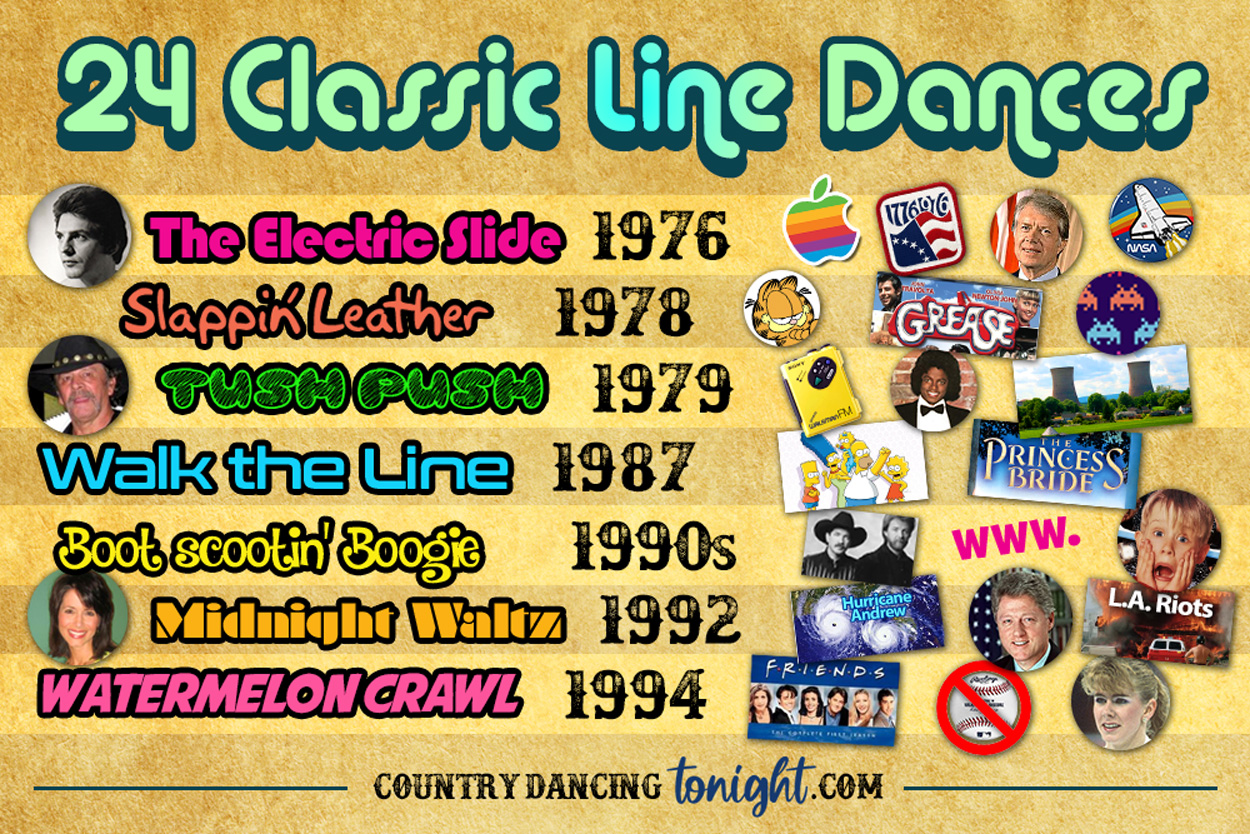
The Electric Slide, created in 1976 and associated with Bunny Wailer's "Electric Boogie," became one of the most enduring line dances in American culture. The 1977 release of Saturday Night Fever pushed disco and its associated dance styles to new heights of popularity.
The Country Boom
The 1980 film Urban Cowboy triggered a surge of interest in country-western culture, including its dance forms. Over a dozen line dances were created for country songs during the 1980s. The 1990 music video for Billy Ray Cyrus's "Achy Breaky Heart" is widely credited with launching line dancing into the mainstream, and the 1992 Brooks & Dunn cover of "Boot Scootin' Boogie" spawned at least 16 line dances bearing its name.
Beyond Country
In the mid-1990s, choreographer Max Perry had a worldwide hit with "Swamp Thang," a techno line dance set to The Grid's "Swamp Thing." This helped establish that line dancing could work with music beyond country. The 1997 Steps song "5,6,7,8" brought line dancing to audiences outside the U.S., and the arrival of Country Music Television in Europe further fueled its growth.
Today, "modern line dance" describes styles that blend pop, Latin, Irish, big band, and country influences. Participants often wear casual clothing and dance trainers rather than Western-style boots.
Popular Line Dances You Should Know
Line Dancing: A Beginner's Guide to Steps, Songs & Styles - Popular Line Dances You Should Know.
If you're new to line dancing, these are the dances you'll most likely encounter at social events, weddings, and classes.
The Electric Slide
The Electric Slide is arguably the most famous line dance in the world. It's a four-wall dance, meaning the sequence rotates 90 degrees each time through. The steps are simple—grapevines, steps, and turns—making it an ideal starting point for beginners. It's danced to "Electric Boogie" by Marcia Griffiths and appears at weddings, parties, and community events everywhere.
The Macarena
The Macarena exploded in the 1990s alongside Los del Río's hit song. The dance is simple enough that it became a global phenomenon, performed at sporting events, school dances, and family gatherings. It's a one-wall dance with a memorable arm sequence that most people learn within minutes.
Boot Scootin' Boogie
Choreographed by Bill Bader for the 1990 Asleep at the Wheel single, this dance gained massive popularity after Brooks & Dunn covered the song in 1992. It's a staple of country-western venues and remains one of the most requested line dances at country bars.
The Nutbush
Danced to Tina Turner's "Nutbush City Limits," this line dance originated in the 1970s and maintains a devoted following, particularly in Australia where it's a cultural institution at social gatherings.
Achy Breaky Heart
Billy Ray Cyrus's 1992 hit came with a line dance that helped catapult western line dancing into mainstream consciousness. The dance is straightforward and frequently taught in beginner classes.
Understanding Walls and Step Counts
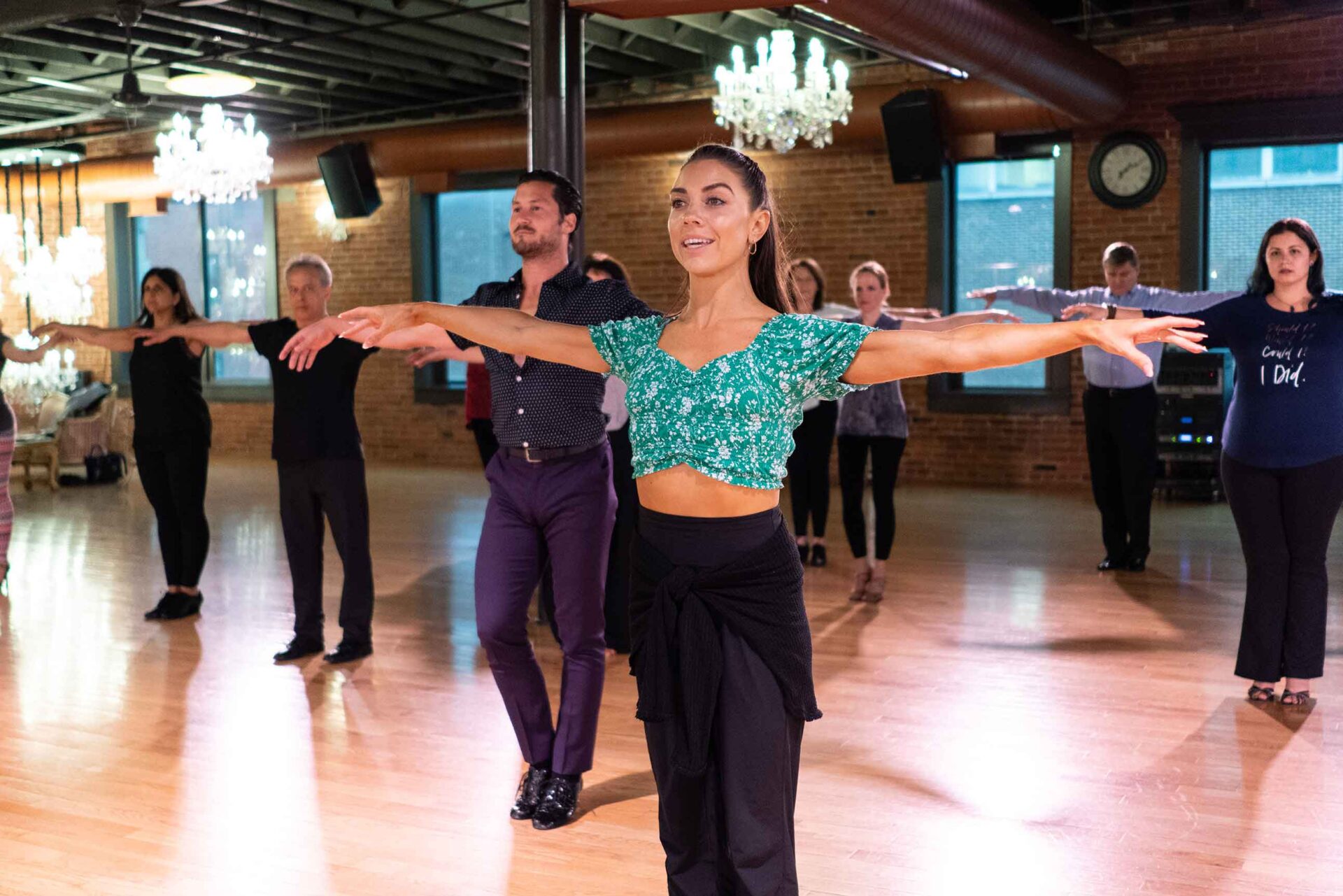
Line Dancing: A Beginner's Guide to Steps, Songs & Styles - Understanding Walls and Step Counts.
Line dances are commonly described by their number of walls. A wall is the direction dancers face at any given moment—front, back, or either side.
- One-wall dance: Dancers face the same direction at the end of the sequence as at the beginning. No turn or a full 360-degree turn occurs.
- Two-wall dance: Repetitions end alternately at the back and front walls. Dancers turn 180 degrees during one sequence. The samba line dance is an example.
- Four-wall dance: The direction faced at the end of the sequence is 90 degrees to the right or left. Dancers face each of the four walls in turn over four repetitions. The hustle line dance is an example.
Understanding wall counts helps you anticipate where you'll be facing when the sequence repeats, which is especially useful when learning a new dance from a video or instructor.
Basic Line Dance Steps and Terminology
Most line dances are built from a small vocabulary of steps. Learning these fundamentals makes picking up new dances dramatically easier.
Grapevine
A side-stepping sequence: step right, cross left behind, step right, touch left. It can be performed in either direction and is a building block for countless dances, including the Electric Slide.
Step-Touch
Step to the side with one foot, then bring the other foot to touch beside it. This simple movement appears in beginner dances and warm-ups.
Kick-Ball-Change
A quick three-count movement: kick one foot forward, step onto the ball of that foot, then shift weight to the other foot. It adds rhythmic texture to many routines.
Pivot Turn
A turn executed by stepping forward and rotating on the balls of both feet. Pivot turns are common in two-wall and four-wall dances.
Jazz Box
A four-step pattern: cross one foot over the other, step back, step to the side, step forward. It's borrowed from jazz dance and appears frequently in line choreography.
Heel Dig and Toe Tap
Touching the heel or toe to the floor in a specific direction without transferring weight. These accents give country line dances their characteristic style.
How to Start Line Dancing
Getting started with line dancing requires no special equipment or prior experience. Here's a practical path forward.
1. Find a Class or Venue
Country-western bars, community centers, dance studios, and social clubs frequently offer line dancing nights. Many venues host beginner sessions before the main event, giving you a low-pressure environment to learn. Check local event listings, Meetup groups, or community bulletin boards.
2. Learn from Video Tutorials
If you prefer to practice at home first, video tutorials are an excellent resource. The best beginner tutorials teach steps slowly, repeat sequences multiple times, and then run through the full dance to music. Look for instructors who face away from the camera so you can mirror their movements naturally.
3. Start with One-Wall Dances
Begin with dances that don't require turns, such as the Macarena or simple beginner routines. Once you're comfortable with the basic step vocabulary, progress to two-wall and four-wall dances like the Electric Slide.
4. Dress for Comfort
Modern line dancing doesn't require Western wear. Casual clothing and supportive shoes with smooth soles are ideal. Dance trainers or shoes that allow easy pivoting will make turns much easier on your knees and ankles.
5. Don't Worry About Mistakes
Line dancing is a social activity, not a performance. Everyone in the room has missed a step at some point. The repeating structure means you'll get another chance on the next sequence—often within seconds.
Line Dancing Beyond the Dance Floor
Line dancing has expanded well beyond its country-western roots. Today you'll find line dancing classes at fitness studios, flash mobs in public spaces, and line dance routines choreographed to pop, Latin, and electronic music. The "modern line dance" movement embraces diverse musical genres while keeping the core format: a group of people moving in unison through a repeating sequence.
For event organizers, community groups, and dance instructors, coordinating classes and events often involves managing communications across multiple channels. Some organizers use unified messaging platforms to keep dancers informed about schedule changes, new choreography, and venue updates across different messaging apps simultaneously. Tools like UnifyPort provide a single API for sending and receiving messages across Telegram, WhatsApp, LINE, and other channels, which can simplify outreach for dance communities that span multiple platforms. For a deeper look at how social messaging works for groups and businesses, see this guide to social messaging.
Related reading
- LINE Features: The Complete Guide to Messaging, Calls & More - Explore LINE's messaging, calling, stickers, Timeline, LINE Pay, and business tools. Learn how developers can integrate LINE via a unified messaging API.
- CM.com API: Channels, Docs, Pricing, and Alternatives - A practical guide to the CM.com API: messaging channels, developer docs, authentication, pricing considerations, and how it compares to unified messaging APIs.
- Unipile Pricing Explained: Plans, Costs & Alternatives - Understand Unipile pricing in 2025: the €49/month base plan, per-account tiers, what counts as a linked account, and how it compares to unified messaging API alternatives.
Sources and further reading
- Line dance - From Wikipedia, the free encyclopedia
- BEGINNER LINE DANCE - ELECTRIC SLIDE - TUTORIAL! - Learn the steps to the popular Electric Slide Line Dance!
- 4.6M views · 60K reactions | Crisco Line Dance 🤠🪩 Choreographed by George Blick / Standard Western | Miranda Lambert - Crisco Line Dance 🤠🪩 Choreographed by George Blick / Standard Western
Frequently Asked Questions
Do I need a partner for line dancing?
No. Line dancing is performed individually in a group. You don't need a partner, which makes it one of the most accessible social dance forms.
What should I wear to a line dancing class?
Casual, comfortable clothing and supportive shoes with smooth soles. Dance trainers or shoes that allow pivoting are ideal. Western boots are optional and not required for modern line dancing.
Is line dancing only for country music?
No. While line dancing has strong country-western roots, modern line dancing incorporates pop, Latin, disco, Irish, big band, and electronic music. The Electric Slide, Macarena, and Nutbush are all non-country examples.
How long does it take to learn a line dance?
Most beginner line dances can be learned in 15 to 30 minutes with a good instructor or tutorial. The repeating structure means you practice the same sequence many times in a single song.
What's the easiest line dance for beginners?
The Macarena and the Electric Slide are widely considered the easiest entry points. Both use simple, repetitive steps and are taught at nearly every beginner class.
What does "four-wall" mean in line dancing?
A four-wall dance rotates 90 degrees each time through the sequence, so dancers face all four walls over four repetitions. The Electric Slide and the hustle line dance are examples.
Conclusion
Line dancing endures because it removes the barriers that keep people off the dance floor. No partner required, no formal training needed, and a musical range that spans country, disco, pop, and Latin. The core experience—moving in sync with a room full of people through a repeating sequence—remains as satisfying today as it was when the Madison debuted in 1957.
Whether you start with a video tutorial at home or show up to a beginner night at your local country bar, the path is the same: learn a few basic steps, follow the sequence, and let the repetition carry you. Before long, you'll be stepping through the Electric Slide without thinking about it.