
What Is Communication Platform as a Service (CPaaS)? A 2026 Guide
Learn what Communication Platform as a Service (CPaaS) is, how it works, key features, and how to choose a platform for messaging, voice, and video APIs.
What Is Communication Platform as a Service (CPaaS)? A 2026 Guide
Communication Platform as a Service (CPaaS) has become the backbone of modern digital engagement. Instead of building separate integrations for SMS, voice, video, and chat apps, businesses now use a single cloud platform to embed real-time communication into their products. This guide explains what CPaaS is, how it works, the key players, and how to choose the right approach for your stack.
What Is CPaaS?
Gartner defines CPaaS as a cloud-based platform that lets organizations embed voice, SMS, messaging apps, email, and video directly into applications. It delivers programmable, omnichannel experiences without requiring the complex telecom infrastructure that used to take months to build.
In practice, a CPaaS platform provides APIs and SDKs that developers call to send a WhatsApp notification, initiate a video session, or verify a user via SMS—all from the same codebase. The platform handles carrier relationships, compliance, scaling, and delivery, while your team focuses on the customer experience.
How CPaaS Works
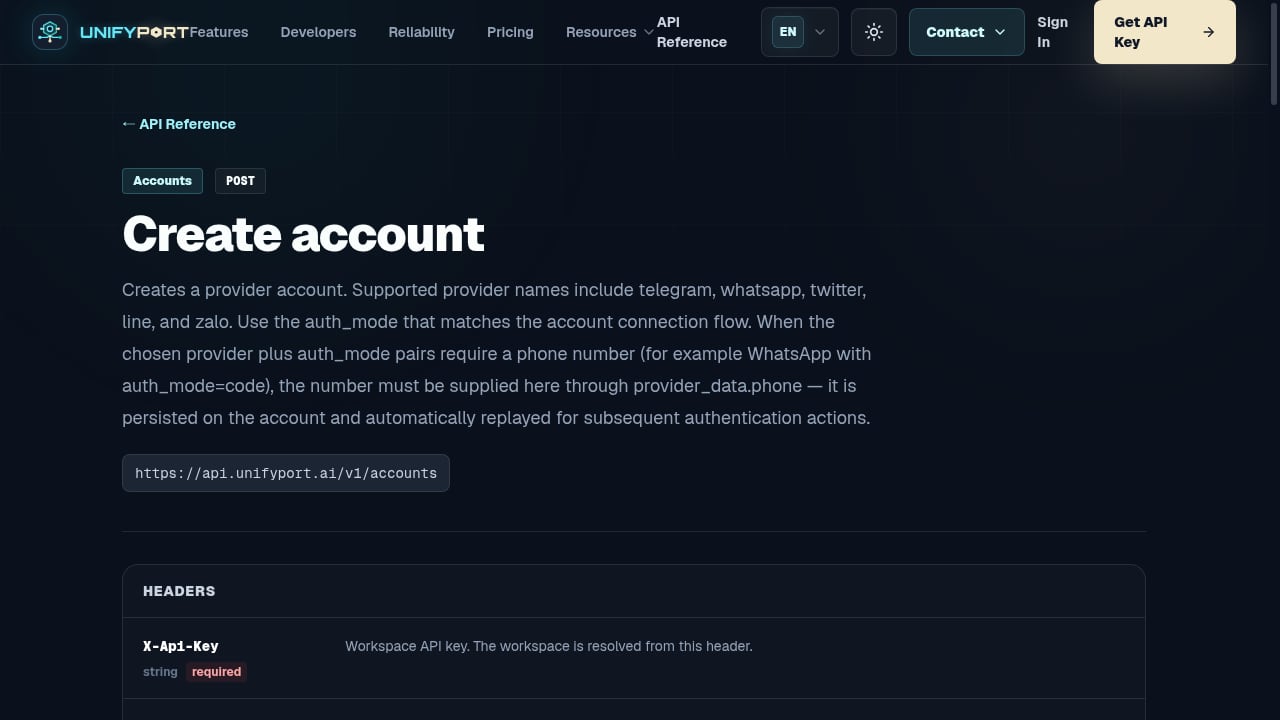
First viewport screenshot of Create account — API Reference — UnifyPort.
A CPaaS platform sits between your application and the communication networks. You make REST API calls or use server-side SDKs to trigger actions, and the platform translates those calls into carrier-grade delivery across channels.
Core components include:
- Programmable APIs for messaging, voice, and video
- Webhook events that notify your app about delivery status, incoming messages, or call state changes
- SDKs for web, iOS, Android, and server-side languages
- Authentication and verification services built on phone numbers or silent network signals
- A control plane for managing credentials, rate limits, and routing rules
This architecture lets a single engineering team support SMS, WhatsApp, voice calls, and in-app chat without hiring telecom experts for each channel.
Key CPaaS Features to Evaluate
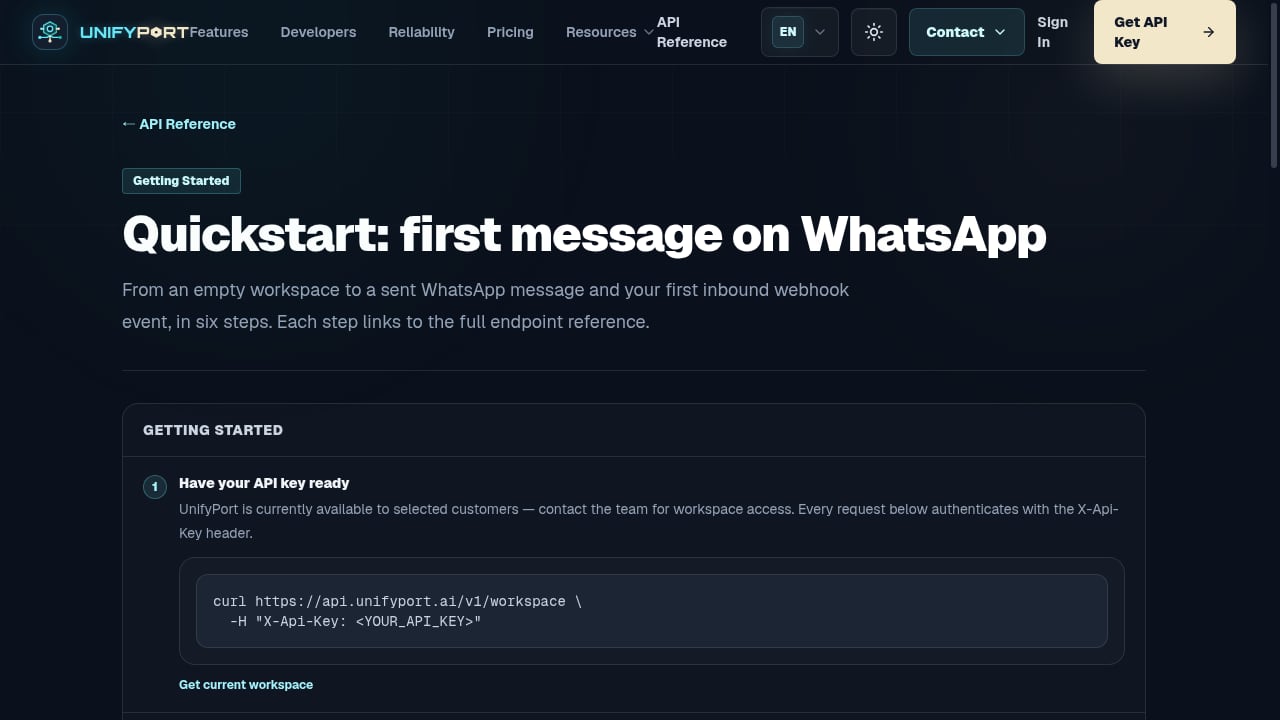
First viewport screenshot of Quickstart: first message on WhatsApp — API Reference — UnifyPort.
Not all CPaaS platforms are equal. When evaluating providers, look for these capabilities:
Omnichannel Reach
A strong CPaaS should cover the channels your customers actually use: SMS, MMS, RCS, WhatsApp, Facebook Messenger, Viber, voice, email, and push notifications. The broader the native coverage, the fewer third-party add-ons you need.
Developer Experience
SDKs in your stack’s languages, clear documentation, a sandbox environment, and predictable API design shorten time-to-market. Platforms like Twilio and Vonage have invested heavily in developer tooling, which is why over 12 million developers use Twilio alone.
Global Compliance and Deliverability
Carrier regulations, data residency requirements, and sender registration vary by country. The platform should abstract this complexity, maintain high deliverability rates, and provide tools for managing opt-ins and consent.
AI and Automation
Modern CPaaS offerings layer AI on top of raw channels. This includes chatbots, sentiment analysis, predictive routing, and customer journey orchestration. Infobip’s Moments engine and Webex Connect’s low-code flow builder are examples of how automation is becoming a first-class feature.
Reliability and Scale
Look for built-in retries, idempotency, rate limiting, and failure isolation. When you send millions of messages, a single dropped webhook or a provider outage shouldn’t cascade through your system.
CPaaS vs. Unified Messaging APIs: Understanding the Spectrum
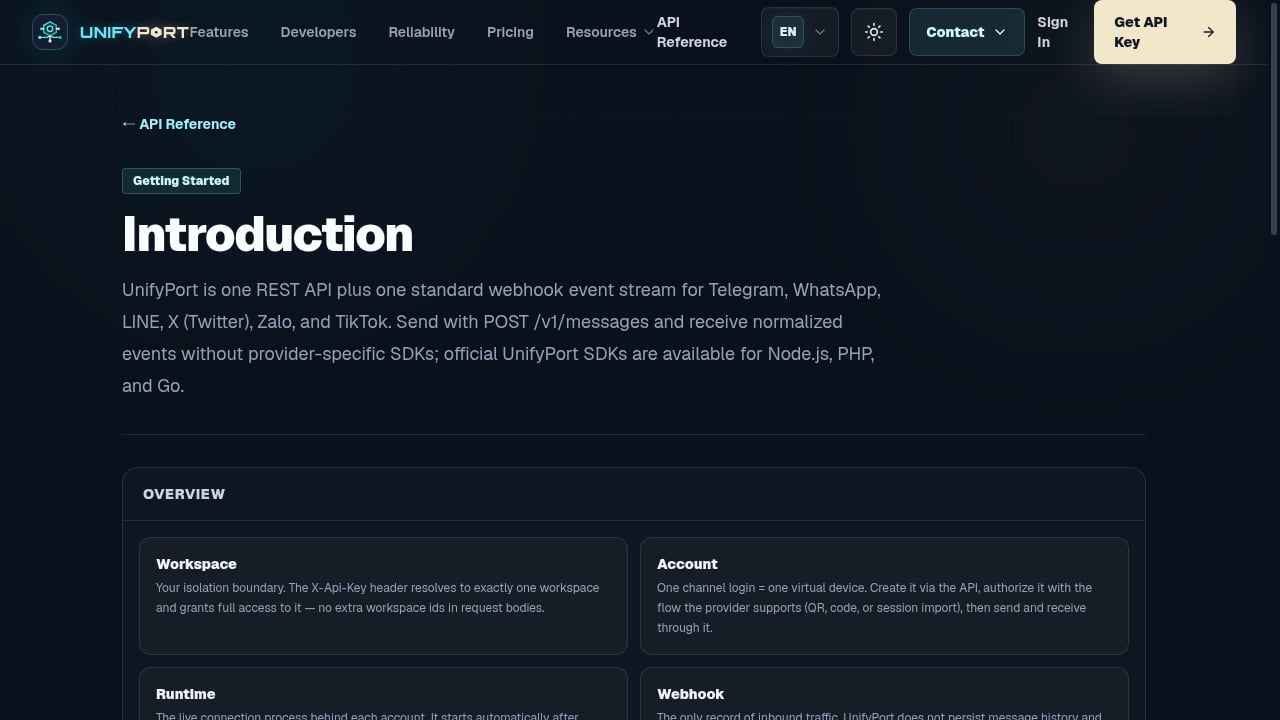
First viewport screenshot of Introduction — API Reference — UnifyPort.
Traditional CPaaS platforms like Twilio, Sinch, and Vonage give you raw access to telecom and messaging channels. You still need to handle the differences between each provider’s API, webhook format, and rate limit rules.
A unified messaging API sits one layer above. Instead of learning the WhatsApp Business API, the Telegram Bot API, and the LINE Messaging API separately, you interact with a single normalized interface. The platform translates your requests into provider-specific calls and converts all incoming events into a consistent JSON shape.
This approach is especially valuable for teams building AI agents, CRMs, or notification systems that need to connect with multiple chat apps without maintaining separate integrations. For example, Unipile’s tutorial on connecting multi-channel messaging shows how a unified API can collapse weeks of integration work into days.
When your primary need is multi-channel messaging across consumer chat apps—Telegram, WhatsApp, LINE, X (Twitter), Zalo, TikTok—rather than raw telecom infrastructure, a platform that normalizes those channels becomes a practical alternative to a full CPaaS. UnifyPort, for instance, provides a single REST API and standardized webhook events for these channels, with built-in rate limiting, retries, and HMAC-SHA256 signature verification. It’s designed for developers who want to send and receive messages across platforms without managing provider-specific SDKs.
Top CPaaS Providers in 2026
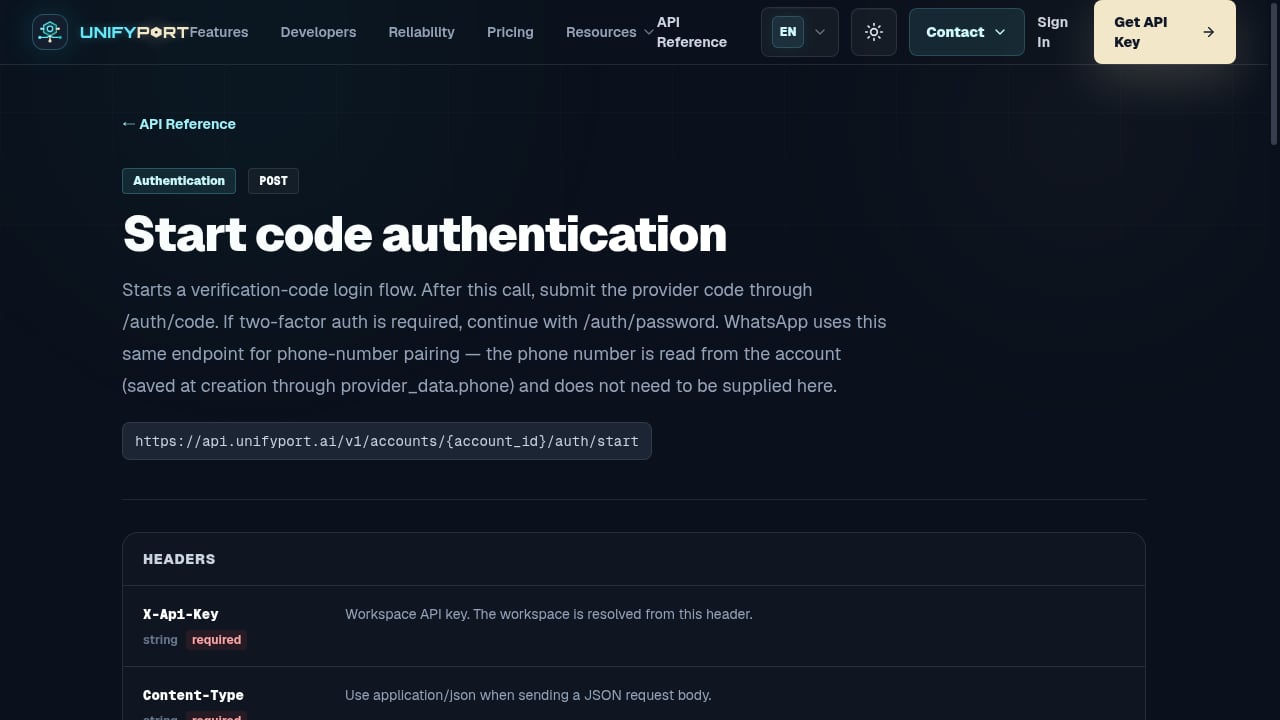
First viewport screenshot of Start code authentication — API Reference — UnifyPort.
Based on Gartner Peer Insights reviews and market presence, these platforms lead the category:
- Twilio: The largest developer-focused CPaaS, with deep APIs for messaging, voice, video, and email. Strong in global reach and AI-driven engagement.
- Vonage Communications APIs: Programmable voice, SMS, and video with a focus on API simplicity and network quality.
- Infobip: Omnichannel CPaaS with 30+ channels, a customer engagement platform, and chatbot-building tools.
- Sinch: AI-powered cloud communications with strong messaging, email, and fraud prevention capabilities.
- Webex Connect: Enterprise CPaaS with a visual flow builder for multi-channel journey orchestration.
- Azure Communication Services: Native integration with the Azure ecosystem, ideal for teams already on Microsoft cloud.
Each platform has strengths. Twilio excels at developer experience and ecosystem breadth. Infobip leads in channel variety and SaaS applications on top of CPaaS. Azure Communication Services wins when deep Azure integration matters.
How to Choose the Right CPaaS Approach
Start with the channels your customers use and the experience you want to deliver:
- If you need raw telecom APIs (SMS, voice, video) plus a few chat apps, a traditional CPaaS like Twilio or Vonage is the standard choice.
- If your product lives in the Azure ecosystem, Azure Communication Services reduces integration friction.
- If you need a broad set of consumer messaging channels with a single normalized API, a unified messaging platform can reduce development overhead. This is where tools like UnifyPort fit—providing a standardized event layer, webhook control plane, and SDKs for Node.js, PHP, and Go, so your AI agent or CRM connects to multiple chat platforms through one integration.
- If you want a low-code journey builder, Webex Connect or Infobip’s Moments platform let business teams orchestrate communications without deep engineering.
For a deeper look at how unified APIs connect AI agents to messaging channels, see our comparison of the best AI chatbots in 2026 and how they integrate with communication layers.
CPaaS and the Modern Digital Platform
CPaaS doesn’t exist in isolation. It’s part of a broader digital platform strategy that includes CRM, data platforms, and automation tools. Understanding what a digital platform is helps you see where CPaaS fits: it’s the communication layer that connects your business logic to real-time customer interactions across every channel.
Related reading
- Recruitment Messaging Automation: A Practical Guide for 2026 - Learn how recruitment messaging automation unifies email, SMS, and chat apps to boost candidate engagement, reduce no-shows, and sync data with your ATS.
- How to Delete Your Telegram Account Permanently in 2026 - Step-by-step guide to permanently delete your Telegram account via browser, mobile, or auto-deletion. Learn what happens to chats, groups, and contacts before you deactivate.
Frequently Asked Questions
What is the difference between CPaaS and UCaaS?
CPaaS provides programmable APIs for developers to embed communication features into applications. UCaaS (Unified Communications as a Service) delivers ready-made tools like VoIP phones, team messaging, and video conferencing for internal collaboration. CPaaS is for building; UCaaS is for using.
How much does CPaaS cost?
Pricing is typically usage-based: per message sent, per minute of voice, or per active video session. Some platforms offer graduated monthly tiers for dedicated services. Always check for hidden costs like carrier surcharges, number rental, and compliance fees.
Can I use CPaaS for outbound marketing?
Yes, but you must comply with regulations like TCPA in the US and GDPR in Europe. Most CPaaS platforms provide tools for consent management, opt-out handling, and sender registration.
Do I need a CPaaS if I only need messaging?
Not necessarily. If your needs are limited to consumer chat apps, a unified messaging API may be simpler and more cost-effective than a full CPaaS. Evaluate whether you need voice, video, and telecom features, or just multi-channel messaging.
How do webhooks work in CPaaS?
When an event occurs—a message is delivered, a call is answered, a user sends a reply—the platform sends an HTTP POST to your configured endpoint. Your app processes the event and responds. A well-designed webhook control plane handles signature verification, retries, and subscription management.
Conclusion
Communication Platform as a Service has evolved from a developer toolkit into a strategic layer for customer engagement. Whether you choose a full CPaaS like Twilio or a focused unified messaging API depends on your channels, team structure, and integration requirements. The common thread is abstraction: the right platform hides telecom complexity, normalizes provider differences, and lets your team ship faster. As AI agents and omnichannel automation become the norm, the communication layer you build on today will determine how quickly you can adapt tomorrow.