
Syniverse CPaaS Omni-Channel Messaging Review 2026
Evidence-based Syniverse CPaaS Omni-Channel Messaging review: channels, unified API, Communication Assistant, pricing signals, setup, and who it fits.
Syniverse CPaaS Omni-Channel Messaging Review: A Practical 2026 Evaluation
Syniverse is best known as a global connectivity and roaming specialist, but its CPaaS Omni-Channel Messaging platform targets a different job: letting developers and enterprises add SMS, MMS, RCS Business Messaging, WhatsApp, Facebook Messenger, WeChat, push notifications, and voice to their own applications through REST APIs. This review examines what the platform actually offers, where it fits, and where buyers should look carefully before committing.
What Syniverse CPaaS Omni-Channel Messaging actually is
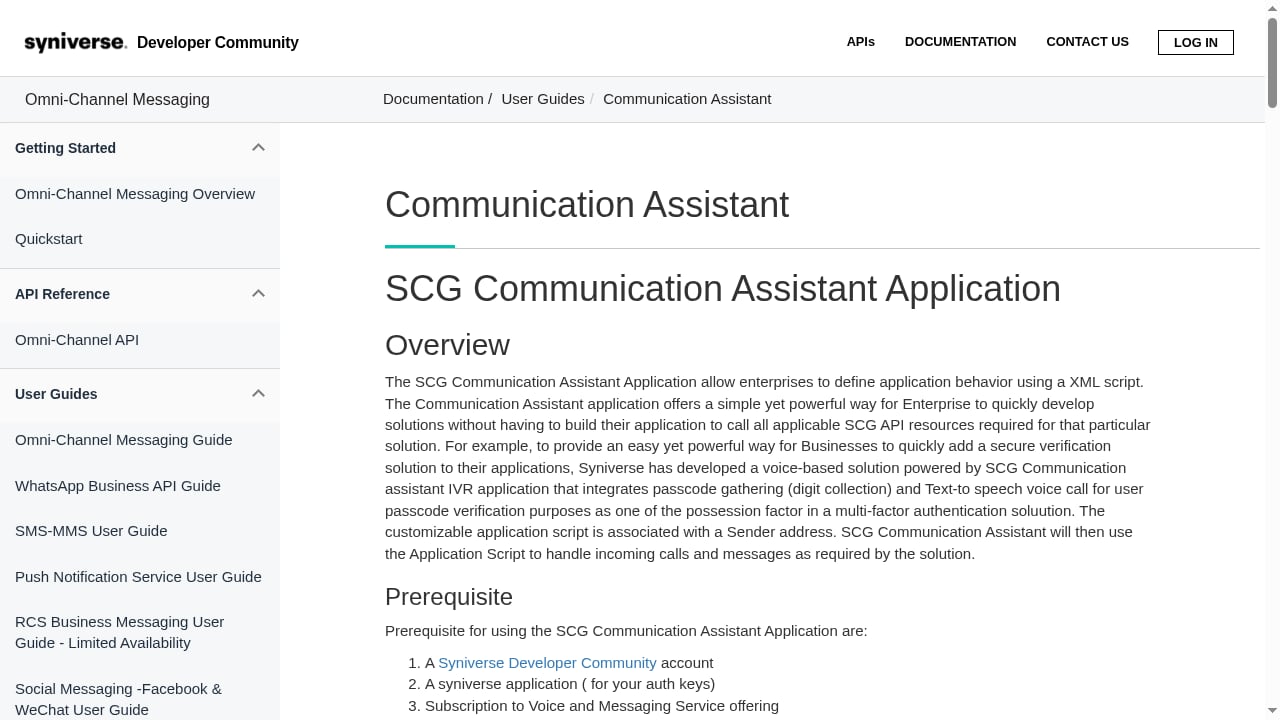
First viewport screenshot of Communication Assistant :: SDC Documentation.
At its core, the product is a cloud communications layer with a unified API endpoint across channels. Instead of maintaining separate integrations for each messaging network, a team can send and receive across channels through one set of credentials and one documentation surface. Syniverse positions the platform for businesses, individual developers, and enterprise customers — a broad audience that shapes both its strengths and its trade-offs.
Beyond raw send/receive APIs, two features stand out:
- Communication Assistant — an XML-scripted engine that defines application behavior for voice and messaging flows. Typical uses include voice-based passcode verification and multi-factor authentication, where the call flow logic lives in a script rather than in your application code.
- Chatbot Connector Services — connectors that link external chatbot platforms (for example, Microsoft Azure Direct Line) to Syniverse messaging channels, so an existing bot can reach users over SMS, WhatsApp, or other supported channels without a full rebuild.
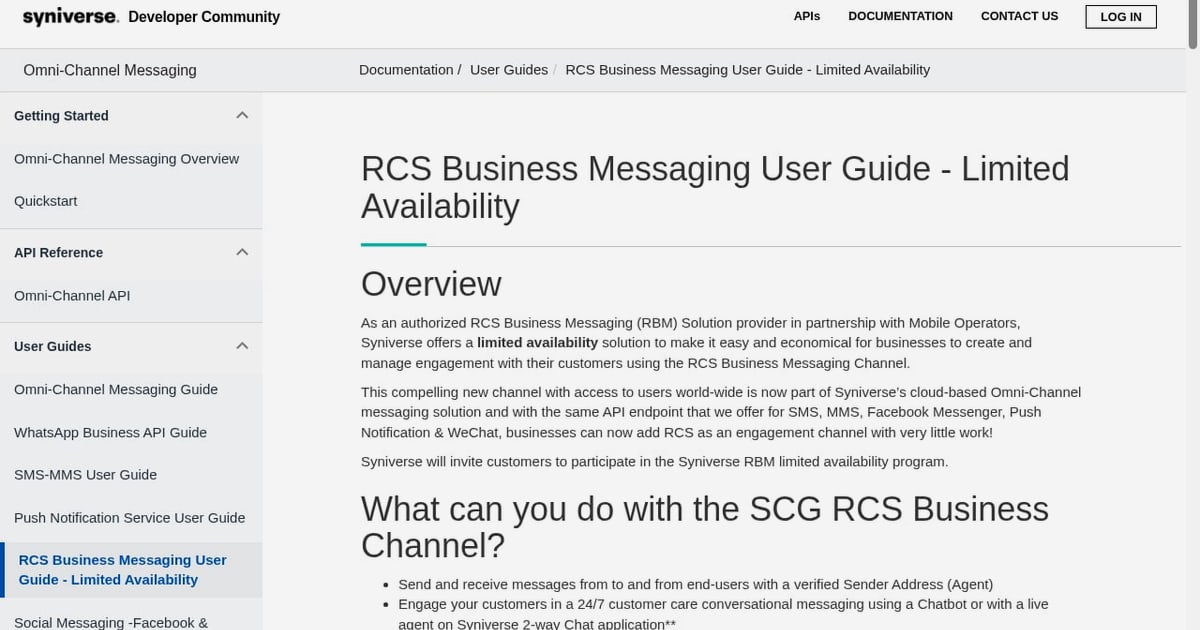
The documentation site provides per-channel user guides and sample requests, which matters more than it sounds: multi-channel platforms often fail at the integration stage, not the feature list stage.
Channels and global reach
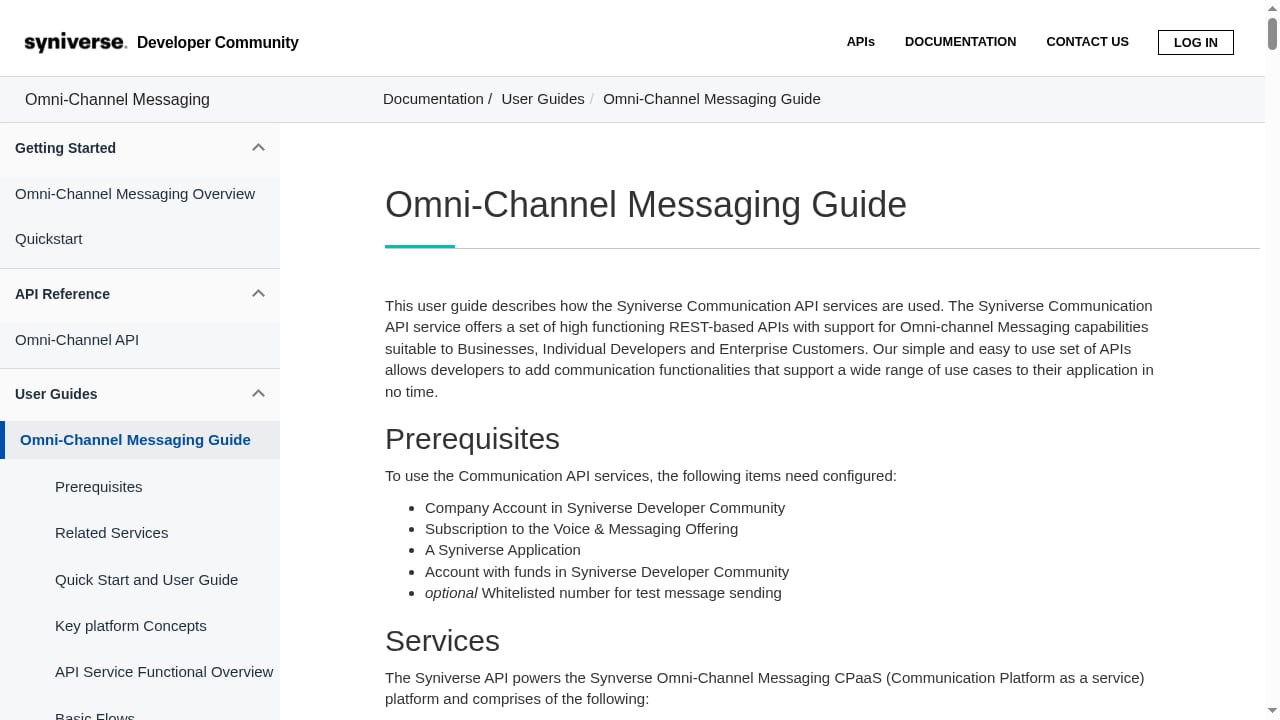
First viewport screenshot of Omni-Channel Messaging Guide :: SDC Documentation.
Channel coverage is the headline argument for an omni-channel CPaaS, and Syniverse's list is wide:
| Channel | Typical use |
|---|---|
| SMS | OTPs, alerts, transactional notifications |
| MMS | Promotions, visual support content |
| RCS Business Messaging | Rich branded messaging where carrier support exists |
| WhatsApp Business API | High-engagement conversational support and commerce |
| Facebook Messenger, WeChat | Regional and social-first audiences |
| Push notifications | In-app engagement |
| Voice | Verification, MFA, notifications |
Reach claims are substantial: Voice API coverage across more than 200 countries, and WhatsApp access to roughly 2 billion users in 180+ countries. For teams with cross-border requirements, that footprint is a genuine differentiator. The practical caveat is that channel availability is not the same as channel quality in every market — SMS filtering, RCS carrier readiness, and WhatsApp template approval all vary by region and use case. If your traffic mix leans heavily on A2P SMS, it is worth reading independent industry analysis of how SMS routing and aggregator dynamics affect deliverability before assuming global coverage equals global performance.
If you are still deciding how much channel breadth you actually need, our developer guide on engaging customers across messaging channels with a unified API walks through the architecture decisions that come before vendor selection.
Ideal users and use cases
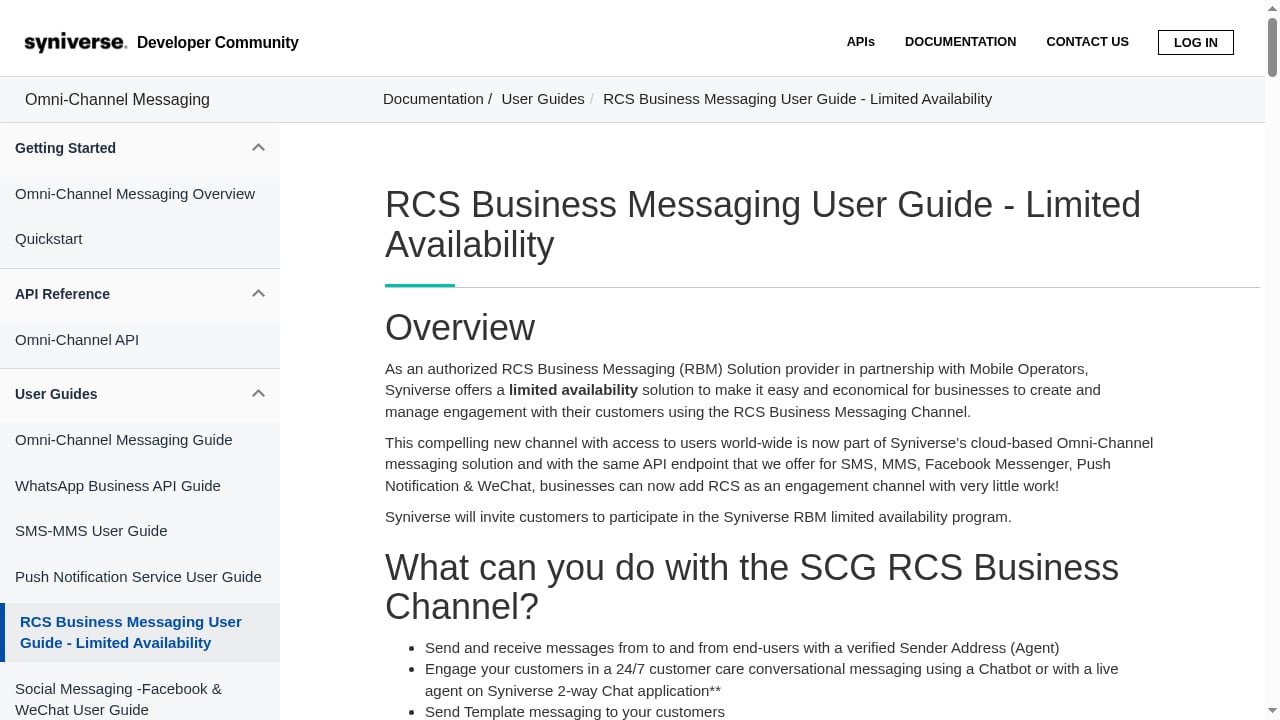
First viewport screenshot of RCS Business Messaging User Guide - Limited Availability :: SDC Documentation.
Syniverse CPaaS fits best in a few recognizable situations:
Enterprises already in the Syniverse ecosystem. Organizations using Syniverse for connectivity, roaming, or carrier services get procurement and relationship leverage that a standalone developer-first CPaaS cannot match.
Teams with voice verification requirements. The Communication Assistant's XML scripting model is well suited to passcode verification and MFA flows, where deterministic call behavior matters more than visual flow builders.
Businesses with existing chatbot investments. If you already run a bot on Azure Direct Line or a similar platform, Chatbot Connector Services can extend it to messaging channels with less rework than a ground-up integration.
Cross-border engagement programs. Marketing, logistics, and financial services teams that need SMS, WhatsApp, and voice in many countries from one provider.
Less obvious fits: small startups optimizing purely for time-to-first-message. A developer-first platform with generous free tiers and dense community examples will usually get a prototype running faster. Syniverse's prerequisites — a Syniverse Developer Community account, a subscription to the Voice & Messaging Service offering, and application credentials — imply a more structured onboarding path.
Strengths
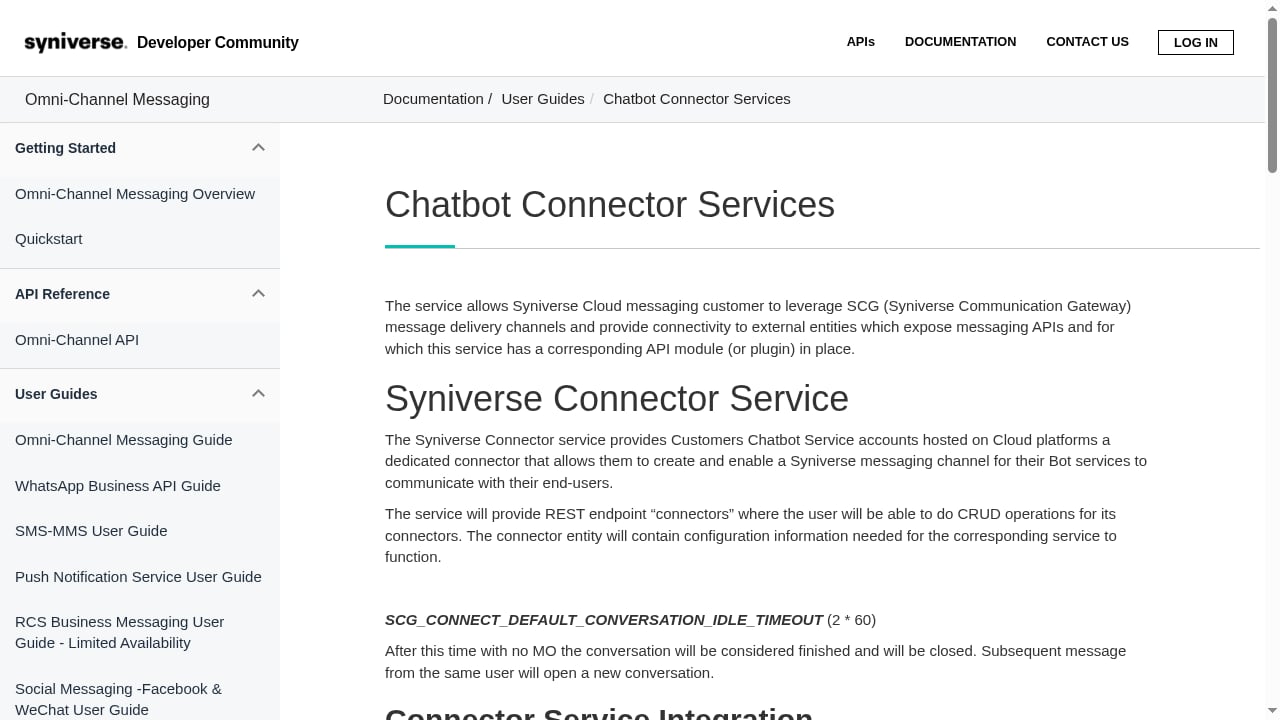
First viewport screenshot of Chatbot Connector Services :: SDC Documentation.
- Genuine channel breadth under one API. SMS, MMS, RCS, WhatsApp, Messenger, WeChat, push, and voice from a single endpoint reduces integration sprawl.
- Scriptable voice logic. Communication Assistant handles verification flows without forcing you to build state machines in your own backend.
- Chatbot interoperability. Connector services acknowledge that many enterprises already have bots and need a bridge, not a replacement.
- Enterprise-grade positioning. Syniverse has been evaluated alongside major CPaaS providers in analyst vendor assessments, including Omdia's CPaaS platform provider evaluations, which signals enterprise relevance even if the full reports sit behind a subscription.
- Documentation with per-channel samples. Sample requests per channel shorten the gap between reading docs and shipping code.
Limitations and things to verify
No review is honest without friction points. Based on the platform's structure and public evidence, watch for these:
- Opaque pricing. Syniverse does not publish rate cards the way developer-first CPaaS vendors do. Expect a sales conversation, volume commitments, and per-channel pricing that varies by destination. Budget for procurement time.
- Onboarding prerequisites. The subscription requirement for Voice & Messaging Service means you cannot simply sign up and send in minutes. Prototype timelines should account for account provisioning.
- Channel quality varies by market. RCS readiness and WhatsApp template approval are ecosystem constraints, not Syniverse-specific flaws, but they affect planning. Syniverse's own guidance on choosing between SMS and MMS is a useful reminder that format choice drives cost and reach.
- Developer community size. Compared with the largest CPaaS platforms, third-party tutorials, Stack Overflow answers, and open-source SDKs are thinner. Your team's ability to work from official docs matters more here.
- Webhook reliability is your responsibility. Multi-channel platforms deliver events asynchronously; you still need signature verification, idempotency, and retry handling on your side. Our webhook event processing guide covers the patterns that prevent duplicate sends and lost events.
Setup and integration path
A realistic implementation sequence looks like this:
- Create a Syniverse Developer Community account and request access to the Voice & Messaging Service offering.
- Provision application credentials for the channels you plan to use first — resist enabling everything at once.
- Start with one channel. SMS is usually the fastest validation; WhatsApp and RCS add approval steps.
- Model voice flows in Communication Assistant if verification or MFA is in scope, and test script behavior against real call paths.
- Connect existing bots through Chatbot Connector Services if applicable.
- Harden the event layer. Build idempotent webhook handlers before production traffic, not after the first duplicate OTP.
- Integrate with CRM, customer care, and POS systems so message history lands where agents and analysts already work.
Pricing signals and decision criteria
Syniverse does not publish public per-message rates, so treat pricing as quote-based. Signals to gather during evaluation:
- Per-channel unit costs for your top five destination countries
- Volume tiers and minimum commitments
- Voice per-minute rates and MFA flow pricing
- WhatsApp conversation pricing passthrough terms
- Support tiers and escalation SLAs
Then score vendors against your actual constraints. A simple decision framework:
- Choose Syniverse if you need broad global reach, voice verification scripting, chatbot bridging, and you value an enterprise relationship over self-serve speed.
- Choose a developer-first CPaaS if time-to-prototype, transparent pricing, and community support outweigh enterprise procurement advantages.
- Consider a unified messaging API layer if your real problem is normalizing many channels behind one interface rather than sourcing connectivity. Comparisons like UnifyPort vs Unipile vs Esendex show how that layer differs from a full CPaaS.
For a broader market view before shortlisting, see our ranked top 10 omnichannel customer communication platforms for 2026.
Related reading
- Top 10 Conversational Commerce & Engagement Platforms 2026 - Ranked 2026 review of the top 10 conversational commerce and customer engagement platforms, with transparent criteria, evidence, pricing signals, and buying guidance.
- How to Use UnifyPort with SleekFlow: Developer Setup Guide - Connect UnifyPort's unified messaging API to SleekFlow. Learn the architecture, setup steps, webhook flow, and practical examples for multi-channel messaging.
FAQ
Does Syniverse CPaaS support WhatsApp and RCS? Yes. The platform lists WhatsApp Business API and RCS Business Messaging alongside SMS, MMS, Messenger, WeChat, push, and voice, all reachable through a unified API endpoint.
What is the Communication Assistant used for? It lets enterprises define application behavior with XML scripts, commonly for voice-based passcode verification and multi-factor authentication flows.
Can I connect an existing chatbot? Yes. Chatbot Connector Services link external chatbot platforms such as Microsoft Azure Direct Line to Syniverse messaging channels.
Is pricing published? No public rate card is available. Pricing is quote-based and varies by channel, destination, and volume, so plan for a sales and procurement cycle.
What do I need before I can start building? A Syniverse Developer Community account, a subscription to the Voice & Messaging Service offering, and application credentials.
Conclusion
Syniverse CPaaS Omni-Channel Messaging is a credible enterprise option for teams that need wide channel coverage, scriptable voice verification, and a bridge for existing chatbots — especially organizations already working with Syniverse. It is not the fastest path from zero to first message, and its quote-based pricing demands diligence. Evaluate it against your destination mix, verification requirements, and internal tolerance for a structured onboarding process; if those align, the platform's breadth is a real advantage rather than a checkbox.