
UnifyPort vs Vonage: Unified Messaging API Comparison
Compare UnifyPort and Vonage for social messaging APIs. See how UnifyPort unifies WhatsApp, LINE, and more versus Vonage's broader CPaaS and UCaaS suite.
UnifyPort vs Vonage: Which Messaging API Fits Your Build?
If you're building customer support, notifications, or engagement workflows across social channels, you've likely encountered Vonage. It's a long-established communications platform with a broad suite of APIs. But broad isn't always better when your core need is unified social messaging. This comparison examines where UnifyPort, a focused unified messaging API, differs from Vonage's expansive CPaaS and UCaaS offerings—and which scenarios favor each.
What Each Platform Actually Does
First viewport screenshot of www.vonage.com.
UnifyPort is built around a single purpose: connecting developers to social messaging channels through one REST API and a standardized webhook stream. It supports WhatsApp, Telegram, LINE, TikTok, Zalo, and X (formerly Twitter). You send with one POST /v1/messages call and receive normalized events like message.received with consistent provider, account, conversation, sender, and message fields. SDKs exist for Node.js, PHP, Go, and Python.
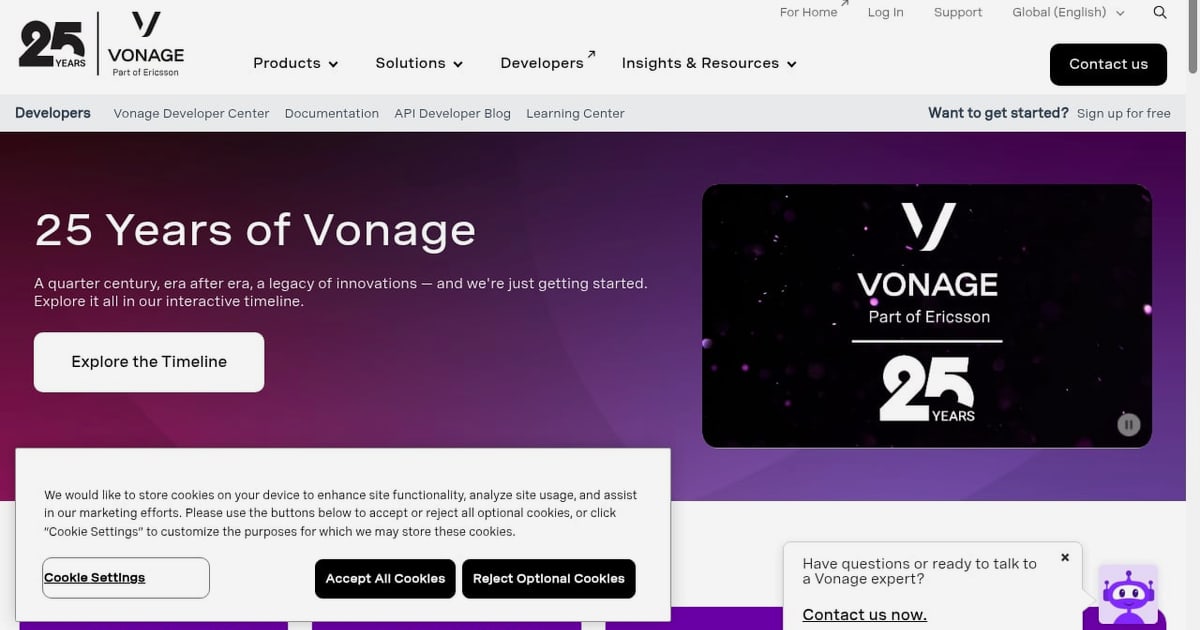
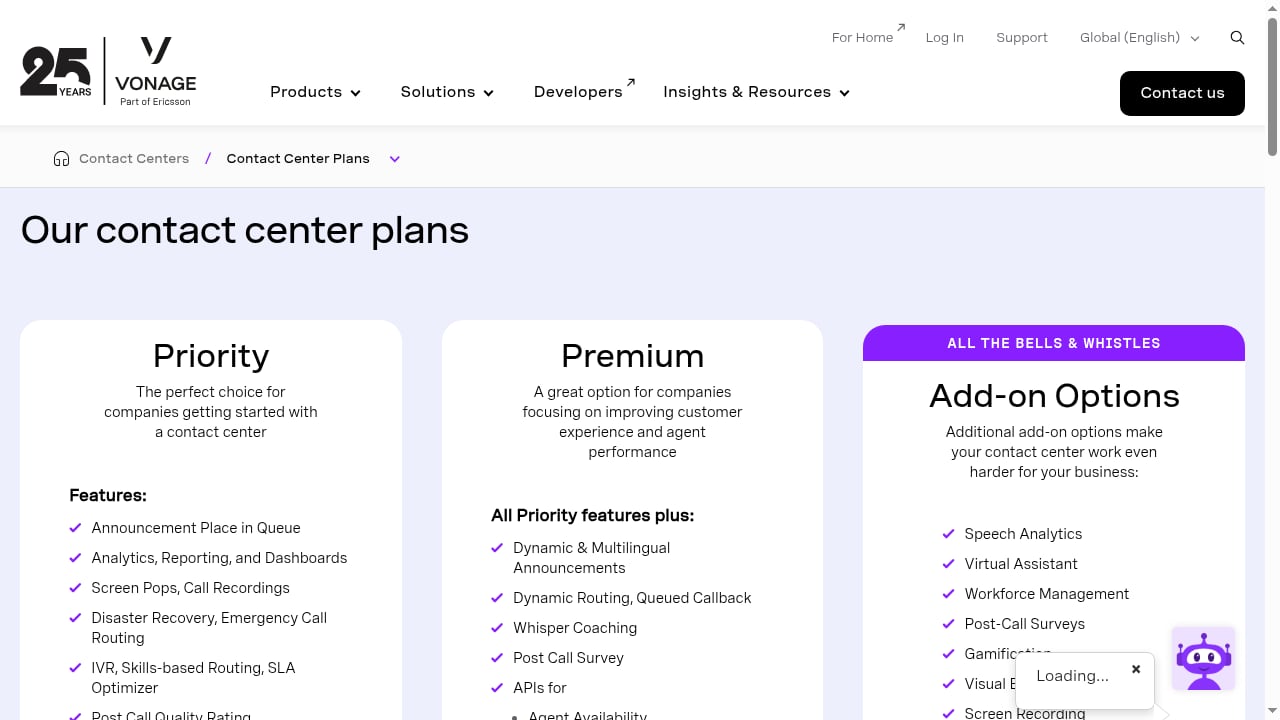
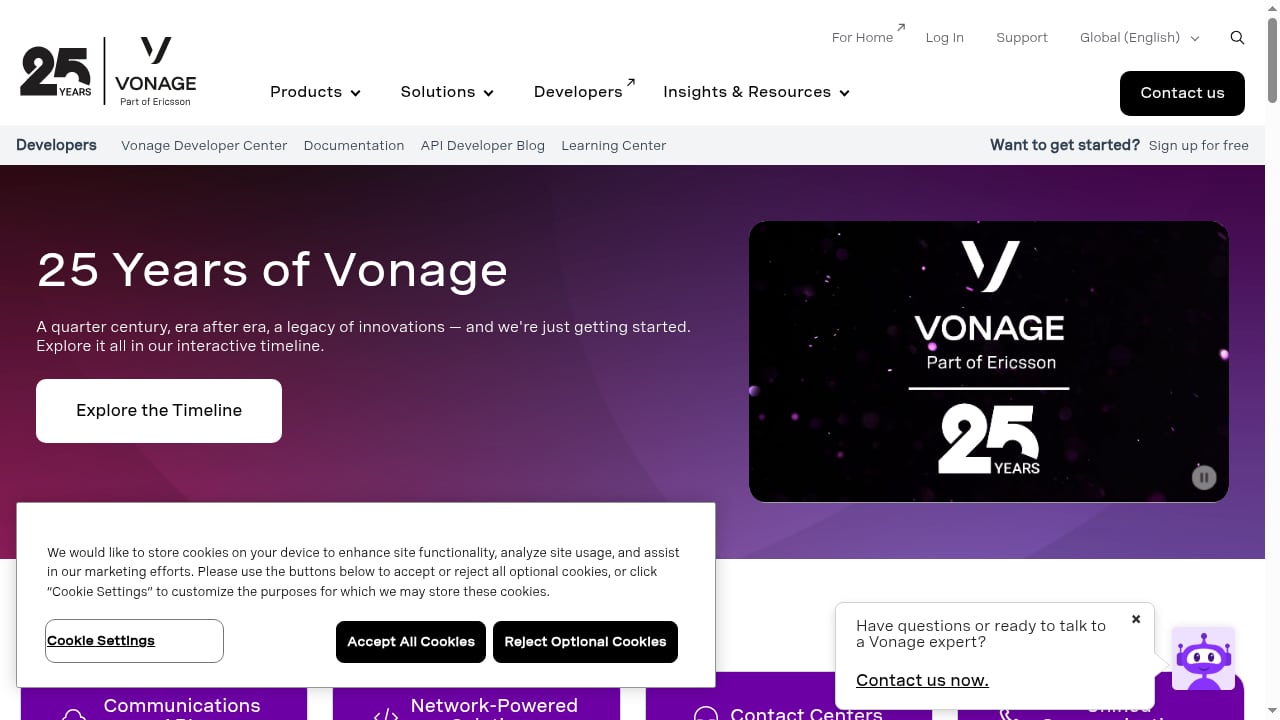
Vonage is a communications technology company offering voice, messaging, video, and data capabilities across Unified Communications, Contact Centers, and Communications APIs. It serves both businesses and developers, with usage-based API pricing and subscription plans for contact center and UC solutions. It's a mature, broad platform—but that breadth means social messaging is one piece of a much larger puzzle.
Where UnifyPort Shines for Social Messaging
One API, Consistent Schema
UnifyPort's core value is eliminating per-platform integration rebuilds. Instead of maintaining separate connectors for WhatsApp, LINE, and Zalo, you work with a single normalized event stream. This matters most in Asia-Pacific markets where LINE, Zalo, and TikTok are prominent and where building each integration from scratch is costly.
Rich Two-Way Messaging Features
UnifyPort supports text and media captions, mentions, message pinning, revocation, emoji reactions, and account lifecycle management—including QR-code, code, session, and Passkey authentication flows. These are practical features for support and engagement workflows, not just send-only notifications.
Transparent, Graduated Pricing
UnifyPort describes its pricing as transparent graduated monthly messaging-account costs in USD, with unified API access and free messaging accounts in every workspace. Wallet-mode and quota-based billing operations give teams control over spend without surprise add-ons.
Where Vonage Falls Short for Social-First Teams
First viewport screenshot of www.vonage.com.
Vonage is a capable platform, but its breadth introduces friction for teams focused on social messaging:
- Complexity and learning curve: Vonage is an open API platform that can be difficult to learn for companies without a developer on staff, according to GetVoIP's comparison. Its admin portal has been described as clunky, with occasional latency.
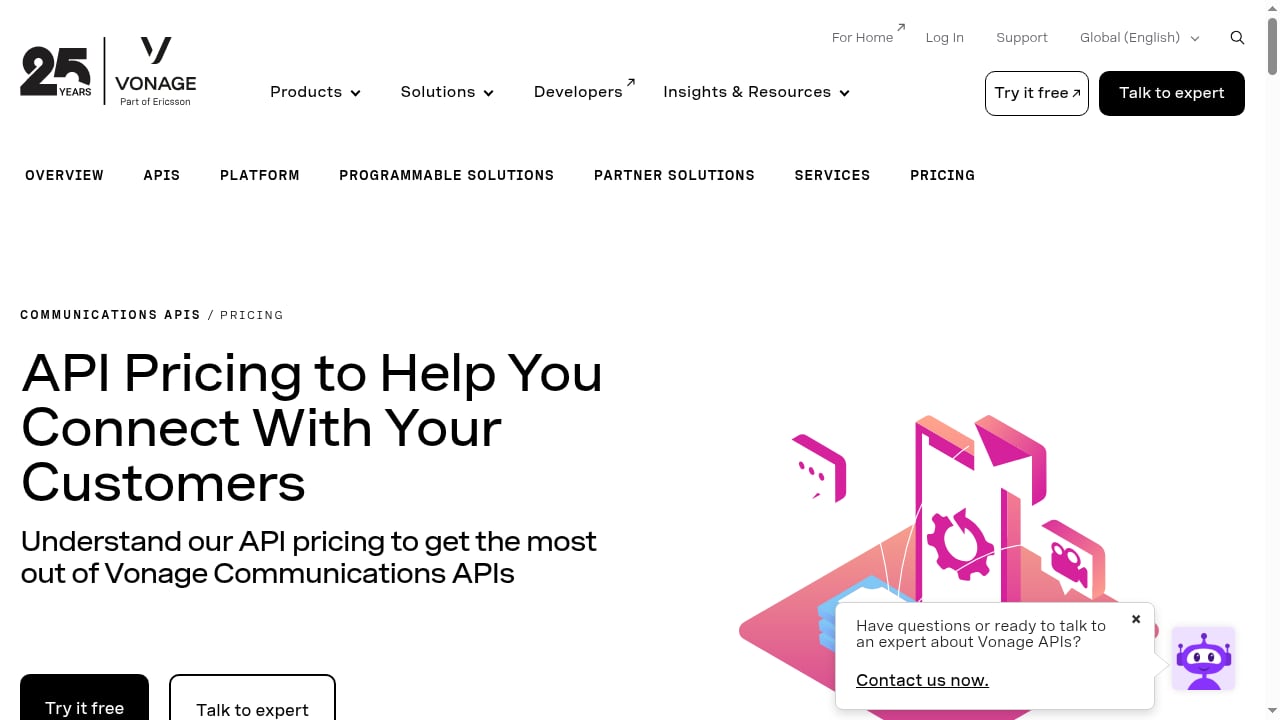
- Pricing opacity and add-on costs: Multiple sources report that Vonage's base plans are limited, with features like call recording, virtual fax, and conference bridge requiring paid add-ons. KrispCall's analysis notes that CRM integrations and advanced features often come at extra cost. GetVoIP also references the FTC's 2022 $100 million settlement with Vonage over hidden-fee practices.
- Support limitations: Vonage does not provide 24/7 live support unless users pay for the Support PLUS add-on, and users report inconsistent response times, per GetVoIP.
- Contract lock-in: Vonage typically requires a 12-month contract for promotional pricing, with early termination fees up to the remaining contract value, according to GetVoIP.
These weaknesses don't make Vonage a bad platform—they make it a different fit. If you need a full UCaaS suite with voice, video, and contact center, Vonage's breadth is an advantage. If you need focused social messaging, that breadth becomes overhead.
Feature Comparison at a Glance
First viewport screenshot of www.vonage.com.
| Capability | UnifyPort | Vonage |
|---|---|---|
| Primary focus | Unified social messaging API | Full CPaaS + UCaaS suite |
| Social channels | WhatsApp, Telegram, LINE, TikTok, Zalo, X | Messaging APIs (channel mix varies) |
| Webhook model | Standardized event stream (message.received, etc.) |
Provider-specific webhooks |
| SDKs | Node.js, PHP, Go, Python | Multiple SDKs available |
| Pricing model | Graduated monthly account costs, free accounts | Usage-based APIs + subscription UC/CC plans |
| Two-way features | Mentions, pinning, revocation, reactions, captions | Varies by channel and product |
| Account lifecycle | QR-code, code, session, Passkey auth | Managed via admin portal |
When to Choose UnifyPort
UnifyPort is the stronger fit when:
- Your core need is two-way social messaging across WhatsApp, LINE, Zalo, TikTok, or X.
- You want one API and one webhook schema instead of per-channel integrations.
- You're building for Asia-Pacific markets where LINE and Zalo are essential.
- You value transparent, graduated pricing without add-on surprises.
- Your team uses Node.js, PHP, Go, or Python and wants official SDKs.
For a deeper look at how UnifyPort compares to other platforms, see our Top 10 Unified Communication API Platforms 2026 and our UnifyPort vs Gupshup.ai comparison.
When Vonage Makes Sense
First viewport screenshot of www.vonage.com.
Vonage is worth considering when:
- You need a full Unified Communications suite (business phone, contact center) alongside APIs.
- Voice and video are as important as messaging.
- You're already invested in Vonage's ecosystem and can absorb its pricing structure.
- You need global scale across 190+ countries with a provider trusted by 1.8 million developers.
If you're evaluating Vonage against other CPaaS options, our Sinch review offers a useful parallel.
Practical Example: Sending a Message
With UnifyPort, a single call handles cross-channel delivery:
curl -X POST https://api.unifyport.com/v1/messages \
  -H "Authorization: Bearer YOUR_API_KEY" \
  -H "Content-Type: application/json" \
  -d '{
    "account_id": "acc_123",
    "to": "+1234567890",
    "channel": "whatsapp",
    "text": "Your order has shipped!"
  }'
The same pattern works for LINE, Telegram, or Zalo by changing the channel field. With Vonage, you'd typically use channel-specific endpoints and payloads, which means more integration work per channel.
Related reading
- respond.io Review 2026: Pricing, Pros & Ideal Users - Evidence-based respond.io review: unified inbox, AI Agents, WhatsApp API costs, pricing from $79/mo, setup, limitations, and who should use it in 2026.
- LINE Social Plugins vs Messaging APIs: What Developers Need - LINE Social Plugins add Share, Add friend, and Like buttons to webpages. Learn when you need a messaging API instead, and how UnifyPort unifies channels.
- UnifyPort + Conversational AI: SMS, Email & Voice Workflow - Learn how UnifyPort's unified messaging API pairs with Conversational AI and APIs for SMS, Email, and Voice. Setup steps, workflow, and practical examples.
Sources and further reading
- Vonage Alternatives & Competitors in 2026: Best Options for Streamlined Communication - Key takeaways MightyCall is best for small businesses and remote teams: affordable, easy to set up, and strong for outbound calling with predictive, power, preview dialers, AI answering-machine detection, and local-presence dialing. RingCentral is best for larger teams or enterprise-scale needs: better for organizations that need deeper integrations and an all-in-one communications setup. Aircall is…
FAQ
Is UnifyPort a replacement for Vonage?
Not exactly. UnifyPort replaces Vonage's messaging APIs for social channels, but Vonage also offers voice, video, and full UCaaS/CCaaS suites that UnifyPort does not. If you need those, Vonage remains relevant.
Does Vonage support WhatsApp, LINE, and Zalo?
Vonage offers messaging APIs, but its channel coverage and webhook normalization differ from UnifyPort's social-first approach. UnifyPort explicitly supports WhatsApp, Telegram, LINE, TikTok, Zalo, and X through one standardized API.
Which platform is better for Asia-Pacific markets?
UnifyPort is designed with Asia-Pacific channels like LINE, Zalo, and TikTok as first-class citizens, making it a stronger fit for teams targeting those markets.
How does pricing compare?
UnifyPort uses transparent graduated monthly messaging-account costs with free accounts in every workspace. Vonage uses usage-based API pricing plus subscription plans for UC and contact centers, with add-ons that can increase total cost.
Can I use both platforms together?
Yes. Some teams use Vonage for voice and contact center while using UnifyPort for social messaging. The APIs are independent, so integration is possible.
Conclusion
UnifyPort and Vonage serve different needs. UnifyPort is a focused, developer-friendly unified messaging API built for social channels—especially in Asia-Pacific markets—with transparent pricing and a consistent webhook model. Vonage is a broad communications platform with voice, video, and UCaaS strengths, but its complexity, add-on costs, and contract terms can be drawbacks for social-first teams. Choose based on whether you need depth in social messaging or breadth across communications. For more comparisons, explore our UnifyPort vs Syniverse CPaaS comparison.