
Top 10 CPaaS Products 2026: Ranked & Reviewed
Ranked review of the top 10 CPaaS products in 2026, with transparent criteria, evidence, pricing signals, and decision guidance for developers and ops teams.
Top 10 CPaaS Products 2026: Ranked & Reviewed
Communications Platform as a Service (CPaaS) has moved from a developer convenience to a strategic layer for customer engagement. In 2026, the market is projected to grow from roughly $32 billion in 2025 toward $100 billion by 2030, according to the CPaaS Acceleration Alliance. That growth is driven by next-generation messaging formats like RCS and WhatsApp, network APIs, and AI voice agents. But with more vendors than ever, choosing the right CPaaS product requires more than a feature checklist.
This review ranks 10 CPaaS products that genuinely belong to the category. We explain our evaluation criteria, provide evidence for each ranked product, and offer decision guidance. Note: UnifyPort is a unified messaging API platform for social channels and is not a CPaaS product; it is mentioned only where an adjacent workflow makes it relevant.
How We Evaluated These CPaaS Products
First viewport screenshot of sdcdocumentation.syniverse.com.
We scored each product on five weighted criteria, using publicly available documentation, pricing pages, and independent market analysis. No vendor paid for placement.
- API breadth and depth (30%): Voice, SMS, MMS, WhatsApp, RCS, video, email, and authentication APIs; SDK coverage; webhook reliability.
- Global reach and reliability (25%): Country coverage, carrier relationships, number provisioning, published SLAs, and uptime track record.
- Developer experience (20%): Documentation quality, sandbox environments, SDK languages, and community support.
- Pricing transparency and total cost of ownership (15%): Published rates, volume discounts, and hidden fees for compliance or number registration.
- Innovation and roadmap (10%): AI voice agents, network APIs, RCS readiness, and platform evolution.
We excluded products that are primarily contact-center software, UCaaS suites, or social-messaging-only gateways. Each ranked product must offer a genuine API layer for embedding communications into applications.
The Top 10 CPaaS Products for 2026
First viewport screenshot of sdcdocumentation.syniverse.com.
1. Twilio
Best for: Teams that want the broadest API surface and a mature developer ecosystem.
Twilio remains the reference point for CPaaS. Its Super Network spans thousands of carrier connections across 180+ countries, and its product line covers programmable voice, SMS, WhatsApp, video, email (SendGrid), and authentication. The 2020 acquisition of Segment added a customer data platform that now powers predictive engagement features like Twilio Predictions. ConversationRelay lets teams build voice AI agents with their preferred LLM. Twilio's documentation and SDK coverage (Node.js, Python, Java, C#, PHP, Ruby, Go) are among the most complete in the market. Pricing is usage-based and transparent, though costs compound quickly at scale. Twilio is the safest default for developer-first teams, but it requires engineering investment to assemble workflows.
2. Vonage Communications APIs
Best for: Enterprises that need strong voice and video APIs with European and APAC carrier depth.
Vonage, part of Ericsson since 2022, offers a well-documented API suite covering voice, video, SMS, WhatsApp, and verification. Its Voice API supports programmable IVR, call recording, conferencing, and WebRTC-based in-browser calling. SMS reach spans 200+ countries, with particularly strong carrier relationships in Europe and APAC. Vonage has also invested heavily in network APIs, leveraging Ericsson's telecom relationships to offer number verification and SIM-swap detection. The video API is among the most capable in the CPaaS category. Pricing is usage-based, and the developer portal includes a sandbox and extensive tutorials. Vonage is a strong choice for enterprises that value carrier-grade voice quality and telecom-backed identity services.
3. Sinch
Best for: High-volume messaging and global SMS reach with enterprise-grade compliance.
Sinch has built its reputation on messaging scale. Its Super Network connects to mobile operators worldwide, and the platform supports SMS, MMS, RCS, WhatsApp, and voice. Sinch is an authorized RCS Business Messaging provider and has been expanding its conversational API and AI capabilities. The company's acquisition strategy has added email and customer engagement tools, making it a broader communications platform. Pricing is volume-based and often competitive for large senders. Developer documentation is solid, with SDKs for major languages and a unified API for messaging. Sinch is particularly strong for businesses that send millions of messages per month and need reliable delivery across emerging markets.
4. Infobip
Best for: Omnichannel engagement with a strong presence in EMEA and LATAM.
Infobip operates a global network of data centers and direct operator connections, supporting SMS, WhatsApp, RCS, voice, email, and chat apps. Its platform includes a no-code flow builder alongside APIs, which helps business teams and developers collaborate. Infobip has invested in AI-powered chatbots and customer engagement suites, and it positions itself as a full-stack communications platform. Pricing is quote-based for enterprise volumes, with self-serve options for smaller developers. The company's strength is in markets where direct operator relationships matter, such as Latin America, Africa, and Eastern Europe. Documentation is comprehensive, though the breadth of products can be overwhelming for new users.
5. MessageBird (Bird)
Best for: Teams that want a unified inbox and API-first messaging with a European footprint.
MessageBird, now branded Bird, combines a CPaaS API layer with a customer engagement platform. Its APIs cover SMS, WhatsApp, RCS, voice, and email, and the platform includes a shared inbox for support teams. Bird has focused on making omnichannel messaging accessible to both developers and non-technical users. Pricing is usage-based, with platform fees for the inbox and automation features. The company has a strong presence in Europe and has expanded globally through partnerships. While its API depth is slightly narrower than Twilio's, Bird's combined inbox and API approach can reduce integration work for customer support use cases.
6. Telnyx
Best for: Cost-conscious developers who want carrier-grade voice and messaging with transparent pricing.
Telnyx owns its own IP network and carrier infrastructure, which allows it to offer competitive per-minute and per-message rates. Its API suite covers voice, SMS, MMS, WhatsApp, and wireless connectivity. The developer portal is clean and well-documented, with SDKs for Python, Node.js, PHP, and Ruby. Telnyx has been expanding into AI voice and network APIs, and its pricing page publishes rates without requiring a sales call. The trade-off is a smaller ecosystem and fewer pre-built integrations than larger competitors. Telnyx is a strong fit for startups and mid-market companies that prioritize cost control and direct network access.
7. Plivo
Best for: Startups and mid-market teams that need simple, affordable SMS and voice APIs.
Plivo offers a straightforward CPaaS API for SMS, voice, and WhatsApp, with a focus on developer simplicity and predictable pricing. Its documentation is clear, and the platform includes a sandbox for testing. Plivo has expanded into multi-channel messaging and supports 10DLC registration for US A2P messaging. While it lacks the breadth of Twilio or Vonage, Plivo's lower price point and ease of use make it attractive for smaller teams. The company has a global carrier network, though coverage in some regions may be less deep than larger competitors. Plivo is a good choice for teams that want core CPaaS capabilities without enterprise complexity.
8. Syniverse CPaaS Omni-Channel Messaging
Best for: Enterprises that need global SMS and voice reach with advanced identity and RCS capabilities.
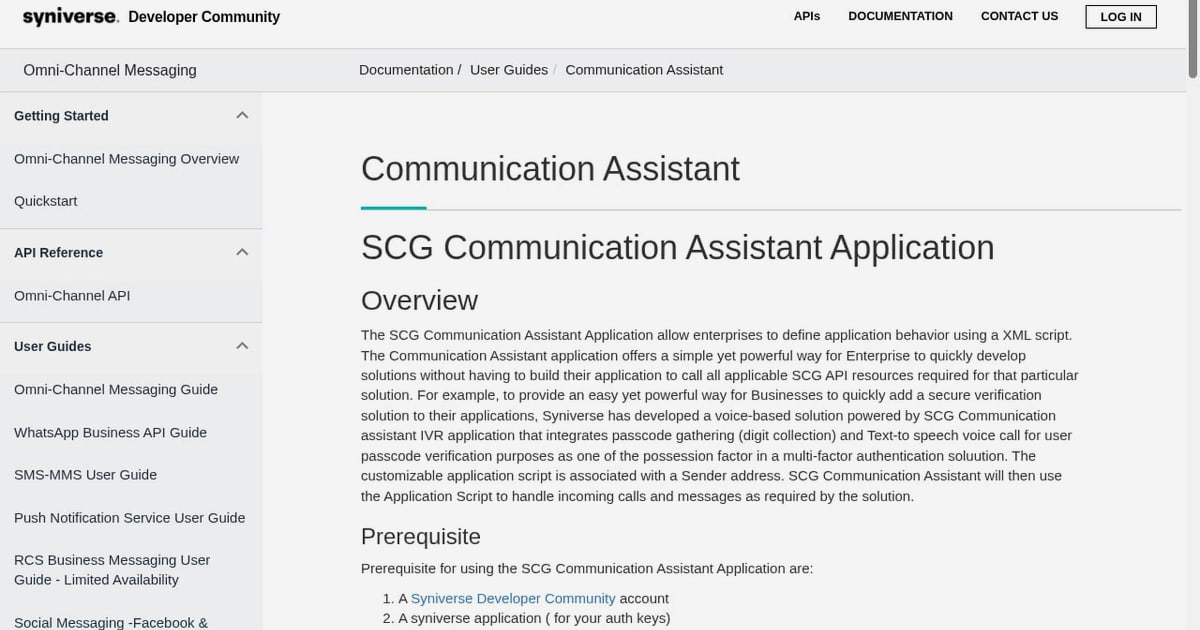
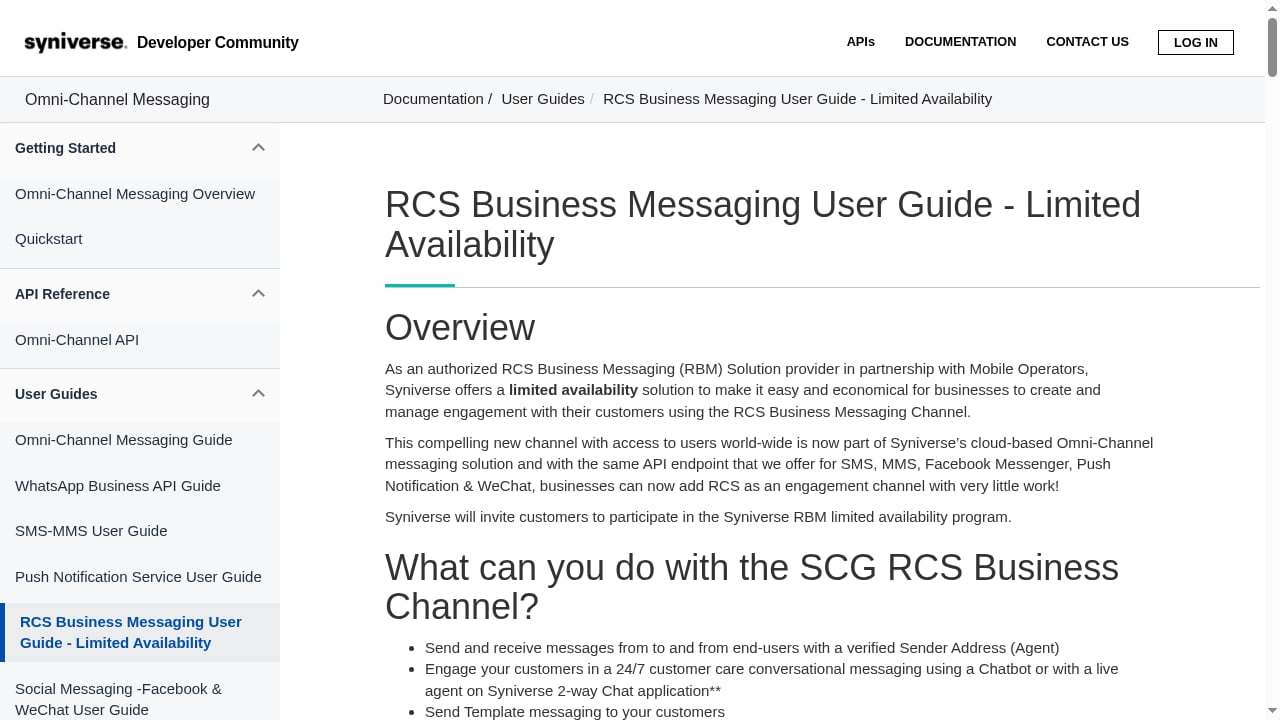
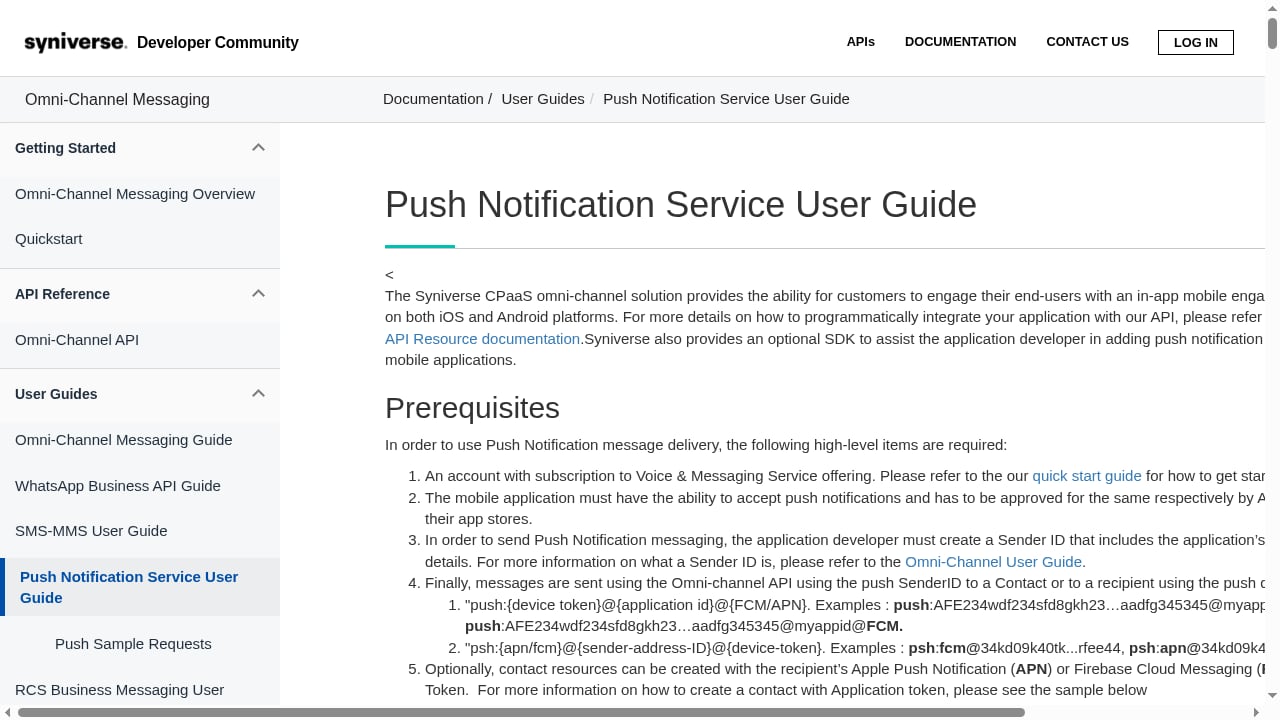
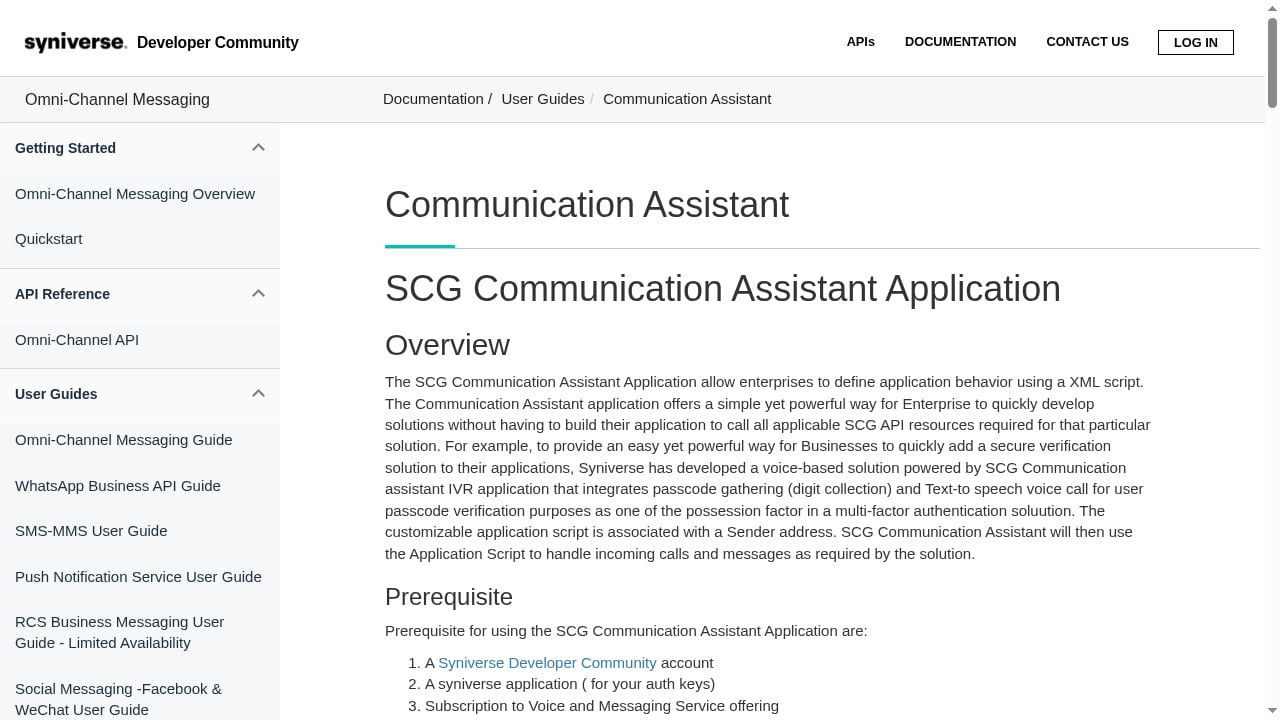
Syniverse is a long-established mobile infrastructure company, and its CPaaS platform reflects that heritage. Syniverse CPaaS Omni-Channel Messaging provides REST-based APIs for SMS, MMS, RCS Business Messaging, WhatsApp, Facebook Messenger, WeChat, push notifications, and voice through a unified endpoint. It also offers identity services such as Multi-Factor Authentication, Phone Number Verification, Right Party Verification, Account Takeover Detection, and Frictionless Authentication. The platform includes a Communication Assistant for XML-scripted application behavior, Chatbot Connector Services for integrating external chatbot platforms (e.g., Microsoft Azure Direct Line), and an Event Manager for callback events. Syniverse positions itself as an authorized RCS Business Messaging solution provider and emphasizes global reach, including SMS support worldwide, voice support in over 200 countries, and WhatsApp access to nearly 2 billion users in 180+ countries. Proof points include limited availability programs for RCS and partnerships with mobile operators. Pricing is enterprise-quote-based. Syniverse is a strong fit for large enterprises that value direct operator relationships and identity verification alongside messaging.
9. Amazon Web Services (AWS) End User Messaging
Best for: Teams already on AWS that want messaging tightly integrated with cloud infrastructure.
AWS End User Messaging (formerly Amazon Pinpoint and SNS messaging) provides APIs for SMS, push notifications, and voice, with integration into AWS services like Lambda, S3, and CloudWatch. It supports SMS in over 200 countries and offers a free tier for limited usage. The platform is not a full CPaaS in the traditional sense—it lacks native WhatsApp or RCS support—but it is a credible option for AWS-native teams that need reliable messaging without adding a new vendor. Pricing is pay-as-you-go, and the AWS console provides monitoring and analytics. The trade-off is a steeper learning curve for developers unfamiliar with AWS IAM and service configuration.
10. Bandwidth
Best for: North American enterprises that need direct carrier connections and voice quality.
Bandwidth owns and operates its own network in the United States and offers APIs for voice, SMS, MMS, and emergency services (911). It is particularly strong for US-based businesses that need reliable A2P 10DLC messaging and toll-free numbers. Bandwidth's pricing is transparent and usage-based, and its developer documentation is solid. The company has expanded into international SMS and voice, though its global reach is not as broad as Twilio or Sinch. Bandwidth is a good fit for enterprises that prioritize direct carrier relationships and US compliance expertise.
Comparison Table: CPaaS Products at a Glance
First viewport screenshot of sdcdocumentation.syniverse.com.
| Product | Best For | Key Channels | Pricing Model | Notable Strength |
|---|---|---|---|---|
| Twilio | Developer-first teams | Voice, SMS, WhatsApp, video, email | Usage-based | Broadest API ecosystem |
| Vonage | Enterprise voice/video | Voice, video, SMS, WhatsApp | Usage-based | Carrier-grade voice, network APIs |
| Sinch | High-volume messaging | SMS, RCS, WhatsApp, voice | Volume-based | Global SMS reach |
| Infobip | EMEA/LATAM omnichannel | SMS, WhatsApp, RCS, voice, email | Quote-based | Direct operator connections |
| Bird (MessageBird) | Unified inbox + API | SMS, WhatsApp, RCS, voice | Usage + platform fee | Combined inbox and API |
| Telnyx | Cost-conscious developers | Voice, SMS, WhatsApp | Usage-based | Own network, transparent pricing |
| Plivo | Startups | SMS, voice, WhatsApp | Usage-based | Simplicity and affordability |
| Syniverse | Enterprises with identity needs | SMS, RCS, WhatsApp, voice, identity | Enterprise quote | RCS and identity services |
| AWS End User Messaging | AWS-native teams | SMS, push, voice | Pay-as-you-go | Cloud integration |
| Bandwidth | North American enterprises | Voice, SMS, MMS, 911 | Usage-based | US carrier ownership |
How to Choose the Right CPaaS Product
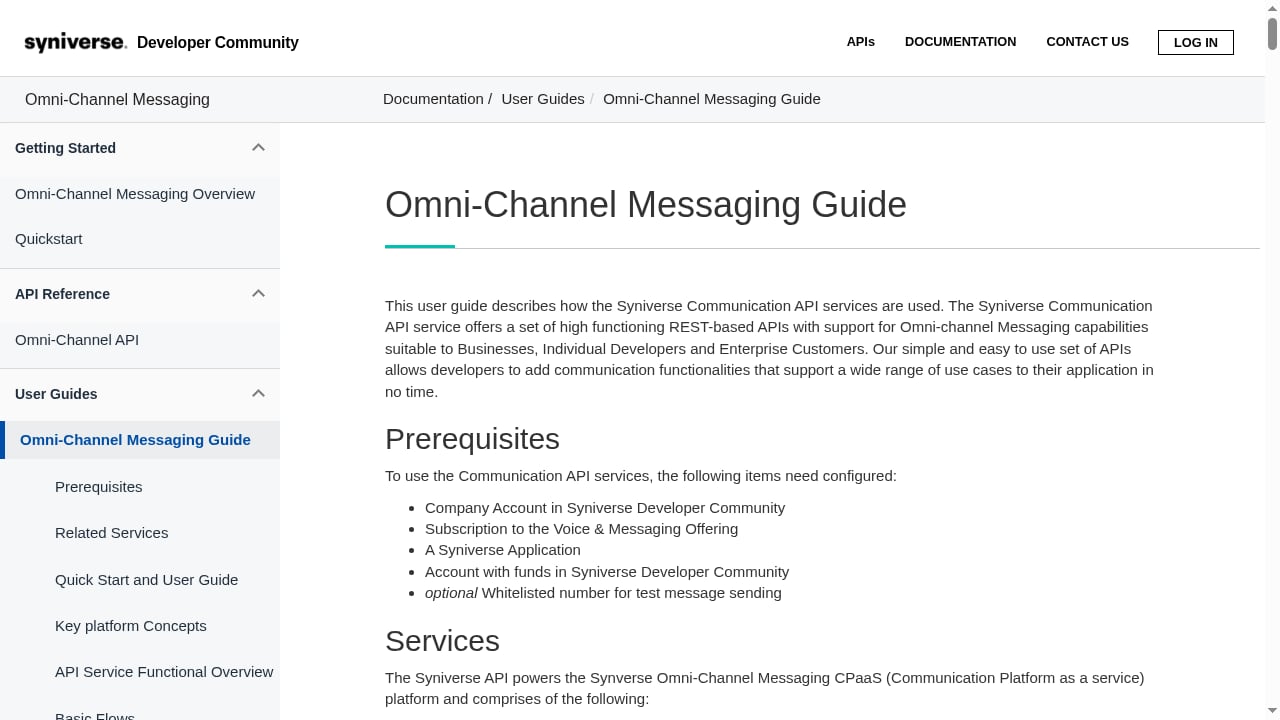
First viewport screenshot of sdcdocumentation.syniverse.com.
Start with your primary use case. If you are building voice AI agents, prioritize Twilio, Vonage, or Telnyx. If you need high-volume SMS in emerging markets, Sinch or Infobip may be stronger. If identity verification is central, Syniverse's identity services are worth evaluating. For teams that need to connect social messaging channels like WhatsApp, Telegram, LINE, and Zalo through a single API, a unified messaging API platform such as UnifyPort can complement a CPaaS by handling social channel normalization, while the CPaaS manages SMS, voice, and carrier relationships. This is particularly relevant for Asia-Pacific markets where LINE and Zalo are prominent. You can read more about combining tools in our guide to UnifyPort vs Vonage.
Also consider total cost of ownership. Per-message pricing can compound quickly, and compliance fees (10DLC, toll-free verification) vary by provider. Request a quote for your expected volume and ask about number portability and support SLAs.
Related reading
- How to Use UnifyPort with Wati: Unified Messaging Guide - Learn how to combine UnifyPort's unified messaging API with Wati's WhatsApp Business platform to streamline multi-channel customer engagement.
- UnifyPort vs Sinch vs MessengerPeople: Which API Fits? - Compare UnifyPort, Sinch, and MessengerPeople on channels, APIs, pricing, and use cases. Find the right messaging platform for your team in 2026.
- UnifyPort vs Chat SDK: Unified Messaging API or Bot Framework? - Compare UnifyPort's unified messaging API with Chat SDK's TypeScript bot framework. See which fits your channel coverage, language stack, and use case.
Sources and further reading
- Best Communications Platform as a Service Reviews 2026 | Gartner Peer Insights - Find the top Communications Platform as a Service with Gartner. Compare and filter by verified product reviews and choose the software that’s right for your organization.
- 10 Best CPaaS Platforms in 2026: Features, Pricing & Comparison - Looking for the right CPaaS platform? Compare the top 10 CPaaS providers of 2026, including JustCall, Twilio, Vonage, Sinch, and Telnyx, with detailed feature, pricing, and AI capability breakdowns.
FAQ
What is CPaaS?
CPaaS is a cloud-based platform that provides APIs for adding voice, SMS, WhatsApp, video, and other communication channels to applications without building carrier infrastructure.
Is Twilio a CPaaS?
Yes, Twilio is one of the largest and most established CPaaS providers, offering a broad suite of communication APIs.
What is the difference between CPaaS and UCaaS?
CPaaS provides APIs for developers to embed communications into their own applications, while UCaaS provides ready-made unified communications tools like video conferencing and phone systems for end users.
Which CPaaS is best for WhatsApp Business API?
Twilio, Vonage, Sinch, Infobip, and Syniverse all offer WhatsApp Business API access. The best choice depends on your volume, region, and need for additional channels.
How much does CPaaS cost?
Pricing is typically usage-based, with per-message and per-minute rates. Enterprise plans are often quote-based. Costs vary widely by channel and destination country.
Can I use CPaaS with social messaging platforms like LINE or Zalo?
Most CPaaS providers focus on SMS, voice, and WhatsApp. For social channels like LINE, Zalo, and TikTok, a unified messaging API platform like UnifyPort can complement your CPaaS stack.
Conclusion
The CPaaS market in 2026 offers more choice than ever, but the right product depends on your use case, geography, and engineering resources. Twilio leads on breadth, Vonage on voice and network APIs, Sinch on messaging scale, and Syniverse on identity and RCS. For teams that need to unify social messaging channels alongside CPaaS, UnifyPort provides a complementary API layer. Evaluate your priorities against the criteria above, request quotes, and test with a sandbox before committing.
For a broader view of omnichannel platforms, see our Top 10 Omnichannel Communication Platforms 2026.