
Top 10 Cloud-Based Messaging Apps in 2026 Ranked
Discover the 10 best cloud-based messaging apps for 2026. We rank Telegram, Discord, LINE, Viber, and more based on sync, features, and security. Find your ideal messenger.
Top 10 Cloud-Based Messaging Apps in 2026: The Ultimate Ranked Guide
Choosing a messaging app used to be simple. Today, your decision shapes how you sync chats across devices, how secure your data feels, and whether you can truly collaborate without limits. Cloud-based messengers have risen as the go-to solution: they store messages on remote servers so you can pick up any conversation right where you left off—no matter which gadget you reach for next.
This ranking focuses specifically on apps that treat the cloud as their foundation, not an afterthought. We looked at real-world sync performance, feature depth, cross-platform polish, privacy models, and community size to bring you a credible top‑10 list for 2026. Whether you need massive group chats, team channels, or regional connectivity, you’ll find a match below.
How We Evaluated Cloud-Based Messaging Apps
Top 10 Cloud-Based Messaging Apps in 2026 Ranked product interface and feature overview.
Our criteria are transparent and evidence‑based:
- True cloud synchronization: Messages, media, and settings flow instantly between devices without needing a constant primary‑device connection.
- Cross-platform reach: Apps that work natively on iOS, Android, desktop, and web with a unified experience.
- Feature set: Beyond plain text, we valued large file sharing, voice/video calling, bots, channels, and community tools.
- Security architecture: End‑to‑end encryption options, self‑destructing messages, and transparent data handling.
- Active user base: A healthy, engaged community validates long‑term viability and reachability.
The Top 10 Cloud-Based Messaging Apps for 2026
Top 10 Cloud-Based Messaging Apps in 2026 Ranked - supporting product research image 4.
1. Telegram – The Feature‑Rich Powerhouse
Telegram defines what a cloud‑first messenger should be. No matter which device you use, every chat, channel, and file appears instantly. It supports groups of up to 200,000 members, file transfers up to 2 GB, and an open API that fuels a massive bot ecosystem.
Standout features: Secret Chats with end‑to‑end encryption, self‑destructing media, customizable themes, AI‑powered group moderation, and channels that rival traditional social feeds. Recent updates added smartwatch companion apps and more expressive sticker tools.
Why it ranks first: Few apps marry cloud convenience with such relentless feature innovation. If you want a messenger that grows with your needs—be it community building, automation, or personal privacy—Telegram remains unmatched.
2. Discord – Communities Powered by the Cloud
Originally built for gamers, Discord evolved into a full‑featured communication platform where every server, channel, and direct message lives in the cloud. Switch between your phone, browser, and desktop app seamlessly; your entire history stays intact.
Standout features: Themed servers, fine‑grained roles and permissions, voice channels with low‑latency audio, threaded conversations, and a robust bot framework for moderation or fun.
Why it’s a top pick: If your life revolves around interest‑based communities—study groups, hobbyist clubs, or professional networks—Discord’s cloud architecture makes it the most versatile hangout. The ability to join 100+ servers without cluttering your device is a genuine advantage.
3. LINE – Asia’s Cloud Messenger with a Personality
LINE conquers Japan, Thailand, Taiwan, and Indonesia with a cloud‑connected experience that blends messaging, payments, and lifestyle services. Every sticker and message syncs across devices, and you can back up chats to the cloud with an optional PIN.
Standout features: Voice/video calls, official accounts for brands, LINE Pay, a timeline for social updates, and end‑to‑end encryption in secret chats. Its sticker market is one of the richest in the world.
Why it’s essential: LINE’s deep integration into daily life—from ordering food to hailing taxis—makes it more than a messenger. For anyone with personal or business ties in East Asia, LINE is indispensable. (For a deeper dive, see our LINE App Review 2025.)
4. Viber – Reliable Cloud with a Privacy Focus
Viber combines the convenience of cloud storage with a strong privacy story. Messages on Viber are end‑to‑end encrypted by default, yet still sync across phones, tablets, and desktops via encrypted backup and restore to Google Drive or iCloud.
Standout features: Viber Out lets you call non‑Viber numbers at low rates, group chats support up to 250 members, and self‑destructing messages offer an extra confidentiality layer. Viber Communities act like broadcast lists with engagement.
Why users keep coming back: In markets like Eastern Europe, the Philippines, and parts of the Middle East, Viber is the cultural default. Its balance between always‑available history and top‑tier encryption keeps it competitive.
5. WeChat – China’s Super App Runs Entirely on the Cloud
WeChat is a cloud‑native phenomenon. Every text, mini‑program, and payment leaves a synchronized trail accessible from any logged‑in device. While its primary user base is in China, its global reach extends through diaspora communities and business connections.
Standout features: Official accounts, WeChat Pay, mini‑programs that replace standalone apps, Moments social feed, and robust group chat functions. Voice and video calling work globally.
Why it’s a powerhouse: No other app embeds so many services into one cloud‑synced interface. For professionals engaging with Chinese markets or friends living there, WeChat is practically mandatory.
6. KakaoTalk – South Korea’s Cloud‑Connected Hub
KakaoTalk’s grip on South Korea is formidable. The app syncs messages, photos, and voice notes across all devices using a cloud‑based architecture, making it the default for everything from friendly banter to business coordination.
Standout features: Integrated Kakao services (Pay, Taxi, Games), high‑quality voice/video calls, group chat rooms that support media‑rich expression, and robust backup options. It also supports Secret Chat with encryption.
Why it matters: If you live, work, or socialize with people in Korea, KakaoTalk is the phone number you can’t ignore. Its deep integration into daily life mirrors LINE’s model.
7. Zalo – Vietnam’s Cloud Messenger on the Rise
Zalo dominates Vietnam with a feature set built for local culture. All conversations are stored in the cloud, so switching phones is effortless. The app blends personal messaging with official brand channels and public service integrations.
Standout features: Free voice and video calls, high‑quality stickers, Moments‑style timeline, and end‑to‑end encryption in confidential chats. Zalo Pay enables peer‑to‑peer transfers directly within the app.
Why it’s a genuine contender: Zalo’s user base has soared past 70 million. For anyone doing business in Vietnam or connecting with Vietnamese communities abroad, Zalo is the must‑have messenger.
8. Facebook Messenger – The Ubiquitous Cloud Sync App
Messenger stores every message on Meta’s servers, delivering seamless synchronization across phones, tablets, and the web. Despite privacy debates, its vast user base makes it one of the most practical cloud messengers on the planet.
Standout features: Chat heads on Android, video calling with effects, the ability to send money (in select regions), and integration with Facebook’s ecosystem. Messenger Rooms enable large group video calls.
Why it’s still a top 10 pick: Reachability is hard to beat. Almost everyone with a Facebook account can be contacted via Messenger, and its cloud‑backed history means you never lose a thread.
9. Skype – The Original Cloud Communicator Evolves
Skype pioneered cloud‑based voice and video calls, and it remains a reliable, cross‑platform messenger in 2026. Your chat history, shared files, and call logs stay consistent across devices, underpinned by Microsoft’s cloud infrastructure.
Standout features: Free Skype‑to‑Skype calls, low‑cost international calling to phone numbers, screen sharing, live captions, and integration with Outlook and Microsoft Teams.
Why it still matters: For long‑distance families and small businesses that need a familiar, stable communication tool without switching ecosystems, Skype delivers steady performance. It’s a straightforward, no‑surprises messenger.
10. Slack – Cloud‑First Messaging for Teams
While Slack focuses on workplace communication, its cloud DNA sets it apart. Every channel, direct message, and file upload is instantly available across desktop, mobile, and web apps—ideal for teams that jump between devices.
Standout features: Channels organized by topic, advanced search, thousands of app integrations (Google Drive, Trello, etc.), huddle audio calls, and message threads that keep conversations tidy.
Why it’s included: Slack proves that cloud‑based messaging isn’t just for social chatter. Its real‑time sync and robust notification controls make it indispensable for remote and hybrid teams. If your work life demands structured, searchable communication, Slack is the benchmark.
How to Choose the Right Cloud-Based Messenger for You
Top 10 Cloud-Based Messaging Apps in 2026 Ranked product interface and feature overview.
With so many excellent options, narrow your choice by asking:
- Sync priority: If instant, automatic cloud sync without manual backups is critical, Telegram, LINE, or Slack lead.
- Community size: Need global reach? Facebook Messenger and Telegram cover billions. Regional needs? LINE (Japan/Thailand), KakaoTalk (Korea), Zalo (Vietnam), WeChat (China).
- Privacy stance: Telegram’s secret chats and Viber’s default encryption offer strong protections; study each app’s encryption model before committing.
- Feature appetite: Power users will love Telegram and Discord. Simpler needs might be met by Skype or LINE.
For Businesses: Unifying Your Messaging Channels

Top 10 Cloud-Based Messaging Apps in 2026 Ranked product interface and feature overview.
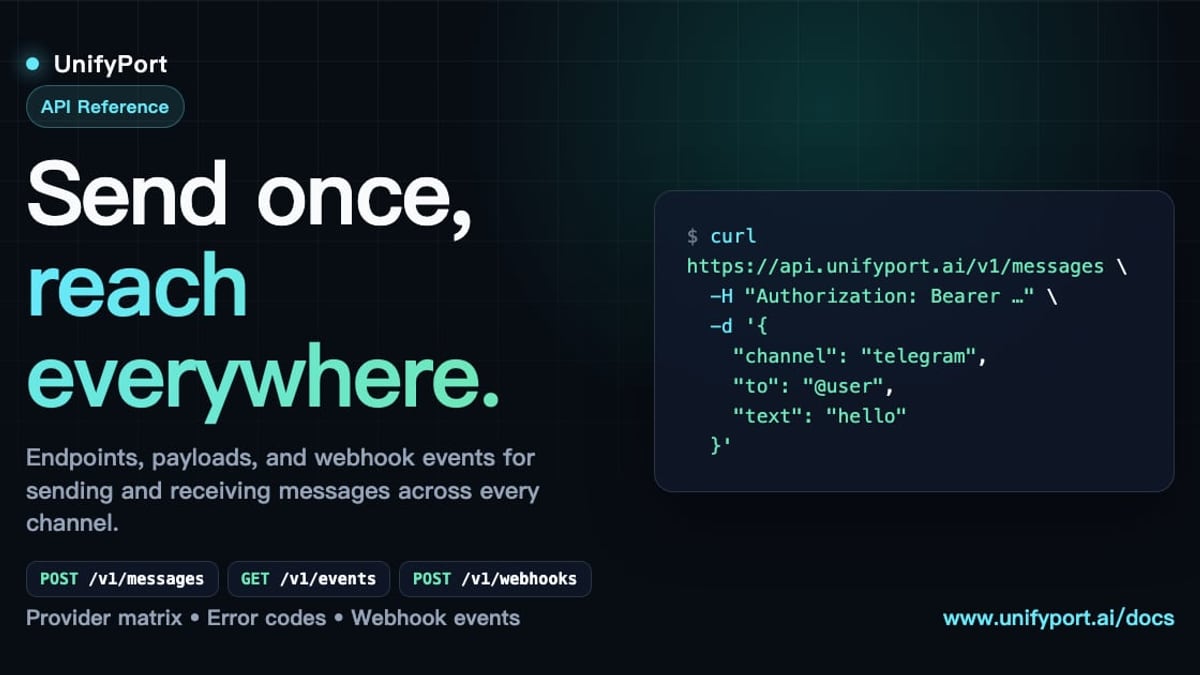
If your team or product interacts with customers across multiple cloud messengers—say, a support bot that needs to reply on Telegram, LINE, and WhatsApp—managing separate APIs becomes cumbersome. That’s where a unified messaging API layer like UnifyPort becomes valuable.
UnifyPort is not a messaging app itself; it’s an infrastructure product that gives developers a single REST API and webhook event stream to send and receive messages across channels including Telegram, LINE, Zalo, and more. By normalizing all provider events into one JSON shape, it eliminates the need to juggle individual SDKs and connection lifecycles. This can be a game‑changer when you need reliable, observable multi‑channel messaging without duplicating engineering effort. For a practical example of wiring up LINE through such an API, check out How to Use UnifyPort with LINE for Multi-Channel Messaging. You can also compare UnifyPort vs Unipile vs CM.com to see which multi‑channel solution fits your stack.
Related reading
- UnifyPort vs Unipile: Multi-Channel Messaging API Comparison - Compare UnifyPort and Unipile for multi-channel messaging. See channel coverage, pricing, reliability, and safety. Learn which API fits your AI agent or SaaS product.
Sources and further reading
- The Best Private Messaging Apps for 2026 - These are the top private messaging services we've tested to keep your conversations confidential from advertisers, governments, and any other prying eyes.
- Most popular messaging apps by country - Messaging app penetration rates: The most definitive and accurate list of messaging app usage in countries across the globe.
- The Best Messaging Apps for Android and iPhone for 2026 - These are the top 5 messaging apps actually worth downloading.
FAQ: Cloud-Based Messaging Apps
Are cloud-based messaging apps safe? Safety depends on the app’s encryption policies and data handling. Telegram’s secret chats and Viber’s default end‑to‑end encryption provide strong safeguards, while other apps may store messages in accessible forms on their servers. Always review each app’s privacy statement.
Do cloud-based messengers work offline? Most allow you to read cached messages when offline, but sending new messages requires an internet connection. Changes are queued and synced once you’re back online.
Can I lose my chat history with these apps? Because messages reside in the cloud, losing them is rare. Even if you lose your device, logging in from a new one restores your history—unlike local‑storage apps that require backup files.
Which cloud messenger is best for large file sharing? Telegram leads with a 2 GB per‑file limit. Discord and Slack have lower caps but still support generous sharing for community and team contexts.
Why didn’t WhatsApp or Signal make the list? WhatsApp uses primarily local storage with optional cloud backups, not seamless, cloud‑native sync. Signal stores messages only on your device, deliberately avoiding server‑side storage. This ranking focuses on apps where the cloud is the primary data repository.
Conclusion
The best cloud-based messaging app in 2026 isn’t one‑size‑fits‑all. Telegram wins on features and pure cloud execution; Discord dominates community spaces; and LINE, WeChat, KakaoTalk, and Zalo are mandatory in their home regions. Viber and Skype offer legacy reliability, while Messenger provides unbeatable reach. And for teams, Slack sets the standard for organized, cloud‑synced collaboration.
Evaluate your daily workflow—which devices you use, who you talk to, and what features you truly need—and pick the messenger that makes staying in sync feel effortless. If your business later needs to connect across multiple of these platforms with a single integration, a unified API approach can save months of development; explore solutions like UnifyPort when that moment arrives.