
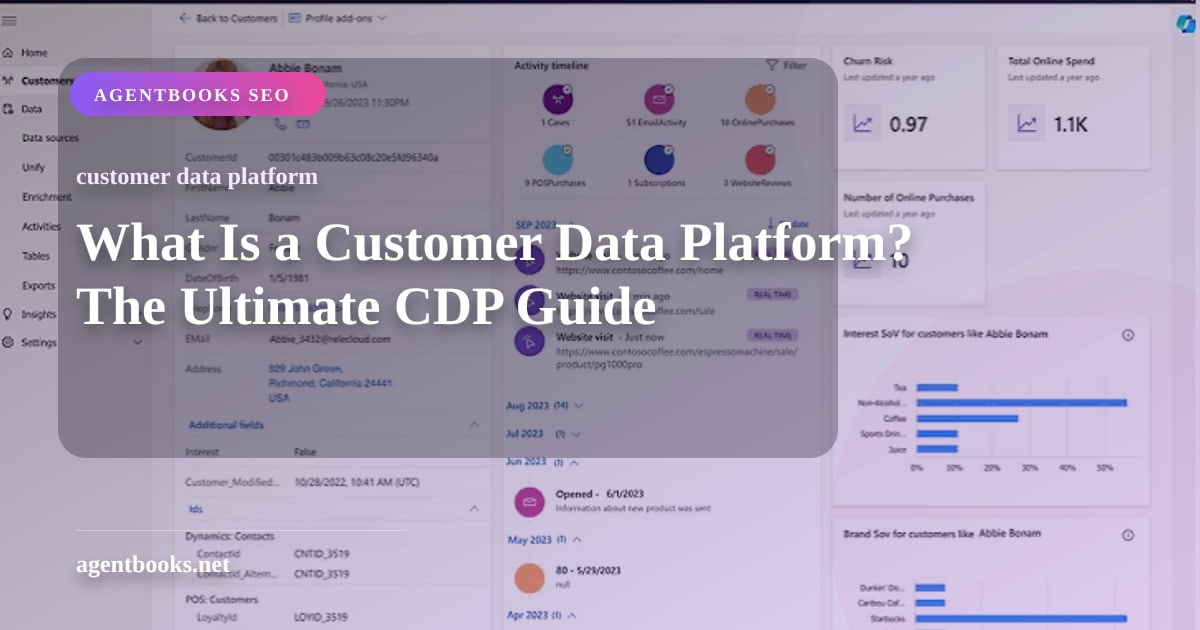
What Is a Customer Data Platform? The Ultimate CDP Guide
Learn what a customer data platform is, how it unifies data, key features, and how to choose the right CDP. Explore real-world benefits and activation strategies.
What Is a Customer Data Platform? The Ultimate CDP Guide
In today’s data-driven marketing landscape, delivering seamless, personalized experiences demands a single source of truth for every customer. That’s where a customer data platform (CDP) comes in. This guide from UnifyPort explains exactly what a CDP is, how it works, the core features to look for, and how it compares to other tools like CRMs and DMPs. You’ll also learn practical ways to activate unified customer data across messaging channels to boost engagement.
What Is a Customer Data Platform?
What Is a Customer Data Platform? The Ultimate CDP Guide product interface and feature overview.
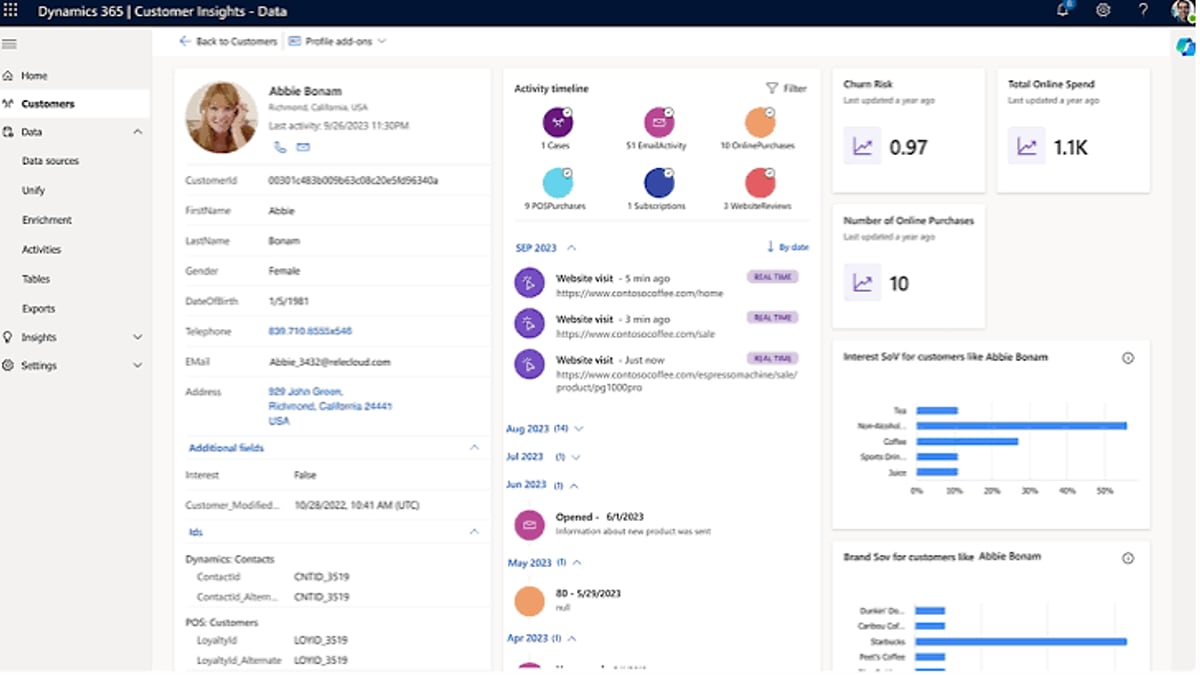
A customer data platform is software that aggregates, cleans, and unifies customer data from multiple online and offline sources to create persistent, individual customer profiles. These profiles are then made available to marketing, sales, and service systems for segmentation, personalization, and analytics. Unlike traditional databases, a CDP is built for real-time data processing and can ingest structured and unstructured data, resolve identities, and activate audiences across channels.
According to Wikipedia, a CDP is “a software system that aggregates and organizes customer data from various touchpoints to build a unified customer profile.” Gartner defines it similarly, emphasizing its role in supporting cross-functional customer experience use cases. Salesforce’s detailed guide highlights four key functions: collect, harmonize, activate, and pull insights.
How Does a CDP Work? The Four Core Steps
What Is a Customer Data Platform? The Ultimate CDP Guide product interface and feature overview.
Figure: A typical CDP ingests data from multiple sources, unifies profiles, and activates audiences across channels.
1. Data Collection
A CDP connects to all sources of customer data: CRM, website analytics, mobile apps, e-commerce platforms, email marketing tools, customer service software, point-of-sale systems, and even offline files. It ingests identity data, behavioral events, transactions, and engagement metrics. The platform typically uses pre-built connectors and APIs for easy integration.
2. Identity Resolution and Profile Unification
Once data is collected, the CDP uses deterministic matching (exact identifiers like email, phone number) and probabilistic matching (statistical models) to link data belonging to the same person across devices, channels, and touchpoints. This creates a single, golden customer record—often called a Customer 360 profile. Identity resolution is what separates a CDP from a data warehouse; it’s the intelligence that merges “user123” on the website with “jane@example.com” in the email platform and “Jane Doe” in the POS.
3. Data Activation
Unified profiles mean nothing if they stay locked away. Activation pushes these profiles into the tools that need them—advertising platforms, email service providers, push notification services, and increasingly, messaging and chat apps. Real-time activation sends events as they happen, enabling instant personalization. For example, when a segment of high-value users is identified, a CDP can trigger a personalized offer via email or a WhatsApp message through a compatible messaging API.
4. Insights and Analytics
With all data in one place, marketers can analyze full customer journeys, measure campaign attribution, and build predictive models. CDPs often include dashboards for segmentation performance, lifetime value forecasts, and churn prediction, making it easier to quantify ROI.
Types of Customer Data Platforms
What Is a Customer Data Platform? The Ultimate CDP Guide - supporting product research image 4.
Based on architectural approaches, CDPs fall into several categories (source: Wikipedia):
- Traditional CDPs: All-in-one platforms that manage the entire data lifecycle—ingestion, storage, modeling, and activation—within a single environment. Examples include Treasure Data and Bloomreach.
- Composable CDPs: Leverage an existing cloud data warehouse (like Snowflake or BigQuery) as the foundation, with layered tools for identity resolution, segmentation, and activation. Hightouch is a leading composable CDP.
- Infrastructure CDPs: Focus on upstream event collection and data pipeline management, often serving as the technical backbone for enterprise data teams. Twilio Segment is a prime example.
- Marketing Clouds: Large suites (e.g., Salesforce Data Cloud, Adobe Real-Time CDP) that embed CDP capabilities within a broader marketing automation ecosystem.
Each type suits different technical maturity levels and company sizes. A composable CDP may be ideal for organizations that already have a mature data infrastructure, while a traditional CDP works well for marketing teams seeking an out-of-the-box solution.
Key Features That Make a CDP Powerful
Advanced Segmentation
CDPs let you build dynamic segments based on any combination of attributes, behaviors, and predictive scores. Whether it’s “customers who browsed winter coats twice in the last week” or “high-value users at risk of churning,” these segments update in real time.
Omnichannel Orchestration
A CDP breaks down silos between channels. It can trigger consistent messages across email, web, mobile push, SMS, and social media. This is where a flexible activation layer becomes crucial—especially when reaching customers on messaging apps like WhatsApp, Telegram, LINE, or TikTok.
AI and Machine Learning
Modern CDPs incorporate predictive analytics, next-best-action recommendations, and generative AI to craft content or automate decision-making. AI-driven identity resolution and data cleaning also improve profile quality.
CDP vs. CRM vs. DMP: Clearing Up the Confusion
Figure: A simplified comparison of the three data-driven platforms.
| Feature | CDP | CRM | DMP |
|---|---|---|---|
| Data focus | First-party, unified profiles | Known customer interactions | Anonymous, third-party segments |
| Primary use | Marketing, analytics, personalization | Sales, service, relationships | Ad targeting, audience extension |
| Identity | Persistent individual profiles | Account/contact records | Device-level, cookie-based |
| Data activation | Across all customer-facing channels | Limited to internal systems | Ad platforms, DSPs |
| Time horizon | Long-term customer lifecycle | Lifecycle of relationship | Short campaign windows |
The Business Benefits of a Customer Data Platform
- Hyper-personalization at scale: With unified data, you can tailor each message based on a customer’s entire history, drastically improving conversion rates.
- Suppression and smarter targeting: Prevent wasted ad spend by suppressing customers who already purchased or opted out.
- Unified customer view for service teams: Support agents see the complete picture, reducing friction and improving satisfaction.
- Improved marketing ROI: Better attribution and optimization lead to more efficient spend.
- Compliance and data governance: Centralized consent management helps meet GDPR, CCPA, and other regulations.
How to Choose the Right CDP
Consider these factors:
- Data sources: List every channel, tool, and database you need to connect. Choose a CDP with native connectors or robust API capabilities.
- Identity resolution requirements: How sophisticated does matching need to be? Deterministic only, or probabilistic + AI?
- Activation needs: Do you need to send data to ad platforms, email tools, and chat apps simultaneously? A CDP that supports webhooks and flexible APIs gives you more control.
- Architecture preference: Traditional vs. composable—decide based on your existing data warehouse strategy.
- Ease of use: Marketers should be able to build segments without SQL. Look for no-code segment builders.
- Compliance and security: Data residency, encryption, and consent management are non-negotiable.
- Vendor ecosystem: Evaluate reviews on platforms like Gartner Peer Insights to see real-user satisfaction.
Activating CDP Data on the Channels That Matter Most

What Is a Customer Data Platform? The Ultimate CDP Guide product interface and feature overview.
Once you have unified profiles and smart segments, the next challenge is engaging customers where they are. Messaging apps now command massive global audiences—WhatsApp, Telegram, LINE, X (Twitter), Zalo, TikTok, and many others. Each platform has its own API, authentication flows, rate limits, and message formatting quirks. Managing separate SDKs for every channel can quickly become a maintenance nightmare.
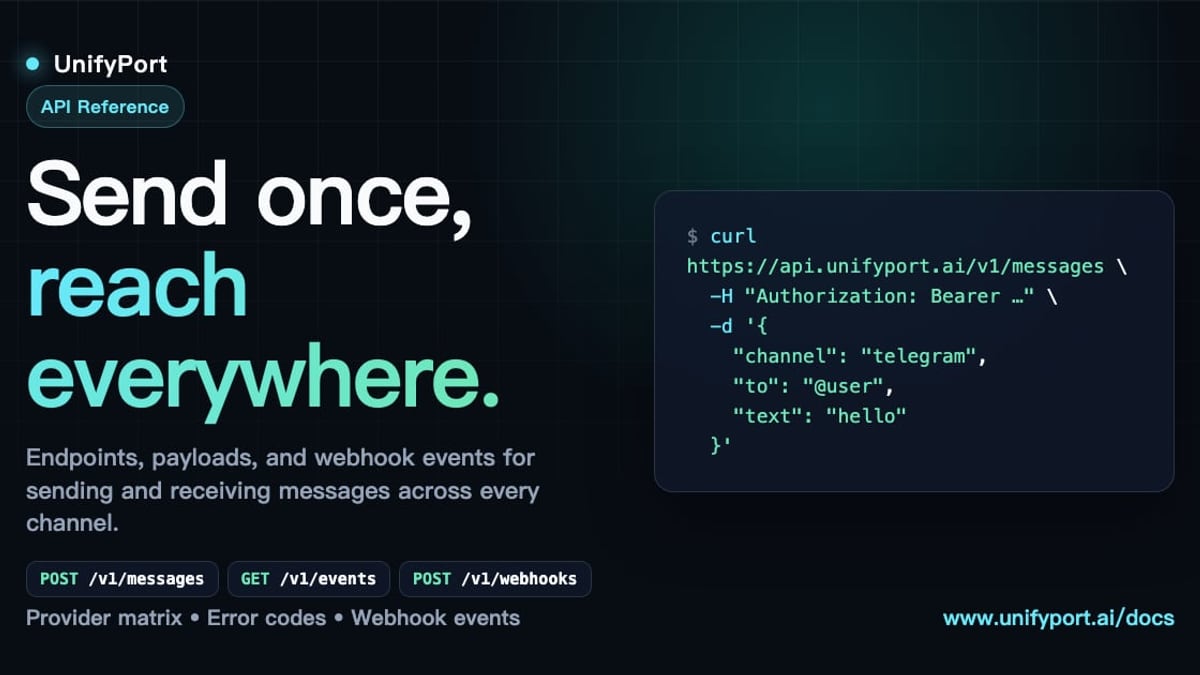
This is where a unified messaging API like UnifyPort can bridge the final mile. While UnifyPort is not a CDP, it serves as the activation infrastructure that many CDPs lack natively. By providing a single REST API and standardised webhook event layer across six major messaging channels, it allows your CDP segments to flow directly into real-time, two-way conversations. You can send personalized text, images, or interactive templates to a WhatsApp user, a Telegram group, or a LINE Official Account—all through the same code path. The platform handles authentication (QR codes, session imports), rate limiting, retries, and failure isolation, so your marketing automation or AI agent can focus on the message, not the delivery.
For example, a composable CDP could query a data warehouse to identify users who abandoned a high-value cart and push their identifiers to an automation system. That system could then use UnifyPort’s API to send a tailored recovery message on the user’s preferred channel, whether Telegram or TikTok, with consistent formatting and delivery guarantees. This combination of a CDP for data unification and UnifyPort for channel-agnostic messaging creates a modern engagement stack that truly respects customer preferences.
To explore the top messaging platforms your customers actually use, check out our list of the best messaging apps for 2026.
Related reading
- Telegram Tutorial: Complete Beginner to Pro Guide & Tips - Master Telegram with our step-by-step tutorial covering installation, privacy, groups, bots, and API integration. Learn everything from basics to advanced features.
- Telegram Desktop: Complete Download, Install & Features Guide - Download Telegram Desktop for Windows, Mac, or Linux. Explore features, installation tips, and how businesses integrate Telegram messaging via unified APIs like UnifyPort.
- What Is Linen? The Complete Guide to the Flax Fabric - Linen is a natural textile made from flax. Learn about its history, properties, types, uses, sustainability, and how it compares to cotton. Your ultimate guide to linen.
Frequently Asked Questions About Customer Data Platforms
1. Do I need a CDP if I already have a CRM?
Yes. A CRM is designed for managing known relationships, not for stitching together anonymous web behavior, ad interactions, and offline transactions into a single view. A CDP complements a CRM by feeding it enriched profiles while also activating data across other channels.
2. How long does it take to implement a CDP?
It varies. A lightweight, cloud-based CDP can be set up in weeks, while an enterprise-grade deployment with complex identity resolution and thousands of data sources might take several months.
3. Can a CDP work with my existing data warehouse?
Absolutely. Composable CDPs are built specifically to sit on top of data warehouses like Snowflake, Redshift, and BigQuery. Even traditional CDPs can often sync with warehouses.
4. Is a CDP only for marketers?
No. While marketing teams are the primary users, customer success, support, and sales departments also benefit from unified profiles to deliver consistent experiences.
5. How does a CDP handle privacy regulations?
Most CDPs include consent management, data retention controls, and the ability to honor deletion and access requests. Always verify the vendor’s compliance certifications for GDPR, CCPA, and other frameworks.
Conclusion
A customer data platform is no longer a luxury—it’s a foundational tool for any business serious about personalization and efficiency. By unifying data, resolving identities, and enabling real-time activation across all touchpoints, a CDP turns fragmented customer information into a strategic asset. Whether you opt for a traditional suite, a composable solution, or a built-in marketing cloud, the right CDP will give your teams the clarity they need to deliver the right message at the right moment. And as you expand your engagement to global messaging channels, consider how a unified API layer can simplify the last mile of activation, ensuring every customer interaction is seamless, compliant, and impactful.