
UnifyPort vs Unipile: Multi-Channel Messaging API Comparison
Compare UnifyPort and Unipile for multi-channel messaging. See channel coverage, pricing, reliability, and safety. Learn which API fits your AI agent or SaaS product.
UnifyPort vs Unipile: Which Multi-Channel Messaging API Fits Your Stack?
When your app needs to send and receive messages on WhatsApp, Telegram, LINE, TikTok, or X (Twitter), stitching together separate integrations for each platform is a nightmare. Unified messaging APIs promise a single integration that talks to all channels—but not all are built equal. UnifyPort and Unipile both offer a multi-channel abstraction, yet their channel coverage, infrastructure, reliability, and pricing differ sharply. This comparison digs into what each platform really delivers, so you can pick the one that aligns with your product’s requirements and risk tolerance.
What Is UnifyPort?
UnifyPort vs Unipile: Multi-Channel Messaging API Comparison product interface and feature overview.
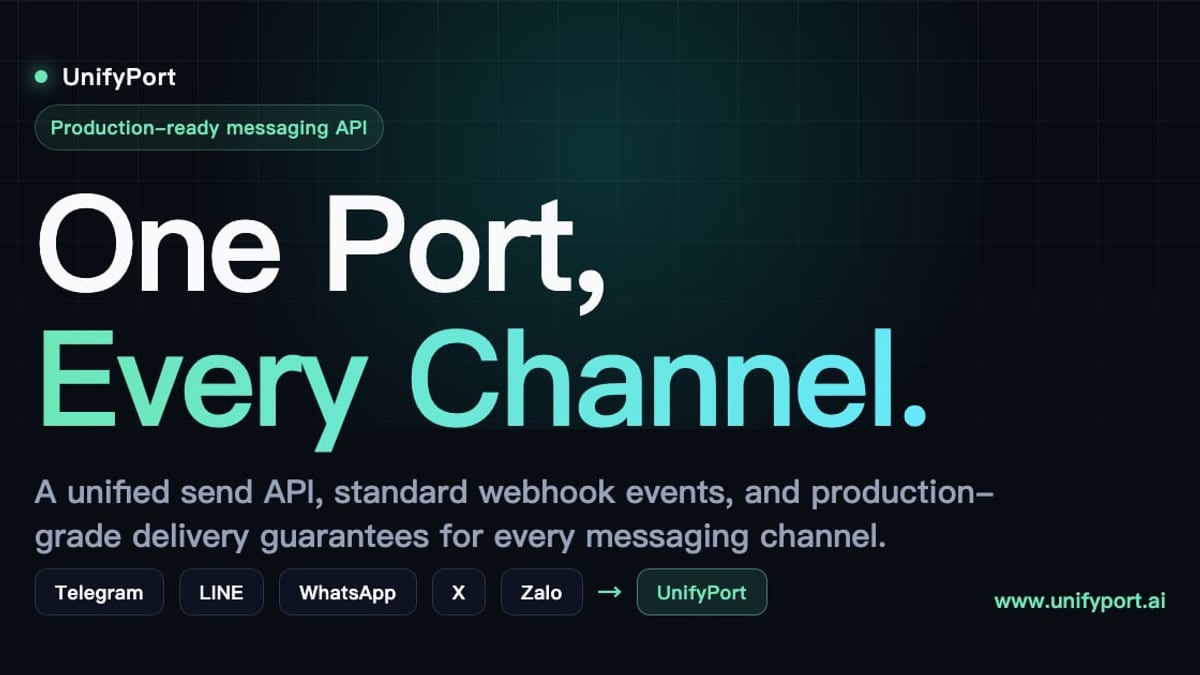
UnifyPort is a unified multi-channel messaging API built for applications that treat messaging as a critical infrastructure layer. It connects AI agents, CRMs, notification systems, and operations tools to WhatsApp, Telegram, LINE, X (Twitter), Zalo, and TikTok through a single REST API and standardized webhook event stream.
What sets UnifyPort apart is its production‑grade core: built‑in rate limiting, automatic retries, idempotency keys, and failure isolation come included, not bolted on. The platform normalizes every provider‑specific event (new messages, delivery receipts, connection statuses) into one consistent JSON shape and offers a full webhook control plane to manage signatures, subscriptions, and retries. Security is handled with HMAC‑SHA256 signed API keys, while virtual messaging account lifecycle—creation, QR or code authentication, monitoring, and teardown—is fully managed via REST and webhooks.
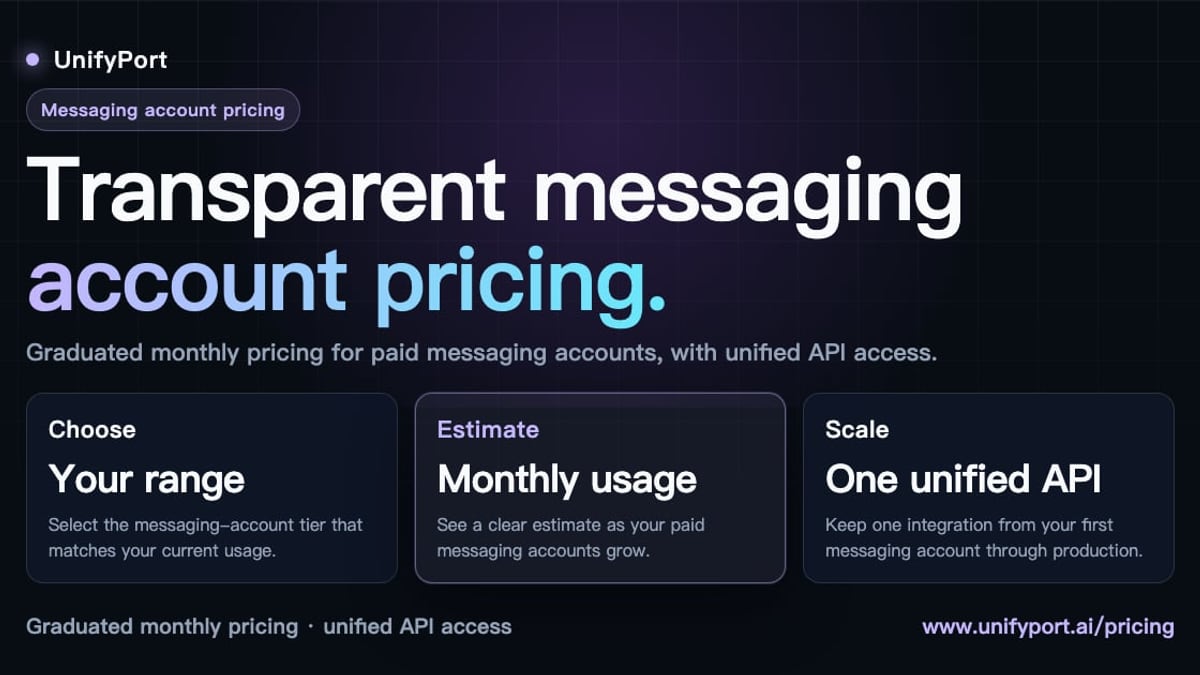
Pricing is transparent and graduated based on paid messaging accounts per month, with a free tier included in every workspace. UnifyPort is currently available to selected customers, positioning itself as the infrastructure layer for developers who need reliable, observable, and unified access to the world’s most popular messaging platforms without juggling multiple SDKs.
What Is Unipile?
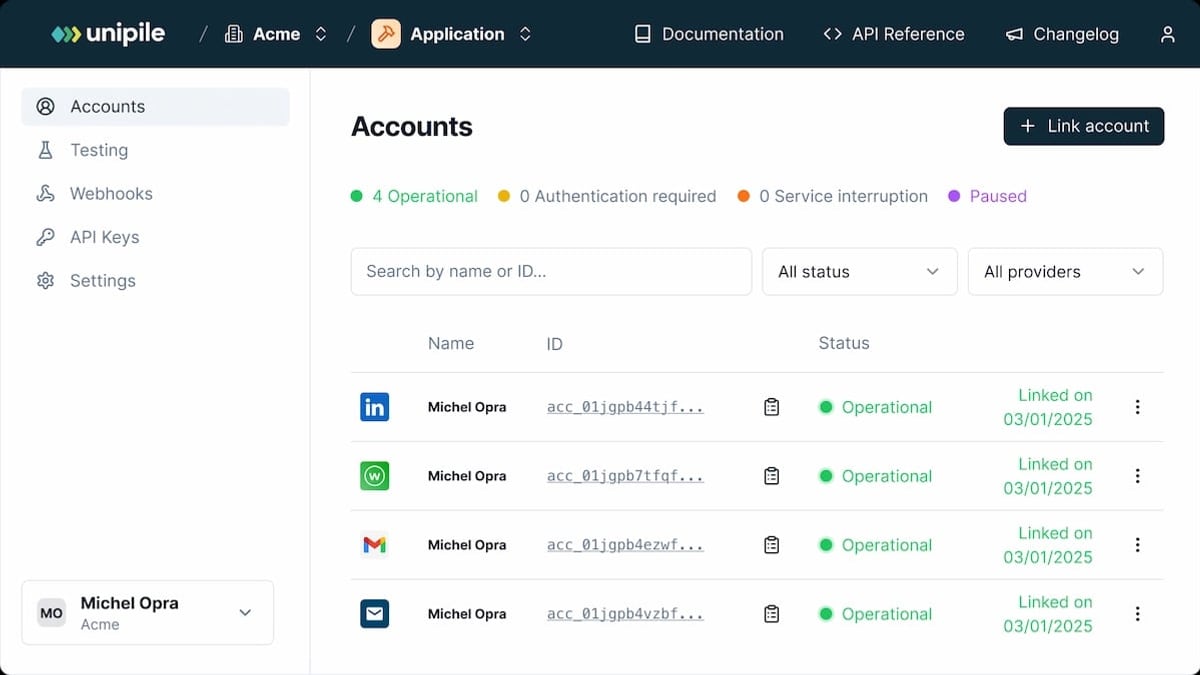
UnifyPort vs Unipile: Multi-Channel Messaging API Comparison product interface and feature overview.
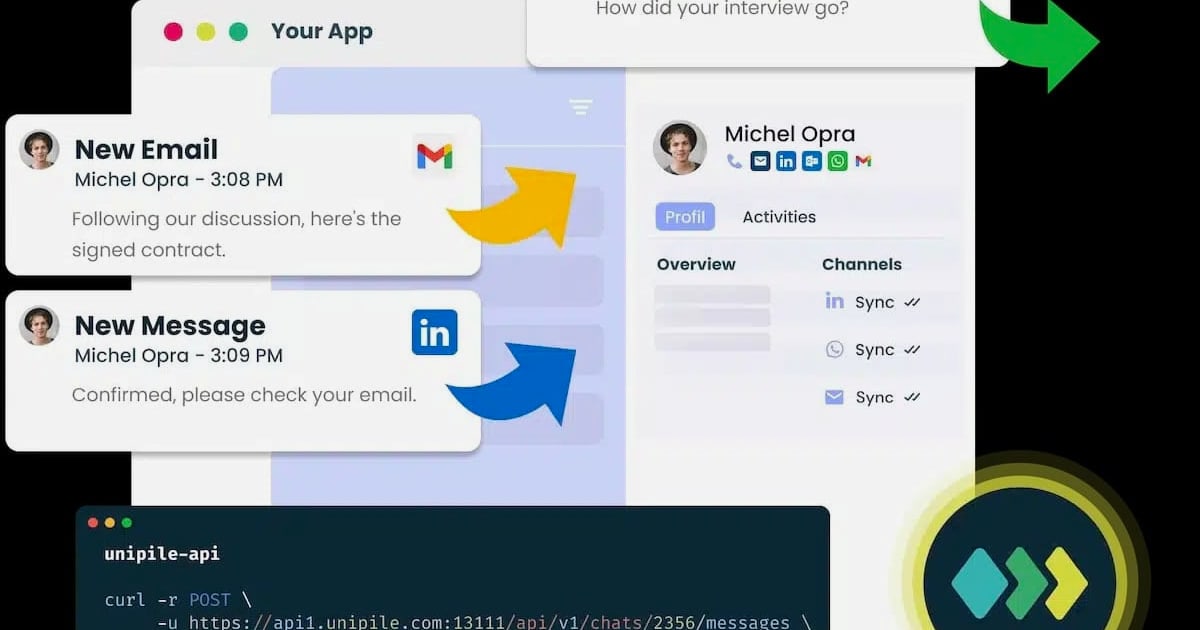
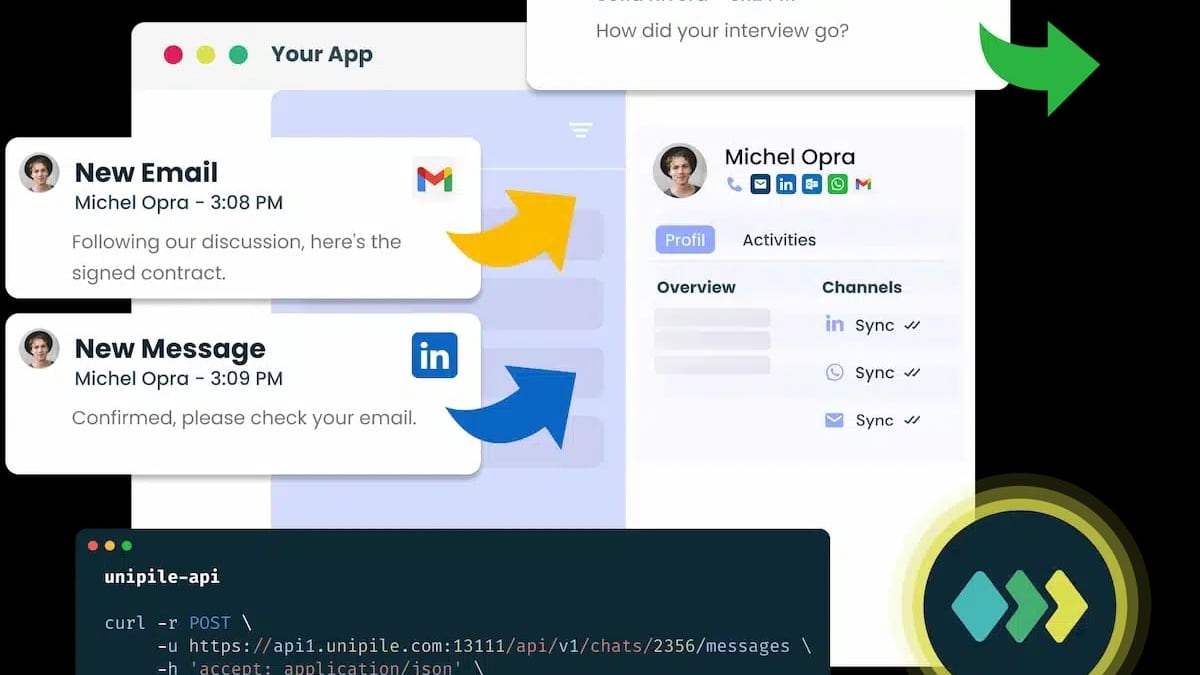
Unipile is a unified API that aggregates LinkedIn, WhatsApp, Instagram, Telegram, Gmail, Outlook, IMAP, and calendars behind one interface. Designed for B2B SaaS companies, CRMs, and recruitment tools, it lets you read and send messages, sync conversations, and manage email/calendar events through a single integration. Its selling point is breadth: you get social messaging (LinkedIn, WhatsApp, Telegram, Instagram) alongside email and calendar, with OAuth‑based account linking and webhook notifications.
However, Unipile’s architecture has important trade‑offs. For LinkedIn—the channel that differentiates it—the platform relies on reverse‑engineered private endpoints, a fact documented in its own FAQs and comparisons. On its generally available (GA) v1 API, Unipile does not enforce rate limits; pacing, 2FA handlings, and CAPTCHA resolutions are left entirely to your application code. A v2 beta introduces some server‑side enforcement, but it’s still evolving. Pricing starts at €49/$55 per month for up to 10 connected accounts, then scales per account (€3.00–5.00 depending on volume), post‑paid on peak usage.
Channel Coverage: Where UnifyPort Dominates
UnifyPort vs Unipile: Multi-Channel Messaging API Comparison product interface and feature overview.
A unified messaging API is only as valuable as the channels it actually covers. Here’s the real‑world picture:
- UnifyPort: WhatsApp, Telegram, LINE, X (Twitter), Zalo, TikTok.
- Unipile: WhatsApp, Telegram, LinkedIn, Instagram, Gmail, Outlook, IMAP, Google Calendar, Microsoft Calendar.
UnifyPort’s lineup reads like a who’s‑who of high‑growth consumer messaging: TikTok’s direct messaging, LINE’s dominant Asian user base (over 200 million active users), X’s real‑time engagement, and Zalo’s essential reach in Vietnam. For products targeting global users—especially in Asia, Latin America, or any market where LINE and TikTok are primary communication tools—UnifyPort is the only option. If you plan to engage LINE’s massive audience, check our LINE App Review 2025: Messaging, Features, Pros & Cons to understand the channel’s full potential.
Unipile compensates with LinkedIn (critical for sales and recruiting) and email/calendar, but those are messaging‑adjacent, not pure messaging. If your use case revolves around social outreach and you can live without TikTok, LINE, X, or Zalo, Unipile might scrape by—yet you’re still missing four of today’s most ubiquitous messaging surfaces.
Infrastructure & Reliability: Built‑In Delivery Guarantees vs. DIY Pacing
Sending a message is easy; guaranteeing delivery at scale is hard. This is where UnifyPort’s architectural advantages become decisive.
UnifyPort bakes reliability into every request. The platform abstracts provider‑specific SDKs and connection management, delivering:
- Built‑in rate limiting to keep you within channel guidelines without throttling logic in your code.
- Automatic retries with idempotency, so duplicate payloads never hit the user.
- Failure isolation that prevents one misbehaving channel from taking down others.
- A standardized event layer that normalizes delivery receipts, message statuses, and errors across all six channels.
- A webhook control plane for managing signatures, subscription filtering, and retries, so you never lose a conversation event.
Unipile, by contrast, pushes much of the operational burden onto your team. On its GA v1 API, there are no enforced limits. Its own developer documentation tells you to implement your own pacing with random delays and handle login challenges like 2FA and CAPTCHAs within a five‑minute window. The reverse‑engineered LinkedIn integration adds another layer of fragility: when LinkedIn changes a private endpoint, your requests can suddenly bear a signature that doesn’t match current frontend traffic, creating a detectable anomaly that puts accounts at risk.
This difference isn’t theoretical. In Linked API vs Unipile (2026) comparisons, the structural safety gap is stark: Unipile’s wire‑level calls emulate a logged‑in browser at a protocol layer, while purpose‑built platforms like UnifyPort integrate through official provider pathways, ensuring your traffic always looks native.
Developer Experience & Webhook Management
Building a messaging layer shouldn’t force you to become an expert in every platform’s quirks. UnifyPort’s normalization engine maps all provider events into one predictable JSON schema, so a message from a Telegram user arrives with the same shape as one from a TikTok user. The webhook control plane gives you fine‑grained twist on subscriptions, signature verification, and automatic retry policies—no extra infrastructure required.
Unipile offers webhook notifications for conversation updates, but the complexity seeps through. Because LinkedIn actions can return a different error shape depending on whether a private endpoint shifted, you’ll be writing unwieldy error‑handling layers. The platform’s own outreach guide shows you how to wire routes and webhooks into a sequencer that you must build and maintain yourself. For teams that value developer velocity, the difference is palpable: UnifyPort lets you go from POST /messages to a delivered message in minutes, while Unipile requires you to architect pacing queues and checkpoint resolvers before you’re production‑safe.
Pricing Comparison: Predictable Costs vs. Per‑Account Metering
Pricing models reflect how each platform thinks about your usage:
- UnifyPort uses a simple, graduated model based on the number of paid messaging accounts you activate per month, with a free tier included. You pay for the accounts you actively message across, not for every email or calendar integration you may not need. This keeps costs predictable and tied directly to your messaging volume.
- Unipile charges a minimum €49/$55 per month for up to 10 connected accounts, then per account on a sliding scale from €5.00 down to €3.00 as volume grows. The catch: it counts all connected accounts (email, calendar, LinkedIn, etc.) toward your peak usage. If you connect a few Gmail accounts mainly for signature parsing, you’re still charged. For a pure messaging product, you end up paying for channels you don’t leverage.
For developers building messaging‑centric applications, UnifyPort’s per‑messaging‑account pricing aligns cost with value far more tightly.
When to Choose UnifyPort (and When Unipile Might Suffice)
UnifyPort vs Unipile: Multi-Channel Messaging API Comparison product interface and feature overview.
Choose UnifyPort when:
- You need reliable, production‑grade messaging on WhatsApp, Telegram, LINE, X, Zalo, TikTok.
- Your application serves users in regions where LINE, TikTok, and Zalo are primary communication tools.
- You want built‑in rate limiting, retries, idempotency, and a webhook control plane without building your own.
- You value a single normalized event stream so your backend logic stays clean regardless of channel.
- You need transparent, messaging‑focused pricing that doesn’t inflate because of email or calendar accounts.
Unipile might suffice only if:
- LinkedIn messaging is non‑negotiable and you’re willing to accept the reverse‑engineering risk and lack of enforced pacing (at least on v1).
- You also need Gmail/Outlook/IMAP and calendar sync, and you’re comfortable maintaining your own pacing and checkpoint‑handling code.
- You don’t require TikTok, LINE, X, or Zalo.
For most teams building modern messaging experiences, the choice is clear: UnifyPort delivers the channels that matter, with the reliability and developer experience that a substitute like Unipile simply cannot match.
Sources and further reading
- Unipile vs Nylas: Messaging & Email APIs - Unipile unifies LinkedIn, WhatsApp, and email. Nylas goes deep on email, calendar, and contacts with Agent Accounts and a CLI. Compare scope and fit.
- One API for Multi-Channel Messaging in your app - Unipile - Advance your app's capabilities: Integrate LinkedIn and WhatsApp for streamlined messaging and improved user experience.
Frequently Asked Questions
Does UnifyPort support LinkedIn?
No. UnifyPort focuses on consumer messaging channels—WhatsApp, Telegram, LINE, X, Zalo, TikTok. If LinkedIn is a core requirement, you would need a separate LinkedIn‑specific solution.
Does Unipile support TikTok or LINE?
Unipile does not integrate with TikTok, LINE, Zalo, or X. Its social channels are limited to LinkedIn and Instagram alongside WhatsApp and Telegram.
Which platform is safer for account integrity?
UnifyPort abstracts official provider SDKs and connection management, working within published guidelines. Unipile’s reliance on reverse‑engineered private endpoints (explicitly stated for LinkedIn) introduces a structural risk not present with UnifyPort’s approach. When a provider changes an unpublished interface, Unipile accounts can behave in ways that current official clients do not, increasing the chance of restrictions.
How does pricing compare if I only need WhatsApp and Telegram?
With UnifyPort, you’d pay only for the two paid messaging accounts you activate, plus benefit from a free tier. Unipile’s minimum €49/$55 covers up to 10 accounts across all its channels; if you connect only two WhatsApp accounts, you’re still paying the minimum and possibly more if you ever link an email or calendar. Over time, UnifyPort’s per‑messaging‑account pricing is likely more efficient.
Does Unipile handle rate limits automatically?
On its generally available API (v1), no—enforcement is left to your application. Its v2 beta adds some server‑side limits, but that version is still maturing. UnifyPort includes built‑in rate limiting and retries from day one.
Conclusion
UnifyPort and Unipile both promise a single API for multi‑channel messaging, but their visions couldn’t diverge more sharply. Unipile tries to be an all‑purpose communication API, stretching from LinkedIn to calendars, often at the cost of reliability and safety for its core messaging channels. UnifyPort, on the other hand, goes deep where it matters: six high‑impact messaging platforms, with infrastructure that ensures your messages are delivered, your events are normalized, and your integration stays resilient.
At UnifyPort, we see teams succeed when they align their API choice with their real channel footprint. For the modern messaging stack—one that must speak WhatsApp, Telegram, LINE, TikTok, X, and Zalo—UnifyPort is the infrastructure layer that removes the pain of building and maintaining a patchwork of integrations. The substitute may look cheaper if you squint at the starter price, but the hidden costs of self‑managed pacing, channel gaps, and account risks quickly erode any initial savings.